HART Moves to Seize Downtown Properties for Kakaako Rail Stations via Eminent Domain
The Honolulu Authority for Rapid Transportation moved closer to seizing two major downtown properties through eminent domain Wednesday, approving resolutions that could force the sale of land needed for the city’s rail extension into Kakaako.
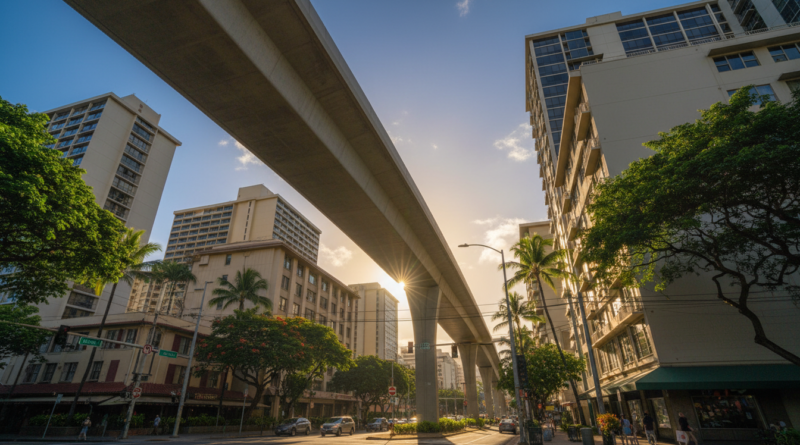
HART’s board unanimously approved condemnation proceedings against Pacific Guardian Center at 733-735 Bishop Street and Servco Pacific at 616 Keawe Street. The properties sit along the planned route for Skyline stations that would extend the elevated rail system from Aloha Stadium to the University of Hawaii at Manoa.
The eminent domain actions target some of downtown Honolulu’s most valuable real estate, including the 30-story Pacific Guardian Center tower that houses major law firms and financial institutions. Servco Pacific’s Keawe Street property serves as headquarters for the automotive and industrial equipment company founded in 1919.
Property Owners Resist Rail Plans
HART officials said negotiations with both property owners have stalled after months of discussions about purchasing portions of their land for rail infrastructure. The agency needs the properties to construct stations and support facilities for the Kakaako extension, which represents the next major phase of the $10 billion-plus rail project.
“We’ve made good faith efforts to reach agreements with these property owners, but we cannot allow the project timeline to be held hostage by prolonged negotiations,” said HART board member James Reynolds during Wednesday’s meeting. “Eminent domain is a tool we hoped not to use, but it may be necessary to keep this critical infrastructure project moving forward.”
The Pacific Guardian Center sits at a key intersection where Bishop Street meets Nimitz Highway, making it strategically important for rail access from downtown’s financial district. The building’s owners have previously expressed concerns about construction impacts on their tenants and property values.
Servco Pacific’s Keawe Street location lies directly along the proposed rail alignment as it curves from downtown toward Kakaako’s waterfront development area. The company has deep roots in Hawaii’s business community and significant political connections that could complicate condemnation proceedings.
Legal Battles Could Delay Timeline
The eminent domain process typically takes 18 to 24 months in Hawaii courts, potentially pushing back HART’s target dates for Kakaako stations. Property owners can challenge both the taking itself and the compensation amount, leading to lengthy litigation that has plagued other major infrastructure projects statewide.
HART estimates it will need approximately 0.8 acres from Pacific Guardian Center and 1.2 acres from Servco Pacific for station construction and rail support systems. The agency has not disclosed compensation amounts but similar downtown properties have sold for $300 to $500 per square foot in recent transactions.
The Kakaako extension would add four new stations between downtown and the University of Hawaii, serving the rapidly developing urban core that has added thousands of residential units over the past decade. Ward Village, Whole Foods, and the planned redevelopment of Ala Moana Center all lie along the proposed route.
City planners view the extension as crucial for reducing traffic congestion on already overwhelmed streets like Kapiolani Boulevard and King Street. The area’s growing population of young professionals and university students represents a key demographic for rail ridership.
Federal Funding at Stake
HART faces pressure to demonstrate progress on the Kakaako extension to maintain federal transportation funding that covers nearly half the project’s cost. The Federal Transit Administration has already expressed concerns about delays and cost overruns on the initial 20-mile segment from East Kapolei to Ala Moana Center.
Construction on that first phase continues with an expected completion date in late 2031, though HART has missed multiple previous deadlines. The agency operates under a federal consent decree requiring regular progress reports and financial oversight following earlier management problems.
The downtown eminent domain cases will likely set important precedents for future rail expansion, including potential extensions to Salt Lake Boulevard and the airport. Property acquisition has consistently proven one of the most expensive and time-consuming aspects of Honolulu’s rail project.
HART expects to file formal condemnation lawsuits within 60 days, beginning a legal process that will ultimately determine whether Kakaako rail stations can open by their target date of 2035. For downtown property owners and transit advocates alike, the next two years of litigation will shape the future of public transportation in urban Honolulu.
