Honolulu City Council Greenlights HART Feasibility Study for Skyline Extension to UH Manoa and Waikiki
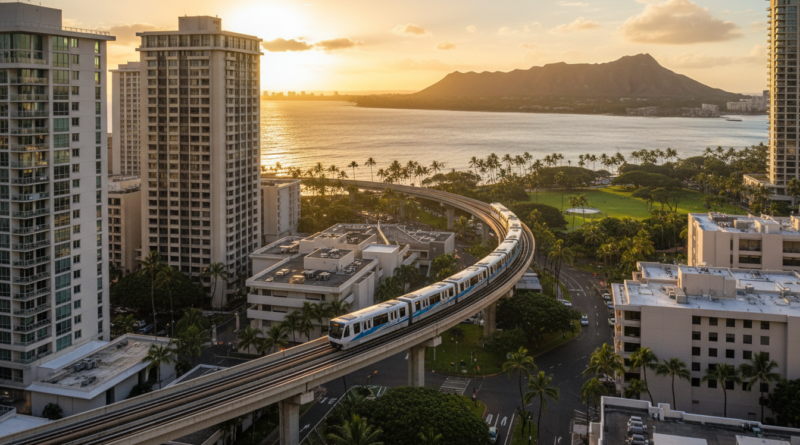
The Honolulu City Council voted 8-1 Wednesday to direct the Honolulu Authority for Rapid Transportation to begin preliminary engineering and feasibility studies for extending the Skyline rail system to the University of Hawaii at Manoa, Waikiki, and areas further west of the current terminus.
The decisive vote signals a potential major expansion of Oahu’s troubled rail project, which has already cost taxpayers billions and faced years of construction delays. The studies will examine the technical and financial feasibility of connecting two of the island’s most significant destinations to the existing 20-mile system.
Council Chair Tommy Waters, who supported the measure, said the extensions represent critical infrastructure investments for Honolulu’s future transportation needs.
“We cannot think small when it comes to transit planning,” Waters said during Wednesday’s meeting. “UH Manoa serves 17,000 students and thousands more faculty and staff daily, while Waikiki remains our economic engine. These connections make sense.”
The lone dissenting vote came from Councilmember Heidi Tsuneyoshi, who expressed concerns about committing to additional rail spending before the current project reaches full operation between East Kapolei and Ala Moana Center.
Technical Challenges Ahead
The proposed UH Manoa extension would require significant engineering solutions to navigate the steep terrain between the urban core and the campus nestled in Manoa Valley. Preliminary discussions suggest the line could branch from downtown Honolulu or the planned Ala Moana terminus, though specific routing remains undetermined.
A Waikiki extension presents different challenges, including navigating the dense urban landscape of Hawaii’s tourism hub and addressing concerns from hotel operators about construction impacts during the planning and building phases.
The westward extension study will examine options for serving communities in Kapolei, Ewa Beach, and potentially as far as Ko Olina Resort, areas experiencing rapid population growth but currently underserved by transit options.
Financial Questions Loom Large
The current Skyline project has already exceeded $10 billion in total costs, making it one of the most expensive transit projects per mile in U.S. history. Adding multiple extensions could potentially double or triple that investment, raising questions about funding sources and taxpayer burden.
Federal Transit Administration rules require detailed cost-benefit analyses and environmental impact studies before any extension can qualify for federal funding. The preliminary studies approved Wednesday represent the first step in that lengthy process.
HART Executive Director Lori Kahikina indicated the feasibility studies could take 18-24 months to complete, with initial cost estimates and ridership projections expected by late 2027.
Community Response Mixed
University of Hawaii officials have long advocated for rail connections to the Manoa campus, citing traffic congestion along University Avenue and limited parking as persistent challenges for students and staff.
The Waikiki Business Improvement District has similarly pushed for better transit connections to reduce tour bus traffic and provide alternatives for the estimated 100,000 daily visitors to the resort area.
However, taxpayer advocacy groups expressed skepticism about expanding rail before demonstrating the current system’s effectiveness. Grassroot Institute policy analyst Joe Kent questioned whether ridership projections justify the massive infrastructure investment.
“We’re talking about potentially doubling down on a system that hasn’t proven its value to commuters,” Kent said. “Shouldn’t we wait to see actual ridership numbers before committing to billions more in spending?”
Political Implications
The council’s vote comes as Mayor Rick Blangiardi prepares his administration’s long-term transportation strategy. Blangiardi has previously expressed cautious support for rail extensions while emphasizing the need for fiscal responsibility.
The decision also occurs as state lawmakers consider various transportation funding mechanisms, including potential increases to the general excise tax surcharge that partially funds the current rail project.
What’s Next
HART will now begin the competitive bidding process for engineering consultants to conduct the feasibility studies. The studies will examine engineering challenges, environmental impacts, construction timelines, and ridership projections for each proposed extension.
For Honolulu residents, the council’s decision means years of additional planning and public input processes before any construction begins. The earliest any extension could break ground would likely be the early 2030s, assuming federal approval and funding.
The vote represents a significant moment in Oahu’s transportation planning, potentially setting the stage for a comprehensive rail network that could fundamentally change how residents and visitors move around the island — if taxpayers ultimately support the massive financial commitment required.