Honolulu Council Authorizes $350K in Legal Defense Against Hitachi Rail Lawsuit
The Honolulu City Council has authorized spending up to $350,000 on outside legal counsel to defend against a lawsuit filed by Hitachi Rail Honolulu JV, the operator of the city’s troubled Skyline rail system.
Resolution 104, passed during Wednesday’s council meeting, allows the city to hire the law firm Cades Schutte to represent Honolulu in litigation brought by the Japanese rail contractor. The dispute represents yet another expensive legal complication for the rail project that has already cost taxpayers billions more than originally projected.
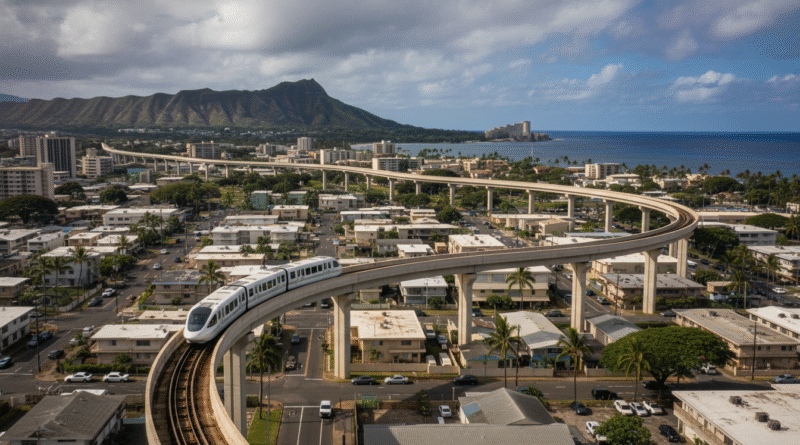
Hitachi Rail Honolulu JV operates and maintains the automated guideway system that currently runs from East Kapolei to Middle Street in Kalihi. The company filed suit against the city earlier this year, though specific details of their claims remain under seal in federal court proceedings.
The lawsuit appears to center on contractual disputes related to the rail system’s operations and maintenance agreement. Hitachi has been responsible for running the Skyline since its partial opening in June 2023, when service began between Kapolei and Aloha Stadium.
Another Layer of Legal Costs
The authorization for outside counsel adds to the mounting legal expenses surrounding the rail project. The Honolulu Authority for Rapid Transportation (HART) has previously faced litigation from multiple contractors and vendors over the years-long construction delays and cost overruns.
“This is unfortunately another example of how the rail project continues to generate unexpected costs even after sections have opened,” said Councilmember Calvin Say, who chairs the Budget Committee. “We need to protect the city’s interests, but taxpayers are rightfully frustrated by these ongoing expenses.”
The decision to hire Cades Schutte comes as the city and HART work to complete the rail line’s extension into downtown Honolulu. The full system is expected to eventually connect West Oahu to Ala Moana Center, though that completion date has been repeatedly pushed back due to construction challenges and funding shortfalls.
Operational Challenges Mount
Since opening, the Skyline has faced various operational issues that have frustrated commuters and raised questions about system reliability. Service disruptions, equipment malfunctions, and capacity constraints have all plagued the automated rail line during its first year of operations.
The system currently carries about 4,000 riders per day, well below initial projections. Ridership has been limited partly by the incomplete route, which doesn’t yet serve major employment centers in downtown Honolulu or popular destinations like Ala Moana Center.
Hitachi’s role as the operations and maintenance contractor makes the company crucial to the system’s day-to-day functioning. The Japanese firm was selected through a competitive bidding process to run the automated trains and maintain the elevated guideway infrastructure.
Downtown Extension Delays
Meanwhile, work continues on extending the rail line from its current terminus at Middle Street toward downtown Honolulu. This segment faces significant engineering challenges, including threading the elevated guideway between existing high-rise buildings along Dillingham Boulevard and into the urban core.
HART officials have indicated the downtown extension could open by late 2025 or early 2026, though previous timeline estimates have proven overly optimistic. The project’s total cost has ballooned from an original estimate of $5.1 billion to more than $12 billion.
The Hitachi litigation adds uncertainty to operations just as the city prepares to expand service. Any disruption to the maintenance and operations contract could potentially impact the system’s reliability and the timeline for extending service.
What’s Next
The $350,000 authorization provides initial funding for legal defense, though additional costs could emerge depending on how the litigation unfolds. Council members indicated they would monitor expenses closely and require regular updates on the case’s progress.
For Oahu residents, the Hitachi lawsuit represents another reminder of the rail project’s complex legacy. While thousands of daily riders now depend on Skyline service between West Oahu and Kalihi, the system continues generating unexpected costs and complications more than two decades after initial planning began.
The outcome of this litigation could influence future operations and maintenance contracts as HART works to complete the full rail line. More immediately, it underscores how legal disputes continue to shadow a project that city leaders hoped would finally be moving past its troubled construction phase.
