Honolulu Council Blasts City’s Slow Response to North Shore Flooding as Cleanup Continues
Honolulu City Council members unleashed sharp criticism this week over the city’s sluggish response to devastating North Shore flooding that left communities underwater and residents stranded for days. The rebuke comes as cleanup efforts continue across affected areas and another flood watch expired just days ago, raising fresh questions about the city’s emergency preparedness.
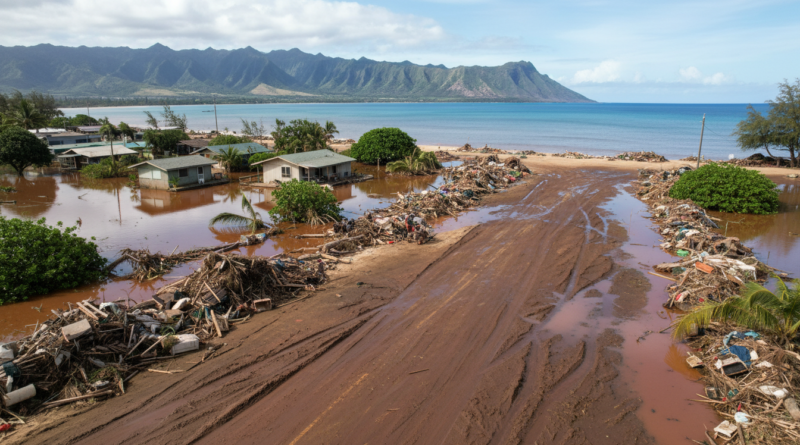
Council Chair Tommy Waters didn’t mince words during Wednesday’s meeting, calling the response “inadequate and frankly embarrassing” for a city that regularly faces flood threats. The flooding, which struck Haleiwa, Waialua, and surrounding communities two weeks ago, left some residents without power for nearly a week and forced dozens of evacuations.
“We had families trapped in their homes with no communication, no power, and no clear timeline for help,” Waters said. “This isn’t some remote rural area—this is part of our city, and these residents deserve better.”
The April flooding was triggered by a slow-moving weather system that dumped more than eight inches of rain in 24 hours across the North Shore. Kamehameha Highway became impassable near Haleiwa Beach Park, effectively cutting off communities and forcing residents to rely on neighbors and community groups for assistance.
Council member Heidi Tsuneyoshi, whose district includes parts of the affected area, painted a grim picture of the response gaps. She described receiving frantic calls from constituents who couldn’t reach city emergency services and felt abandoned as floodwaters rose around their properties.
Infrastructure Concerns Mount
The criticism extends beyond emergency response to deeper infrastructure problems that have plagued the North Shore for years. Aging drainage systems, inadequate storm water management, and deferred maintenance have created a perfect storm for flood disasters, according to council members.
Several areas that flooded two weeks ago have a history of similar problems. The intersection of Kamehameha Highway and Haleiwa Road has flooded repeatedly over the past decade, yet comprehensive drainage improvements remain stalled in the city’s capital improvement pipeline.
“We keep putting band-aids on these problems instead of addressing the root causes,” said Council member Calvin Say. “Every time we get heavy rain, we’re rolling the dice with people’s safety and property.”
The recent flood watch that expired Tuesday served as a stark reminder of the ongoing vulnerability. While no significant flooding occurred this time, the National Weather Service warnings kept residents on edge and highlighted the need for better long-term solutions.
Mayor Rick Blangiardi’s administration has defended its response, pointing to successful evacuations and coordination with state agencies. However, city officials acknowledged communication breakdowns and promised a comprehensive review of emergency protocols.
Community Groups Step Up
As city services struggled to reach affected areas, grassroots organizations filled critical gaps. The Haleiwa Community Association organized food distribution and welfare checks, while local surf shops became impromptu emergency centers.
“The community really came together when the city couldn’t,” said Maria Santos, a Waialua resident whose house took on three feet of water. “Our neighbors were checking on us before any city workers showed up.”
Santos, who runs a local food truck, lost thousands of dollars in equipment and inventory. She said the lack of clear information from the city about assistance programs has made recovery even more difficult for small business owners.
The North Shore’s unique geography presents ongoing challenges for emergency response. The area’s distance from Honolulu’s urban core, combined with limited road access, means that when Kamehameha Highway floods, communities can become isolated quickly.
Looking Ahead
Council members are demanding specific reforms, including improved early warning systems, better coordination between city departments, and accelerated infrastructure investments. They’re also calling for regular community meetings to address residents’ concerns about flood preparedness.
The city has allocated $2.3 million in the current budget for North Shore drainage improvements, but projects are still in the planning phase. With climate change bringing more intense rainfall patterns to Hawaii, the pressure for faster action continues to build.
For North Shore residents, the debate over emergency response isn’t academic—it’s about whether they can count on city services when the next big storm hits. As cleanup continues and the community rebuilds, the spotlight remains on whether Honolulu will finally address the systemic problems that leave neighborhoods vulnerable to flooding.
