Honolulu Council Slams City’s Delayed Evacuation Orders During North Shore Floods
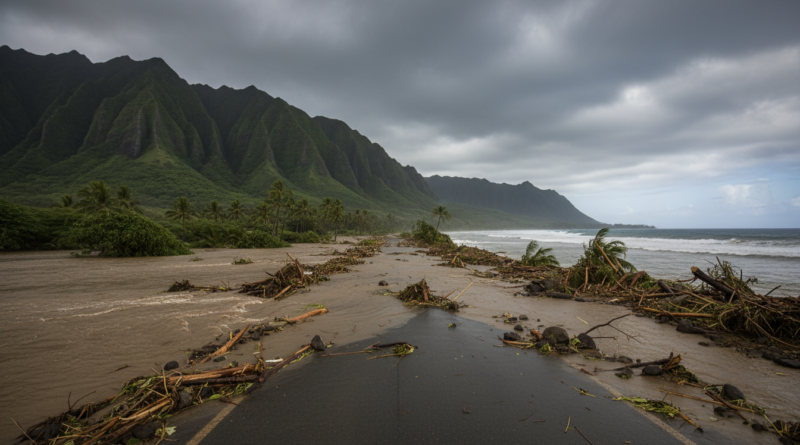
Honolulu City Council members delivered sharp criticism Wednesday to the city’s emergency management chief over delayed evacuation orders and inadequate public communication during last month’s devastating North Shore flooding that left dozens of residents stranded and prompted multiple water rescues.
Council Chair Tommy Waters led the charge during a heated oversight hearing, pressing Emergency Management Agency Director Hiro Toiya on why evacuation orders weren’t issued until hours after flooding began inundating Haleiwa, Waialua, and surrounding communities on March 15.
“We had families trapped on rooftops while the city was still deciding whether to call for evacuations,” Waters said during the three-hour session. “That’s unacceptable. Lives were at risk.”
The flooding, triggered by a stalled weather system that dumped more than eight inches of rain in six hours, overwhelmed the Anahulu River and turned normally quiet residential streets into rushing torrents. Honolulu Fire Department crews conducted 23 water rescues, while hundreds of residents were forced to evacuate their homes.
Council members pointed to a timeline showing the first flood reports came in at 6:30 a.m., but formal evacuation orders weren’t issued until after 11 a.m. — nearly five hours later.
Communication Breakdown
Beyond the delayed response, council members hammered Toiya over what they called a “communication breakdown” that left residents scrambling for accurate information during the crisis.
The city’s emergency alert system sent conflicting messages, with some residents receiving evacuation notices hours after they had already fled their homes. Others reported getting no alerts at all, despite being registered for the service.
“My office fielded dozens of calls from North Shore residents who said they learned about evacuations from neighbors, not from the city,” said Council member Andria Tupola, whose district includes parts of the affected area. “That’s a fundamental failure of our emergency response system.”
The city’s social media accounts also provided inconsistent updates, with some posts minimizing the flooding while others urged immediate action. Local news outlets filled the gap, with KITV and Hawaii News Now providing continuous live coverage that many residents said was their primary source of real-time information.
Toiya defended his department’s response, citing challenges with rapidly changing conditions and coordination between multiple agencies. He noted that the National Weather Service had initially forecast moderate rainfall, not the historic deluge that ultimately occurred.
“We were working with the best information available at the time,” Toiya told the council. “Weather patterns can change quickly, and we had to balance public safety with avoiding unnecessary panic.”
Systemic Issues Exposed
The hearing revealed broader systemic issues within Honolulu’s emergency management structure. Council members learned that the city lacks real-time flood monitoring systems in several North Shore watersheds, relying instead on manual reports from field personnel.
This stands in stark contrast to urban Honolulu, where automated flood sensors provide continuous data to emergency managers. The discrepancy has long frustrated North Shore residents, who argue their community receives less attention from city services.
“The North Shore isn’t just a tourist destination — it’s home to thousands of residents who deserve the same level of emergency preparedness as downtown Honolulu,” said Council member Carol Fukunaga.
The March flooding caused an estimated $12 million in property damage and forced the closure of Kamehameha Highway for two days, cutting off the primary route to popular surf spots and affecting tourism revenue during spring break season.
Demanded Changes
Council members outlined specific reforms they want implemented before the next major storm. These include installing automated flood monitoring systems across all North Shore watersheds, establishing clearer evacuation protocols with specific trigger points, and overhauling the emergency alert system.
Waters announced plans to introduce legislation requiring the city to conduct emergency response drills in flood-prone communities at least twice annually. Currently, such exercises are voluntary and infrequent.
“We can’t wait for another disaster to fix these problems,” Waters said. “North Shore residents deserve better, and we’re going to make sure they get it.”
The council also demanded a comprehensive after-action report within 60 days, including recommendations from an independent consultant. Toiya agreed to the timeline but cautioned that some improvements, particularly infrastructure upgrades, could take years to implement.
For North Shore residents still recovering from last month’s flooding, the hearing offered both accountability and hope for improved emergency response. With hurricane season approaching in just two months, the pressure is on city officials to translate Wednesday’s promises into concrete action that could prevent future tragedies.