State Clears $89.4M in Rail Reimbursements as HART Segment 3 Construction Picks Up Speed
The state has approved $89.4 million in reimbursements to the Honolulu Authority for Rapid Transportation, providing a crucial funding boost as construction of the rail system’s third segment accelerates through Iwilei and Downtown Honolulu.
The first-quarter 2026 payment represents one of the largest single reimbursement approvals in recent months, reflecting the intensified pace of work along the 4.1-mile stretch that will connect Kalihi-Palama station to the Civic Center station near Honolulu Hale.
HART officials say the funding injection keeps Segment 3 construction on schedule for a 2031 passenger service launch, even as the project continues to face scrutiny over its ballooning costs and extended timeline.
Construction Momentum Builds Downtown
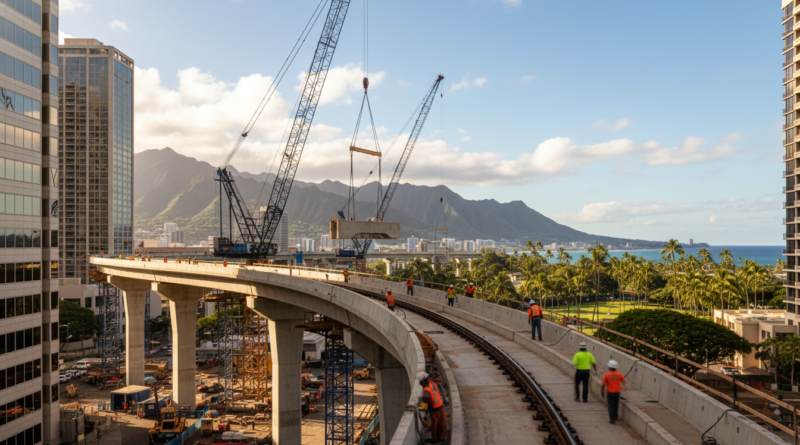
The reimbursement comes as crews have ramped up column construction along the elevated guideway route through some of Honolulu’s most congested urban corridors. Work sites are now visible from Nimitz Highway through Chinatown and into the heart of Downtown Honolulu.
“We’re seeing real momentum now with multiple crews working simultaneously on different sections,” said HART interim executive director Roger Morton in a statement. “This funding allows us to maintain that pace without disrupting our contractor payment schedules.”
The state funding mechanism requires HART to submit detailed expenditure reports before receiving reimbursements from the rail transit tax revenue. The $89.4 million approval followed a thorough review process that examined contractor invoices, change orders, and project milestones achieved during the first quarter.
Construction activity has been particularly intensive around the planned stations near Honolulu Harbor and in Chinatown, where crews are working to minimize disruptions to local businesses and the busy cargo operations at Pier 1.
Costs Under Continued Scrutiny
The substantial reimbursement amount highlights the project’s continued high burn rate, even as HART works to control costs on what has become one of the most expensive transit projects per mile in U.S. history.
The rail system’s total price tag now stands at approximately $12.4 billion, with Segment 3 representing a significant portion of the remaining construction costs. The segment must navigate complex urban terrain, requiring specialized engineering solutions for the elevated guideway’s path through Downtown Honolulu’s dense development.
State transportation officials have maintained closer oversight of HART finances following years of cost overruns and schedule delays that pushed the original completion date back by nearly a decade.
“Every dollar has to be justified and accounted for,” said state Department of Transportation spokesman Jake Nakamura. “We’re committed to transparency while ensuring this critical infrastructure project moves forward.”
Economic Impact on Local Businesses
The construction acceleration has created both opportunities and challenges for businesses along the route. Many Chinatown retailers and restaurants report ongoing impacts from construction-related traffic disruptions, while others have benefited from increased foot traffic from construction workers.
The Iwilei corridor, home to numerous auto dealerships and light industrial businesses, has seen significant utility relocation work as crews prepare for guideway construction over Nimitz Highway.
HART has implemented a small business assistance program providing marketing support and construction impact mitigation for affected local enterprises, funded through a separate community benefit allocation.
Looking Ahead to 2031 Target
With Segment 3 construction now in full swing, HART faces the challenge of maintaining momentum while managing the complex logistics of building through Honolulu’s urban core.
The 2031 passenger service target remains dependent on successfully completing not just the physical infrastructure, but also extensive testing and system integration work. Previous segments have experienced delays during the testing phase, raising questions about whether the timeline is realistic.
Transit advocates argue that completing Segment 3 will finally deliver the rail system’s full promise by connecting suburban West Oahu communities to Downtown Honolulu’s job centers. The segment includes stops that will serve thousands of daily commuters working in government offices, financial institutions, and the harbor area.
For Honolulu residents, the $89.4 million reimbursement represents both progress toward a long-awaited transportation solution and a reminder of the project’s massive financial commitment. As construction crews continue their work through the city’s heart, the community watches closely to see whether HART can deliver on its latest promises while keeping costs under control.