State Sends $89 Million to Honolulu Rail as Downtown Segment 3 Columns Begin to Rise
The state has approved $89.4 million in reimbursements to the Honolulu Authority for Rapid Transportation, providing a crucial funding boost as the rail project’s downtown segment takes visible shape along the urban core.
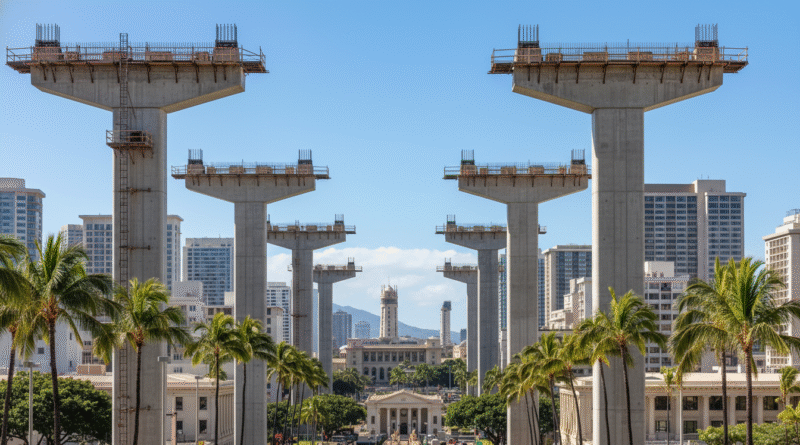
The first quarter 2026 payment represents the largest single reimbursement to HART in recent months, coming as construction crews erect towering concrete columns that will eventually carry trains from Iwilei through Chinatown. The funding approval signals continued state confidence in the project despite years of cost overruns and delays.
“This reimbursement reflects real progress on the ground,” said HART spokesperson Jennifer Takahashi. “Residents driving through downtown can now see the infrastructure that will transform how we move around Honolulu.”
Downtown Construction Picks Up Pace
The most visible progress is occurring along Segment 3, the 4.2-mile stretch that will connect the Iwilei area to downtown Honolulu and Chinatown. Concrete columns now rise at regular intervals along Dillingham Boulevard, creating the skeleton of what will become the elevated guideway.
Construction crews are working in phases to minimize disruption to the busy corridor that serves as a gateway between downtown and the harbor industrial area. The work has required periodic lane closures and traffic diversions, particularly during concrete pours and equipment deliveries.
Local businesses along Dillingham have adapted to the construction environment, with many reporting steady customer traffic despite the ongoing work. The corridor remains a vital link for commuters traveling between residential areas in Kalihi and jobs downtown.
Financial Oversight Tightens
The $89.4 million reimbursement comes after increased state scrutiny of HART’s financial management. State auditors have been reviewing project expenditures more closely following public concerns about cost escalation on the $12.4 billion project.
The current payment covers expenses from October through December 2025, including construction materials, contractor payments, and project management costs. State transportation officials say the reimbursement process now includes additional verification steps to ensure taxpayer dollars are properly spent.
HART’s total project costs have grown significantly since initial estimates, leading to ongoing discussions between city and state officials about funding responsibilities. The current funding plan relies on a combination of federal transit grants, GET surcharge revenue, and state contributions.
Impact on Daily Commutes
The downtown construction is reshaping traffic patterns throughout urban Honolulu. Morning and evening rush hours along Dillingham Boulevard now include construction-related delays, though HART says crews schedule heavy work during off-peak hours when possible.
TheBus has adjusted several routes to accommodate construction zones, with temporary stops relocated in some areas. Riders are advised to check current route information before traveling, as stop locations may change as construction progresses.
Pedestrian access remains available throughout the construction zone, though sidewalks are narrower in some areas. HART has installed temporary walkways and improved lighting in construction areas to maintain safe passage for foot traffic.
Looking Toward 2031
The rising columns represent a milestone in the rail project’s long journey toward completion. HART officials maintain that Segment 3 remains on schedule for a 2031 opening, which would finally connect the existing West Oahu line to downtown employment centers.
Once operational, the downtown segment will serve four stations: Iwilei, Chinatown, Downtown, and Civic Center. The stations are designed to integrate with existing bus routes and provide connections to major employment areas, government offices, and cultural attractions.
The project’s completion would create a 20-mile transit line stretching from East Kapolei to downtown Honolulu, potentially reducing car dependency and traffic congestion along the H-1 freeway corridor.
For Honolulu residents, the $89.4 million state payment represents both progress and accountability in a project that has tested public patience. As concrete columns continue rising downtown, the rail line edges closer to becoming a reality that could reshape how residents navigate their city.
The next major construction milestone will be the installation of guideway segments connecting the columns, work expected to begin later this year as the structural foundation is completed.