Skyline Rail Segment 3: Column Construction Rises Along Dillingham as 2031 Opening Takes Shape
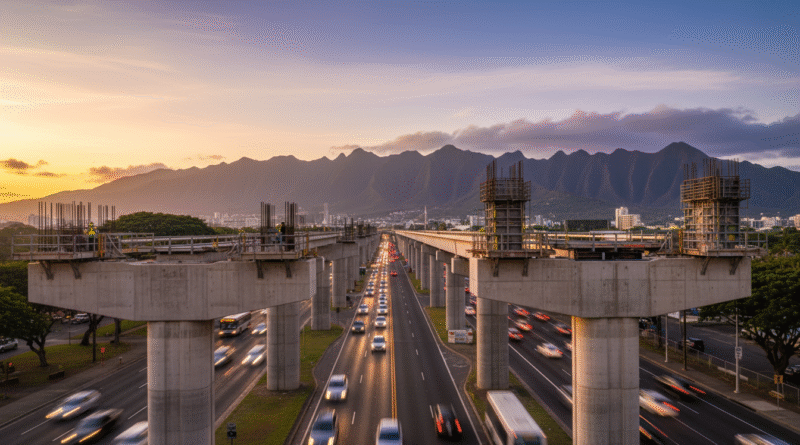
Towering concrete columns are beginning to reshape the skyline along Dillingham Boulevard as construction crews make visible progress on the third segment of Honolulu’s long-awaited rail transit system. The elevated guideway structures for six new stations stretching from Kalihi to the Civic Center are taking form, marking a significant milestone in the project’s march toward its 2031 opening target.
The Honolulu Authority for Rapid Transportation (HART) has ramped up column construction activities along the Dillingham corridor, with crews working to complete the concrete support structures that will eventually carry trains through some of Oahu’s most densely populated urban areas. The work represents the most visible sign of progress on the rail project in recent months, as previous phases focused heavily on underground utility relocations and foundation work.
Utility Relocation Creates Traffic Headaches
The construction push hasn’t come without disruption for commuters and businesses along the route. Extensive utility relocation work has necessitated lane closures and traffic diversions along Dillingham Boulevard, creating bottlenecks during peak hours that ripple through surrounding neighborhoods including Kalihi-Palama and the industrial areas near Honolulu Harbor.
Water, sewer, electrical and telecommunications lines are being moved to accommodate the rail infrastructure, a process that requires careful coordination with Hawaiian Electric, the Board of Water Supply, and other utility providers. The work has been particularly challenging in areas where decades-old infrastructure must be updated to modern standards while maintaining service to existing customers.
“We understand the temporary inconvenience this construction creates for our community, but these infrastructure improvements will benefit residents long after the rail opens,” said Maria Santos, a HART spokesperson. “The utility upgrades alone represent a significant investment in modernizing our urban core.”
Six Stations Taking Shape
The current construction phase encompasses six stations that will serve some of Honolulu’s most important commercial and residential districts. The Kalihi station will provide crucial access for residents in one of the island’s most transit-dependent communities, while the Middle Street station will serve the growing residential towers in the Keeaumoku corridor.
Perhaps most significant for the broader community is progress on the Civic Center station, which will connect rail passengers to city and state government offices, as well as provide easy access to downtown Honolulu’s business district. The station’s proximity to Honolulu Hale and the state Capitol makes it a critical component of the system’s utility for daily commuters.
The Chinatown station has garnered particular attention from local business owners and cultural organizations who see the rail connection as an opportunity to revitalize foot traffic in the historic district. Construction crews are working carefully around the area’s older buildings and narrow streets, some of which date back to the early 20th century.
2031 Timeline Under Scrutiny
While HART officials maintain that the current construction pace supports a 2031 opening for the full 20-mile system, independent observers remain skeptical about whether the ambitious timeline is achievable. The project has already experienced significant delays and cost overruns since construction began more than a decade ago.
The visible progress on Segment 3 represents a crucial test of HART’s ability to deliver on its revised schedule. Unlike earlier segments that faced unexpected challenges with utility conflicts and soil conditions, this stretch of the route was designed with lessons learned from previous construction phases.
Economic factors continue to influence the project’s trajectory. Rising construction costs and supply chain disruptions have affected material deliveries, though HART reports that most critical components are being sourced according to schedule. The authority has also benefited from a more stable workforce compared to the labor shortages that plagued earlier construction phases.
Community Impact and Future Connections
For Honolulu residents, the advancing construction represents both promise and continued disruption. Business owners along Dillingham Boulevard report mixed impacts, with some experiencing reduced foot traffic due to construction barriers while others anticipate increased visibility once the elevated guideway is complete.
The project’s completion will fundamentally alter transportation patterns across urban Honolulu, offering an alternative to the chronic traffic congestion that affects daily life for thousands of residents. The rail system is expected to carry more than 100,000 passengers daily once fully operational, potentially reducing vehicle trips and improving air quality in densely populated areas.
As construction continues through 2025, residents can expect ongoing traffic impacts along the Dillingham corridor and surrounding streets. HART has committed to providing regular updates on construction schedules and traffic mitigation measures as the project moves closer to its promised completion date.