Three Hawaii Beaches Rank Among Nation’s Most Polluted — And the Problem Is Getting Worse
Three Hawaii beaches have earned an unwelcome distinction in a new national water quality report, ranking among the most polluted coastal areas in the United States. The findings have renewed concerns about aging infrastructure and climate impacts threatening the islands’ pristine reputation.
Punaluu Beach Park on Oahu’s windward coast landed in the top 10 most contaminated beaches nationwide according to the Surfrider Foundation’s latest Clean Water Report. The study measured bacterial contamination levels at coastal monitoring sites across the country, with Hawaii’s results painting a troubling picture for both residents and the tourism industry.
Two additional Hawaii beaches also made the national list of most polluted waters, though specific locations for those sites weren’t immediately available. The report analyzed water quality data from state health departments and found consistently high levels of bacteria that can cause serious illness in swimmers and surfers.
“These numbers are alarming, especially for a state that depends so heavily on our ocean resources,” said Dr. Keiko Tanaka, a marine biologist with the University of Hawaii’s Pacific Cooperative Studies Unit. “When we see bacterial counts this high, it’s a clear warning sign that our coastal ecosystems are under stress.”
The contamination stems from multiple sources, but experts point to two primary culprits: aging wastewater infrastructure and increased rainfall from climate change. Heavy rains overwhelm sewage systems and wash pollutants from streets and land into nearshore waters.
Waikiki’s Ongoing Struggles
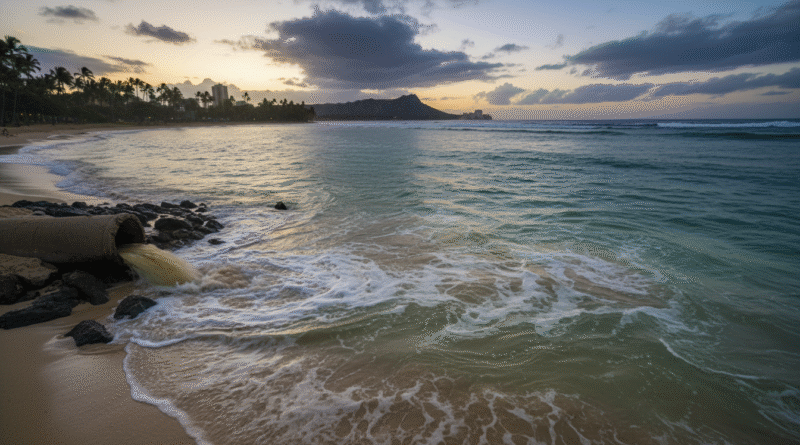
The Ala Wai Canal, which borders Waikiki Beach, continues to be a recurring source of contamination concerns. The canal collects urban runoff from Honolulu neighborhoods and periodically experiences sewage overflows during heavy rains, sending bacteria-laden water into the ocean near one of Hawaii’s most famous tourist destinations.
State health officials have issued multiple high bacteria advisories for North Shore beaches in recent months, warning beachgoers to avoid water activities at popular surf spots including Pipeline and Sunset Beach. These advisories typically follow significant rainfall events that flush contaminants into the ocean.
The pollution problems aren’t limited to Oahu. Statewide, Hawaii has seen an increase in brown water advisories and beach closures due to bacterial contamination, particularly during the rainy season from November through March.
Tourism officials acknowledge the water quality issues pose a challenge for an industry that brings millions of visitors annually to Hawaii’s beaches. However, they emphasize that most beaches remain safe for swimming and that the state’s monitoring system provides real-time warnings when conditions deteriorate.
Infrastructure Under Pressure
Much of Hawaii’s wastewater infrastructure dates back decades and wasn’t designed to handle current population levels or increasingly intense storm events. Honolulu’s sewer system, built primarily in the 1960s and 1970s, experiences regular overflows during heavy rains.
The city has invested hundreds of millions of dollars in recent years to upgrade treatment facilities and replace aging pipes, but the work is ongoing. Officials estimate it will take at least another decade to complete necessary improvements across the island.
Climate change compounds the problem by bringing more frequent and intense rainfall to the islands. When sewage systems overflow or storm drains carry street pollutants to the ocean, bacteria levels spike dramatically in nearshore waters.
The contamination poses health risks ranging from minor skin and eye irritation to serious gastrointestinal illness. Children, elderly residents, and people with compromised immune systems face the highest risk from exposure to polluted water.
Community Response
Environmental groups are calling for accelerated infrastructure improvements and better land use planning to reduce runoff. The Surfrider Foundation’s Hawaii chapters advocate for green infrastructure solutions like rain gardens and permeable surfaces to capture stormwater before it reaches the ocean.
Local communities have also organized beach cleanups and watershed restoration projects to address pollution at its source. These grassroots efforts complement official monitoring and cleanup programs.
State health officials continue monitoring water quality at beaches statewide and post warnings when bacterial levels exceed safe thresholds. Residents and visitors can check current advisories on the Department of Health website before heading to the beach.
The latest water quality report serves as a stark reminder that Hawaii’s ocean paradise requires constant protection. As climate change brings new challenges and visitor numbers rebound to pre-pandemic levels, addressing coastal pollution has become more urgent than ever for preserving both public health and the islands’ economic foundation.