Historic Chinatown Hotel Converted Into Mixed-Use Arts and Housing Complex
A century-old hotel in the heart of Honolulu’s Chinatown will soon house artists and residents after a $12 million renovation project that transforms the historic property into a mixed-use complex combining affordable housing with creative spaces.
The four-story building at 1067 River Street, originally constructed in 1923 as the Palama Hotel, has been redesigned to include 24 affordable housing units alongside artist studios, gallery space, and community areas. The project represents a significant investment in preserving Chinatown’s cultural heritage while addressing Honolulu’s affordable housing shortage.
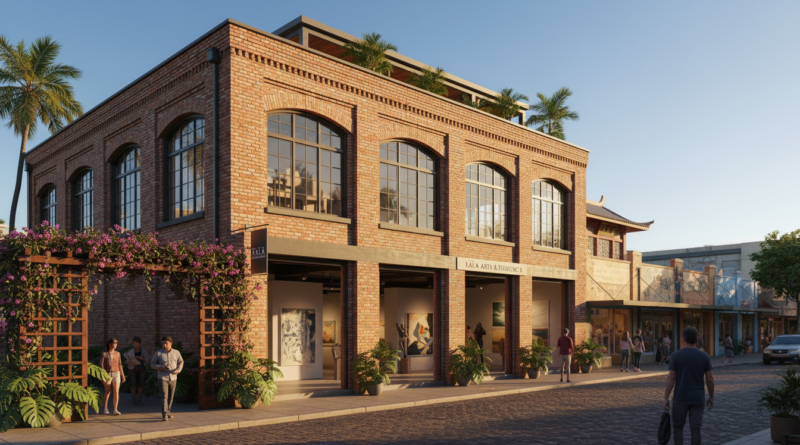
Developer Kai Pacific Real Estate partnered with the Hawaii Community Development Authority and local arts organizations to create what they’re calling the “Chinatown Arts Collective.” The renovation preserved the building’s original brick facade and distinctive architectural features while modernizing the interior for contemporary living and creative use.
“This project embodies what Chinatown has always been about — bringing together diverse communities and fostering creativity,” said Michael Chen, project manager for Kai Pacific. “We’re not just creating housing; we’re creating a cultural hub that will benefit the entire neighborhood.”
Preserving History While Meeting Modern Needs
The Palama Hotel served traveling workers and immigrants for decades before closing in the 1980s. The building sat largely vacant for over 20 years, becoming a symbol of Chinatown’s economic struggles during that period.
The renovation required extensive structural work to meet current building codes while preserving historically significant elements. Original hardwood floors were refinished, and the building’s signature neon sign was restored to working condition.
Each housing unit ranges from 400 to 600 square feet and will be rented to residents earning between 50% and 80% of area median income. Priority will be given to local artists and cultural workers, with rents starting at approximately $1,200 per month for a studio apartment.
The ground floor will house rotating art galleries, a small performance space, and shared workshop areas where residents and community members can collaborate on projects. A rooftop garden will provide additional gathering space with views of Honolulu Harbor.
Supporting Chinatown’s Cultural Renaissance
The project comes as Chinatown experiences renewed interest from developers and artists seeking more affordable alternatives to other Honolulu neighborhoods. Recent investments in the area include new restaurants, art galleries, and the expansion of the monthly First Friday art walk.
Local arts advocate Lisa Wong, who has worked in Chinatown for over 15 years, sees the hotel conversion as part of a broader cultural revival. “Having permanent, affordable space for artists is crucial,” Wong said. “Too often, we see gentrification push out the very creative communities that make neighborhoods vibrant.”
The development team worked closely with existing Chinatown businesses and residents throughout the planning process. Community input sessions helped shape decisions about programming and design, particularly regarding the ground-floor spaces that will remain open to the public.
Honolulu’s shortage of affordable housing makes projects like this particularly significant. The city needs approximately 22,000 additional affordable rental units by 2025, according to recent housing studies. Mixed-use developments that combine housing with commercial or cultural uses are increasingly seen as efficient ways to address multiple community needs.
Economic Impact and Future Plans
Construction is expected to be completed by spring 2024, with the first residents moving in by summer. The project created approximately 85 construction jobs and will support ongoing maintenance and programming positions.
The development received $4.2 million in tax credits through Hawaii’s affordable housing program, with additional funding from the city’s Transit-Oriented Development fund. The proximity to TheBus routes and the upcoming rail system influenced the decision to locate affordable housing at this site.
Property taxes from the renovated building are expected to generate approximately $180,000 annually for the city, a significant increase from the minimal taxes paid while the building sat vacant.
For longtime Chinatown residents and business owners, the hotel’s transformation represents hope for continued revitalization that preserves the neighborhood’s character while meeting contemporary needs. As Honolulu grapples with housing affordability and urban development pressures, projects like the Chinatown Arts Collective offer a model for preserving cultural heritage while creating practical solutions for residents.
The success of this mixed-use approach could influence similar projects throughout Honolulu, particularly in neighborhoods where historic buildings sit underutilized while housing demand continues to grow.
