Luxury Condo Tower Proposed for Last Vacant Lot on Kalakaua Avenue
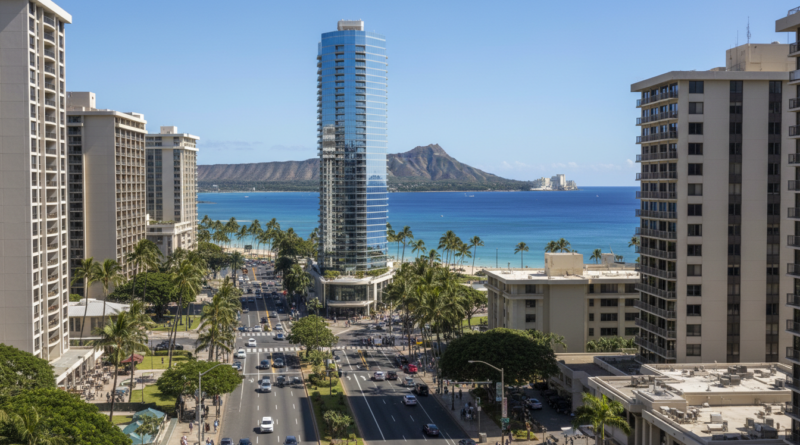
A luxury residential tower could soon rise on the last undeveloped lot along Waikiki’s iconic Kalakaua Avenue, according to preliminary plans submitted to the city planning department this week.
The proposed 32-story condominium building would occupy the 0.8-acre parcel at 2222 Kalakaua Avenue, positioned between the International Market Place and the Royal Hawaiian Center. Developer Pacific Crown Holdings has outlined plans for 180 luxury units with ground-floor retail space, potentially transforming one of Waikiki’s most valuable remaining development opportunities.
The site has remained vacant for nearly two decades following the demolition of a small shopping complex. Its prime location directly across from Waikiki Beach has made it one of Honolulu’s most watched development parcels, with property values in the immediate area reaching record highs over the past five years.
“This represents the final piece of Kalakaua Avenue’s transformation into a world-class luxury destination,” said Maria Santos, a commercial real estate broker with Island Properties who has tracked the parcel’s ownership changes. “Once this develops, there simply won’t be another opportunity like this on the strip.”
The preliminary application indicates units would range from one-bedroom condos starting at approximately 800 square feet to penthouse residences exceeding 3,000 square feet. Amenities would include a rooftop infinity pool, fitness center, and concierge services targeting affluent buyers from the mainland and Asia-Pacific region.
Zoning and Community Concerns
The project faces several regulatory hurdles, including height restrictions and density limitations under Waikiki’s special district zoning. The proposed 350-foot tower would require variances from current building codes, which typically limit structures in the area to 250 feet.
Neighborhood board members have already expressed concerns about increased traffic congestion and the project’s impact on Waikiki’s infrastructure. The area’s aging water and sewer systems have struggled to accommodate recent high-rise developments, leading to periodic service disruptions.
Public parking also remains a contentious issue. The developer’s plans call for 220 parking stalls in an underground garage, but Waikiki residents and business owners worry about spillover parking demand in surrounding neighborhoods already strained by tourism traffic.
Environmental assessments will examine the project’s impact on nearby Kapiolani Park and beach access routes. The site sits within the Waikiki Special District, requiring additional review processes designed to preserve the area’s character while accommodating appropriate development.
Market Dynamics
Luxury condo sales in Waikiki have rebounded strongly following the pandemic downturn, with median prices now exceeding $1.5 million for premium units with ocean views. International buyers, particularly from Japan and mainland China, have returned to the market as travel restrictions eased.
The project would compete with several other luxury developments currently in various stages of completion, including the 400-unit Mandarin Oriental residences and the recently completed Ritz-Carlton Residences. Industry analysts suggest demand remains strong enough to support additional high-end inventory, especially given Waikiki’s limited development opportunities.
Construction costs and supply chain issues have affected project timelines throughout Oahu, with many developers facing 20-30% budget increases compared to pre-pandemic estimates. Pacific Crown Holdings has not released cost projections or financing details for the Kalakaua Avenue project.
What’s Next
The planning application begins a review process expected to take 12-18 months, including environmental impact studies and community input sessions. The Waikiki Neighborhood Board will hold its first public hearing on the proposal next month, followed by Planning Commission review if initial approvals are granted.
City Council approval would be required for any zoning variances, creating additional opportunities for public input and potential modifications to the development plan. Recent luxury projects in Waikiki have typically required 2-3 years from initial application to construction permits.
For Honolulu residents, the project represents broader questions about balancing economic development with livability concerns in the city’s most tourism-dependent district. The outcome could influence how remaining developable parcels throughout urban Honolulu are approached by both developers and city planners moving forward.
