
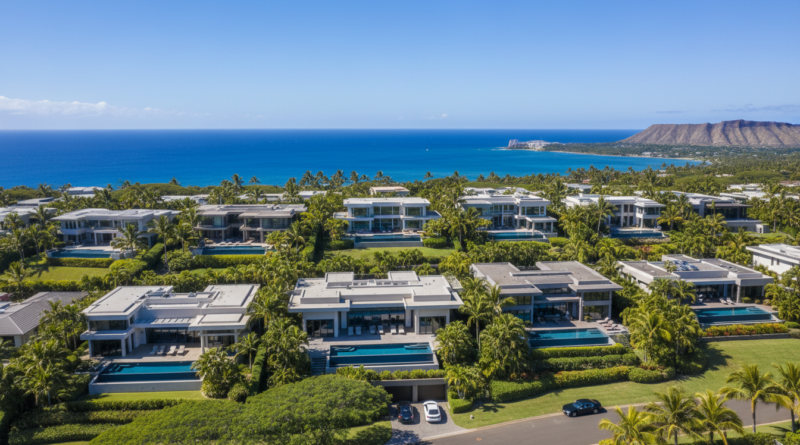
Oahu Single-Family Home Sales Jump 26% in March as Median Price Hits $1.2M
Oahu’s single-family home market showed remarkable resilience in March 2026, with sales jumping 26% compared to the same month last year, even as the median price climbed to a record $1,199,500, according to new market data.
The surge in transactions signals continued strong demand for island real estate, but a notable shift in buyer behavior is emerging. Homes are now spending an average of 40% more time on the market before selling, suggesting purchasers are becoming increasingly selective in their choices despite robust sales volumes.
“We’re seeing buyers take their time and really evaluate their options,” said Maria Chen, a longtime Realtor with Compass Hawaii who specializes in East Honolulu properties. “The demand is absolutely there, but people are being more strategic about what they’re willing to pay $1.2 million for.”
The March figures represent a significant milestone for Oahu’s housing market, with the median price breaking through the $1.2 million barrier for the first time on record. This marks a substantial increase from March 2025, when the median sat at $1,085,000.
Geographic Variations Across the Island
The sales increase wasn’t uniform across Oahu’s diverse neighborhoods. Areas like Kakaako and urban Honolulu saw particularly strong activity, driven partly by new condominium conversions and mixed-use developments that have increased overall housing inventory in these dense urban cores.
Meanwhile, windward communities and the North Shore experienced more modest gains, reflecting the limited inventory of single-family homes in these sought-after but geographically constrained areas.
Waikiki’s residential market, though smaller in terms of single-family inventory, showed interesting patterns as some investors shifted focus from short-term vacation rentals back to long-term housing investments amid ongoing regulatory changes affecting the tourism accommodation sector.
Market Dynamics and Buyer Behavior
The extended time on market — now averaging 28 days compared to 20 days in March 2025 — reflects a more balanced dynamic between buyers and sellers. Homes priced appropriately for their condition and location are still moving quickly, but overpriced properties are sitting longer as buyers demonstrate increased price sensitivity.
Local real estate professionals attribute the sales surge to several factors, including continued in-migration from the mainland, limited new construction supply, and Hawaii’s persistent appeal as both a primary residence and investment destination.
The data also reveals that cash transactions continue to represent a significant portion of sales, highlighting the role of well-capitalized buyers in maintaining market momentum even as financing costs remain elevated.
Construction and Supply Constraints
Behind the numbers lies Oahu’s ongoing struggle with housing supply. New single-family construction remains constrained by limited developable land, complex permitting processes, and high construction costs that make building at lower price points economically challenging.
Recent zoning changes aimed at increasing density in certain neighborhoods have shown some impact on the broader housing picture, but single-family inventory remains tight across most of the island.
The combination of strong demand and limited supply continues to drive price appreciation, though the pace has moderated slightly from the rapid increases seen in previous years.
Looking Ahead
The March data suggests Oahu’s real estate market is finding a new equilibrium — one where demand remains robust but buyers are exercising more discretion. This trend could signal a healthier, more sustainable market dynamic compared to the frenzied pace of recent years.
For prospective homebuyers, the extended time on market may provide more opportunity to thoroughly evaluate properties and negotiate terms. However, well-priced homes in desirable locations continue to attract multiple offers, particularly in neighborhoods with good schools and convenient access to employment centers.
The implications extend beyond individual transactions to broader questions about housing affordability and community sustainability. As median prices approach $1.2 million, the gap between local incomes and housing costs continues to widen, reinforcing concerns about long-term workforce retention and community character.
Real estate professionals expect the current trends to continue through the spring selling season, with sales volume remaining strong but price growth potentially moderating as the market adjusts to new price levels and buyer expectations evolve.