Rail Transit Completion Spurs $500M in New Development Along Kamehameha Highway
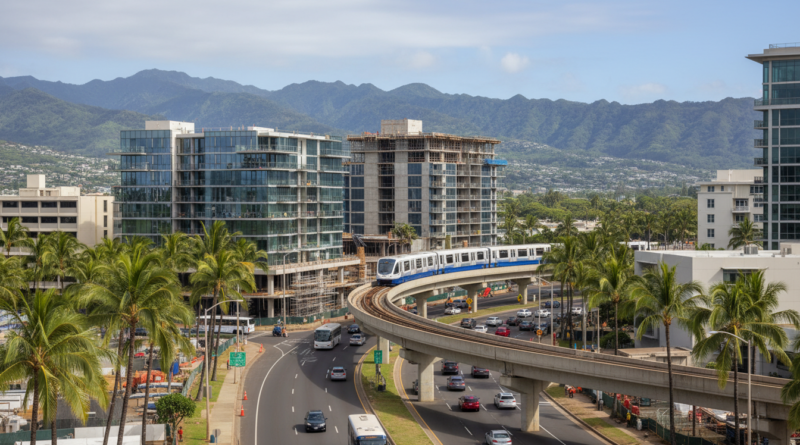
The completion of Honolulu’s rail transit system is already triggering a wave of development activity along Kamehameha Highway, with developers announcing more than $500 million in new projects planned for the corridor between Kalihi and Pearl City.
Three major mixed-use developments totaling 1,200 residential units and 150,000 square feet of commercial space are moving through the city’s planning process, taking advantage of the increased accessibility provided by the Skyline rail stations. The projects represent the largest concentrated development boom along the highway since the 1990s.
The most significant proposal comes from local developer Kamehameha Properties, which plans a $220 million, 18-story tower near the Kalihi Transit Station. The project would include 400 apartments, ground-floor retail, and structured parking for 500 vehicles.
“The rail system fundamentally changes the value proposition for this corridor,” said Maria Gonzalez, Kamehameha Properties’ development director. “Residents can now live in more affordable areas while maintaining easy access to downtown and the airport.”
The Kalihi project reflects broader trends emerging along the rail line, where transit-oriented development incentives are encouraging higher-density housing near stations. The city’s TOD overlay zones allow increased building heights and reduced parking requirements within a quarter-mile of rail stops.
Pearl City Sees Major Investment
Further west, two additional projects are capitalizing on the Pearl City and Aloha Stadium stations. Island Pacific Development announced plans for a $180 million mixed-use complex near Pearl City Station, featuring 500 rental apartments and a 75,000-square-foot retail center anchored by a grocery store.
Meanwhile, Oahu Community Development is proposing a $120 million senior housing project with 300 units specifically designed for residents 55 and older. The development would sit within walking distance of the Aloha Stadium station, providing easy access to medical facilities and shopping centers along the rail line.
The surge in development interest represents a validation of the city’s long-term transit strategy, despite the rail project’s lengthy construction timeline and cost overruns. Property values along Kamehameha Highway have increased 15-20% since the rail began operations, according to data from the Honolulu Board of Realtors.
Community Concerns and Benefits
Not all residents are embracing the development wave. Community groups in Kalihi and Pearl City have raised concerns about increased traffic, strain on schools, and the potential displacement of longtime residents as property values rise.
The Kalihi-Palama Neighborhood Board voted last month to request additional community meetings before approving the Kamehameha Properties tower, citing worries about parking spillover into residential neighborhoods.
“We want development that serves our community, not just brings in outside residents,” said board member Robert Kim during a recent public hearing. “These projects need to include truly affordable units, not just market-rate rentals that most local families can’t afford.”
City planners acknowledge these concerns but argue that transit-oriented development is essential for addressing Oahu’s housing shortage. The three Kamehameha Highway projects would add significantly to the island’s rental inventory, with developers committing to include 10-15% affordable units in each development.
Infrastructure and Timeline
The development boom is also driving infrastructure improvements along the highway corridor. The city plans $30 million in road widening and intersection improvements between Kalihi and Pearl City, funded through development impact fees and federal transportation grants.
Hawaiian Electric is upgrading power lines and substations to handle increased electrical demand, while the Board of Water Supply is installing new water mains with capacity for the additional residential units.
Construction timelines vary for the three major projects. The Kalihi tower could break ground by late 2024 if permitting proceeds smoothly, while the Pearl City developments are targeting 2025 start dates. All three projects are expected to take 24-30 months to complete once construction begins.
The Kamehameha Highway development surge represents just the beginning of rail-influenced growth on Oahu. City planners project that transit-oriented development could add 5,000-7,000 housing units along the entire rail corridor over the next decade, fundamentally reshaping how residents live and work across urban Honolulu.
For longtime residents of these communities, the challenge will be ensuring that growth brings benefits without erasing the character and affordability that have defined these neighborhoods for generations.