
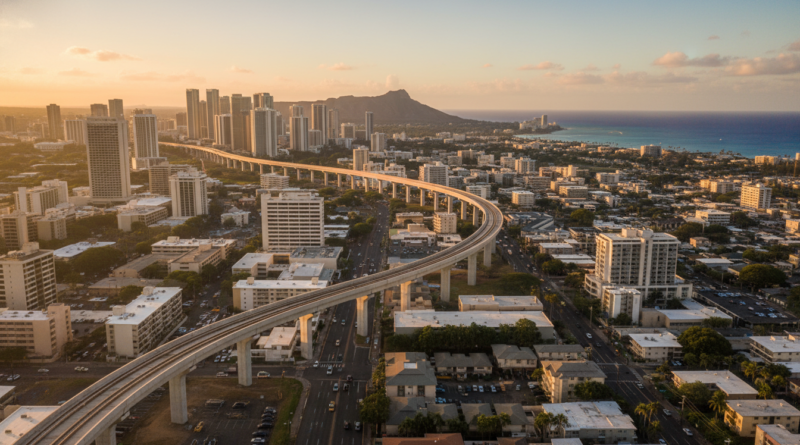
Oahu Rail Authority Releases Revised Timeline for Final Phase to Ala Moana
The Honolulu Authority for Rapid Transportation announced Wednesday a revised timeline for completing the final stretch of the rail project to Ala Moana Center, pushing back the anticipated opening date as the agency grapples with ongoing construction challenges and budget constraints.
The updated schedule shows the final 4.1-mile segment from Middle Street to Ala Moana could open as late as 2031, representing a two-year delay from previous projections. The revision comes as HART continues to navigate elevated construction costs and technical complexities in building through dense urban areas of Kalihi and downtown Honolulu.
HART Executive Director Lori Kahikina said the agency is taking a more conservative approach to project timelines after years of overly optimistic projections. The authority has faced criticism from city and state officials for repeatedly missing deadlines since groundbreaking in 2011.
“We’re committed to providing realistic expectations to the public while ensuring we deliver a safe, reliable transit system,” Kahikina said during Wednesday’s board meeting at HART headquarters on Halekauwila Street. “This revised timeline reflects current market conditions and allows for unforeseen challenges that typically arise in complex infrastructure projects.”
Phased Opening Strategy
The new timeline maintains HART’s phased opening approach, with the first segment from East Kapolei to Halawa set to begin passenger service by late 2025. The Middle Street to Ala Moana segment, considered the most technically challenging portion of the 20-mile elevated rail line, will follow in phases.
Construction crews are currently working on elevated guideway sections through Kalihi and approaching the Honolulu Harbor area. The project’s most complex engineering challenges lie ahead, including building stations at Kalihi-Palama, Honolulu Community College, and downtown’s Civic Center area.
The harbor crossing and downtown corridor require specialized construction techniques due to proximity to existing buildings, utilities, and the need to maintain traffic flow on busy arterials like Nimitz Highway and Ala Moana Boulevard.
Budget Pressures Mount
HART’s latest cost projections show the entire rail project now estimated at $12.4 billion, up from the original $5.1 billion budget approved by voters in 2008. The federal government has committed $1.55 billion through the Federal Transit Administration’s New Starts program, but local funding sources remain strained.
The revised timeline aims to spread construction costs over a longer period, potentially easing pressure on Honolulu’s half-percent general excise tax surcharge that funds much of the local share. However, extending the construction schedule also increases overall project costs due to inflation and extended overhead expenses.
City Council Transportation Committee Chair Tommy Waters expressed frustration with the continued delays during Wednesday’s council session at Honolulu Hale. Waters represents District 4, which includes portions of the rail route through Kalihi and downtown.
“Our residents have been incredibly patient with this project, but they deserve honest timelines and accountability,” Waters said. “Every delay means more years of traffic disruption and more taxpayer dollars spent on what was supposed to be a transformative transit system.”
Community Impact
The extended timeline has significant implications for Oahu residents, particularly those living in West Oahu communities like Kapolei, Ewa Beach, and Waipahu who were counting on rail service to ease their daily commutes to urban Honolulu job centers.
Business owners along the rail route continue to deal with construction-related impacts, including reduced parking, noise, and limited access to their establishments. Many had planned business expansions or relocations around the original completion dates.
The delay also affects transit-oriented development projects near planned rail stations, as developers and property owners adjust their timelines for mixed-use housing and commercial projects designed to capitalize on rail ridership.
Looking Ahead
HART officials said they will provide quarterly progress updates and adjust timelines as needed based on actual construction progress. The authority is exploring value engineering opportunities to reduce costs without compromising safety or functionality of the rail system.
Federal transit officials continue to monitor the project closely, and any significant additional delays could jeopardize remaining federal funding commitments. The FTA has already required enhanced oversight procedures due to the project’s cost increases and schedule delays.
For Honolulu residents, the revised timeline means several more years of construction disruption before experiencing the promised benefits of grade-separated transit service connecting West Oahu to the urban core. The project’s ultimate success will depend on HART’s ability to meet these latest projections while controlling costs and maintaining public support for what remains one of the most ambitious infrastructure projects in Hawaii’s history.