
City Pays $4.5M for Chinatown Corner Lot — and Plans to Turn It Into Affordable Housing
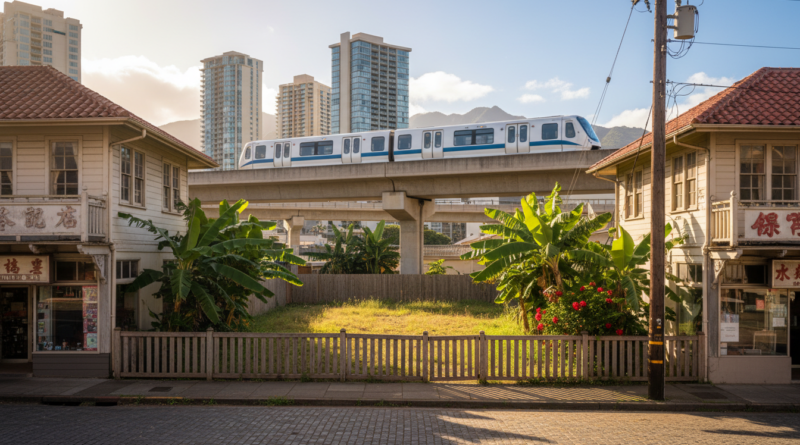
The City and County of Honolulu has acquired a prime corner lot in Chinatown for $4.52 million, marking a significant investment in transit-oriented affordable housing development near the planned rail corridor.
The 8,231-square-foot parcel at the intersection of North Pauahi and River Streets was purchased in April as part of the city’s broader strategy to address Honolulu’s housing crisis while supporting revitalization efforts in the historic district.
Located just blocks from the planned Chinatown rail station, the property represents a strategic acquisition that aligns with the city’s transit-oriented development goals. The site’s proximity to existing bus lines, businesses, and cultural landmarks makes it an ideal candidate for affordable housing that could serve both longtime residents and newcomers to the area.
“This acquisition demonstrates our commitment to creating affordable housing opportunities in areas where residents can access jobs, services, and transportation without relying solely on personal vehicles,” said Deputy Managing Director Michael Formby in a statement to local media.
The purchase comes at a time when Chinatown is experiencing renewed development interest, driven partly by anticipation of the rail system’s completion. Property values in the area have steadily increased over the past several years, making the city’s proactive acquisition particularly timely.
Strategic Location for Transit-Oriented Development
The corner lot sits within walking distance of numerous Chinatown staples, including the Cultural Plaza, Maunakea Marketplace, and the bustling Hotel Street corridor. Its location offers future residents easy access to small businesses, restaurants, and cultural institutions that define the neighborhood’s character.
City planners have long identified Chinatown as a priority area for transit-oriented development due to its existing infrastructure and walkable urban environment. The neighborhood’s grid street pattern and compact layout make it well-suited for higher-density residential development that doesn’t require extensive new infrastructure investments.
The acquisition also supports ongoing efforts to maintain Chinatown’s diverse economic and cultural ecosystem. By ensuring affordable housing remains part of the neighborhood mix, city officials hope to prevent the displacement of longtime residents and small businesses that often accompanies gentrification.
Timeline and Development Process
While the city has not yet released detailed development timelines, the project will need to navigate several planning and approval processes before construction can begin. The site will likely require environmental assessments and community input sessions, typical steps for city-sponsored affordable housing developments.
The project aligns with Mayor Rick Blangiardi’s administration’s goal of creating 10,000 new housing units by 2030, with a significant portion designated for residents earning less than the area median income. Chinatown’s central location and existing infrastructure make it a cost-effective area for meeting these targets.
City officials indicate the development will likely include a mix of studio, one-bedroom, and two-bedroom units designed to serve various household types, from young professionals to small families and seniors.
Broader Chinatown Revitalization Context
The property acquisition represents just one piece of a larger puzzle aimed at balancing Chinatown’s historic preservation with contemporary development needs. The neighborhood has seen increased investment in recent years, including streetscape improvements, new business openings, and infrastructure upgrades.
However, longtime community advocates have expressed concerns about ensuring that revitalization efforts benefit existing residents rather than displacing them. The city’s direct investment in affordable housing could help address these concerns by maintaining economic diversity in the area.
The timing of the purchase also reflects broader trends in urban development, where cities nationwide are prioritizing housing development near transit corridors to reduce car dependency and support climate goals.
For Honolulu residents, this acquisition signals the city’s willingness to make significant financial commitments to address the housing shortage. The $4.52 million investment, while substantial, represents a relatively modest cost compared to the potential long-term benefits of adding affordable housing units in a central, transit-accessible location.
As the rail project moves toward completion and Chinatown continues evolving, this corner lot could become a model for how the city balances development pressures with community needs. The success of this project may influence similar acquisitions and development strategies in other transit-oriented areas across Oahu.
