
Kakaako’s Biggest Affordable Housing Project in Years Set to Break Ground: Inside Kahuina
A massive affordable housing project that could help ease Honolulu’s housing crunch is moving closer to reality in Kakaako, with Stanford Carr Development’s ambitious Kahuina complex expected to break ground in 2026.
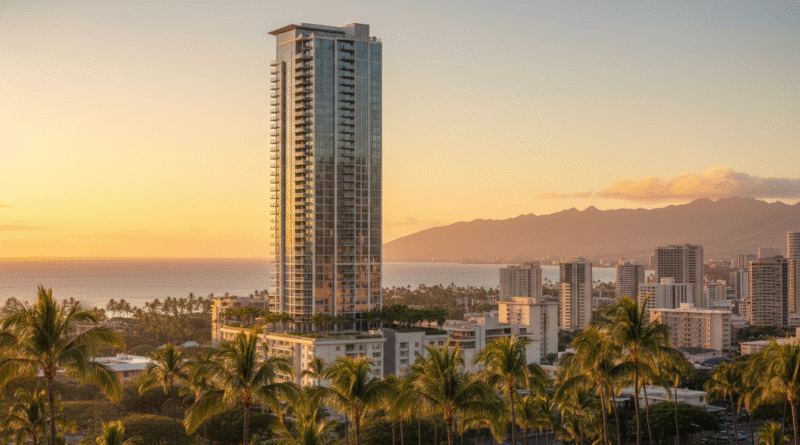
The 861-unit development represents the largest affordable housing initiative to hit the urban core in years, with 60% of its units designated as workforce and affordable housing. Located on a 4.4-acre site bounded by Ala Moana Boulevard, Kamani Street, and Cooke Street, Kahuina will rise as twin towers reaching up to 400 feet — making it among the tallest residential buildings in Hawaii.
The project is a cornerstone of Kamehameha Schools’ broader Kakaako master plan, which aims to transform 29 acres of the former industrial district into a mixed-use community. With Honolulu’s median home price hovering around $1 million and rental costs squeezing local families out of urban areas, developments like Kahuina are increasingly seen as critical to maintaining economic diversity in the city center.
Who Qualifies and What It Costs
The affordable units will target households earning between 80% and 140% of Area Median Income (AMI), translating to annual incomes of roughly $76,000 to $133,000 for a family of four. This income bracket captures many essential workers — teachers, firefighters, nurses, and service industry employees — who often struggle to find housing within reasonable commuting distance of their jobs.
Market-rate units will likely command premium prices given the location’s proximity to downtown, Ala Moana Center, and planned rail transit connections. The development sits just blocks from the planned Keeaumoku rail station, positioning residents for easy access to the island’s emerging transit network.
“Projects like Kahuina are essential for keeping working families in our urban core,” said John Whalen, president of the Building Industry Association of Hawaii. “When we lose workforce housing in areas like Kakaako, we push essential workers further west, creating longer commutes and more traffic for everyone.”
Retail Component Aims to Activate Street Level
Beyond residential units, Kahuina will include 42,000 square feet of ground-floor retail space designed to activate the pedestrian experience along Ala Moana Boulevard. The retail component reflects broader planning goals to create a walkable neighborhood rather than just another collection of residential towers.
The development joins other major Kakaako projects in Kamehameha Schools’ pipeline, including the completed Ke Kilohana and planned Our Kakaako mixed-use phases. Together, these developments are reshaping what was once a light-industrial area into Honolulu’s densest residential neighborhood.
Construction Timeline and Economic Impact
Stanford Carr Development expects to begin construction in 2026, with completion targeted for 2029. The multi-year construction phase will generate hundreds of construction jobs and inject millions into the local economy through materials, equipment, and services.
The project still requires final city approvals and building permits, though Stanford Carr’s track record with previous Kakaako developments like Modera and Lincoln suggests strong momentum. The developer has successfully navigated the complex approval process for multiple high-rise projects in the area.
Financing for the affordable housing component will likely involve a mix of private investment, tax credits, and potentially public subsidies — a common structure for workforce housing developments in Hawaii’s challenging construction environment.
Addressing Honolulu’s Housing Shortage
Kahuina represents a significant addition to Honolulu’s affordable housing stock at a time when the city faces an estimated shortage of over 22,000 units. The 60% affordable designation exceeds typical requirements and reflects growing recognition that market-rate development alone cannot address the housing crisis.
The project’s location in transit-oriented Kakaako also aligns with planning goals to concentrate density near job centers and transportation hubs, potentially reducing car dependency for residents.
For prospective residents, Stanford Carr Development plans to release more details about the application process and unit specifications as the project moves through final approvals. Given the shortage of affordable housing in urban Honolulu, demand will likely far exceed the available units.
As Kakaako continues evolving from industrial district to residential neighborhood, Kahuina will test whether large-scale affordable housing can successfully integrate with market-rate development. For thousands of working families priced out of urban living, the answer could determine whether they can afford to call downtown Honolulu home.