
Honolulu Museum of Art Opens ‘Quiet Luxury’ — The Edo-Period Fashion Show You Didn’t See Coming
The Honolulu Museum of Art is serving up a fashion rebellion centuries in the making with its latest exhibition, “Quiet Luxury: Subversive Fashion in the Edo Period,” opening May 22. The show explores how 17th-century Japanese merchants quietly defied government restrictions through exquisitely understated kimono and textiles — a concept that might sound surprisingly familiar to anyone scrolling through today’s fashion feeds.
During Japan’s Edo period (1603-1868), the ruling class implemented strict sumptuary laws dictating what different social classes could wear. Merchants, despite their growing wealth, were legally forbidden from displaying their prosperity through flashy colors, luxurious fabrics, or ostentatious designs.
But prohibition has never been great at stopping human creativity.
Rather than accepting these restrictions, merchant families developed what the exhibition calls “subversive sophistication” — garments that appeared modest at first glance but revealed incredible artistry and expensive materials upon closer inspection. Think subtle geometric patterns woven with costly silk threads, or kimonos dyed in complex gradations of a single, seemingly simple color.
“These merchants created a visual language of resistance,” said Dr. Shawn Eichman, HoMA’s curator of Asian art. “They found ways to communicate status, taste, and wealth through restraint rather than excess. It’s fascinating how relevant this feels to contemporary fashion conversations about quiet luxury versus logo-heavy brands.”
The parallels to today’s “stealth wealth” trend aren’t coincidental. From Hermès bags with no visible logos to The Row’s minimalist designs that cost more than most people’s rent, the idea that true luxury whispers rather than shouts has deep historical roots.
Hidden in Plain Sight
The exhibition showcases approximately 40 pieces from HoMA’s permanent collection alongside loans from private collectors. Visitors will encounter kimono featuring “forbidden” colors achieved through innovative dyeing techniques, obi sashes with intricate patterns visible only when worn, and accessories that demonstrate remarkable craftsmanship hidden beneath deceptively simple exteriors.
One standout piece is an 18th-century merchant’s kosode (under-kimono) that appears to be plain brown silk from across the room. Step closer, and intricate woven patterns emerge — cherry blossoms and flowing water rendered in threads so fine they’re barely perceptible unless you’re looking for them.
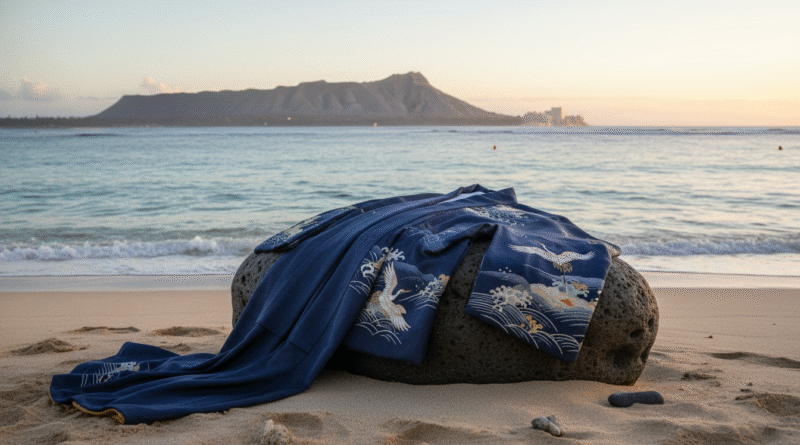
Another highlight features textiles dyed using expensive indigo in dozens of subtle variations, creating what appears to be a monochromatic garment that actually contains an entire spectrum of blues. The technique required master-level skill and costly materials, but the result looked appropriately modest to government inspectors.
The exhibition design itself echoes this theme of hidden complexity. Display cases are arranged to encourage close examination, with detailed lighting that reveals the intricate work that might be missed in casual viewing. Interactive elements allow visitors to explore the weaving techniques and dyeing processes that made this subtle rebellion possible.
Local Connections
Hawaii’s own complex relationship with fashion and cultural expression adds another layer to the exhibition’s relevance. The islands have long been a place where different cultural aesthetics blend and sometimes clash, creating their own forms of quiet resistance and adaptation.
The museum has planned programming to explore these connections, including a June workshop on traditional Japanese dyeing techniques and a July panel discussion about fashion as cultural expression across Pacific Island cultures.
HoMA’s decision to frame this historical exhibition through the lens of contemporary fashion trends reflects the museum’s ongoing efforts to make classical art feel relevant to modern audiences. Located in the heart of downtown Honolulu’s arts district, the museum has increasingly positioned itself as a bridge between historical and contemporary cultural conversations.
The exhibition runs through August 18, giving visitors plenty of time to discover the rebellious sophistication of Edo-period fashion. In an era when our own relationship with luxury, consumption, and self-expression feels increasingly complex, these 300-year-old garments offer surprisingly contemporary lessons about the power of subtlety.
For Honolulu residents interested in fashion, history, or just curious about how people have always found creative ways to bend the rules, “Quiet Luxury” promises to reveal that the most interesting statements are often the ones you have to look closely to see.