
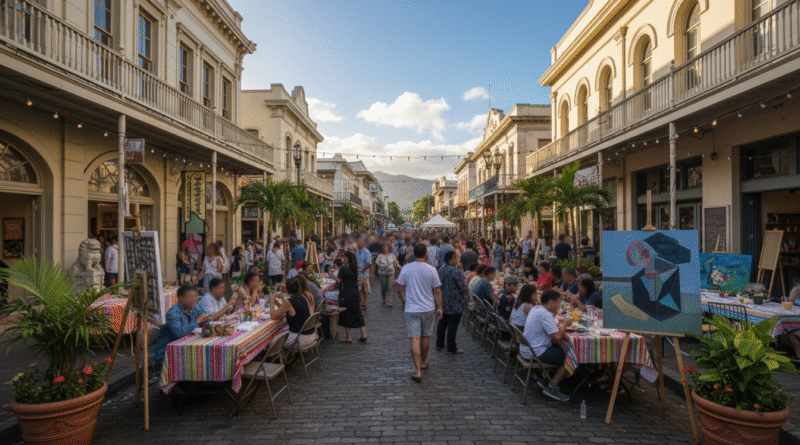
Chinatown’s Nuʻuanu Ave Goes Car-Free All May for HEART District Street Festival
The heart of Chinatown is beating a little differently this month. Nuʻuanu Avenue between Hotel and King streets has traded honking horns for footsteps, transforming into a car-free cultural corridor through May 29 as part of the inaugural HEART District Street Festival.
The Downtown Art Center spearheaded the month-long experiment, working with local arts organizations to celebrate the neighborhood’s identity as Honolulu’s Heritage, Entertainment, Arts, Restaurants, and Theatre district. What was once a busy thoroughfare now hosts pop-up vendors, street performers, and outdoor dining spaces that spill onto the asphalt.
“We wanted to give people a chance to really experience Chinatown at street level,” said Maria Santos, executive director of the Downtown Art Center. “When you remove the cars, you create space for community to happen naturally.”
A Neighborhood Redefined
The pedestrian promenade runs through the cultural spine of historic Chinatown, connecting landmarks like the Hawaii Theatre Center and Chinatown Cultural Plaza. Local businesses have embraced the opportunity, with restaurants extending their seating areas and galleries hosting outdoor exhibitions.
At The ARTS at Marks Garage, artists have set up easels along the sidewalk, creating plein air works while festival-goers watch. The gallery’s monthly First Friday event, typically confined to indoor spaces, now flows seamlessly into the street.
Food vendors from nearby establishments like Lucky Belly and Pig & the Lady have joined traditional Filipino and Vietnamese businesses in offering street-side service. The result is an impromptu food festival that changes daily, reflecting the neighborhood’s diverse culinary landscape.
Community Response
The response from residents and visitors has been overwhelmingly positive, according to organizers. Families with strollers navigate the area more easily, while elderly residents have found new gathering spots on benches placed throughout the corridor.
“I’ve lived in Chinatown for thirty years, and I’ve never seen it this alive during the day,” said longtime resident James Wong, who operates a traditional medicine shop on Nuʻuanu Avenue. “People are walking slower, looking around, actually talking to each other.”
The festival has also provided a platform for local musicians and performers who typically rely on venues like the Hawaii Theatre Center or smaller clubs. Street musicians now perform throughout the day, creating an ever-changing soundtrack for visitors exploring the area.
Economic Impact
Early indicators suggest the pedestrian experiment is boosting foot traffic for area businesses. Several shop owners report increased sales, particularly during lunch hours and evenings when office workers from downtown join tourists and residents in the car-free zone.
The timing coincides with ongoing revitalization efforts in Chinatown, including new residential developments and the renovation of historic buildings. The street festival offers a preview of what the neighborhood could become with more pedestrian-friendly infrastructure.
Local restaurateur Andrew Le, whose establishments anchor several corners along the route, noted the festival’s impact on evening business. “People are lingering longer, trying different places, making it an experience rather than just a quick meal,” he said.
Challenges and Adaptations
The temporary closure hasn’t been without logistical challenges. Delivery trucks must navigate alternate routes, and some businesses initially worried about losing customers who typically drive to the area. However, organizers worked closely with the city to ensure emergency vehicle access and coordinate with affected businesses.
The festival has also highlighted the need for better public transportation connections to Chinatown. Many visitors have discovered the neighborhood is easily accessible via TheBus routes and the downtown trolley system.
Looking Ahead
As the month-long experiment nears its end, conversations are already underway about making aspects of the program permanent. The Downtown Art Center is collecting feedback from businesses, residents, and visitors to present to city planners.
The success of the HEART District Street Festival could influence broader discussions about pedestrian-friendly development in downtown Honolulu. Similar car-free initiatives in cities like San Francisco and Portland have led to permanent changes in urban planning approaches.
For now, Honolulu residents have until May 29 to experience Chinatown in a new way. The festival continues daily with varying programming, from morning tai chi sessions to evening cultural performances. Whether this glimpse of a more pedestrian-friendly Chinatown becomes reality will depend on the community response and political will to reimagine one of Honolulu’s most historic neighborhoods.