
King Kamehameha Day Parade Route, Lei Draping Ceremony, and Everything Happening June 11
Tomorrow marks one of Hawaii’s most cherished traditions as Honolulu prepares to honor King Kamehameha I with the annual King Kamehameha Day celebration on June 11. The statewide holiday brings together thousands of residents and visitors for a day of cultural celebration that showcases the islands’ rich Hawaiian heritage through colorful pageantry and community gathering.
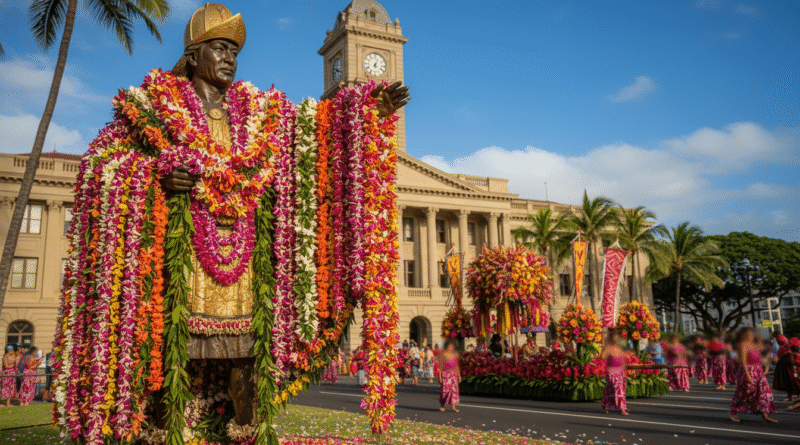
The festivities begin early at Aliʻiōlani Hale, the historic courthouse building across from ʻIolani Palace, where the traditional lei draping ceremony takes place at the iconic King Kamehameha statue. This solemn yet joyful ritual sees dozens of lei makers and community members adorn the bronze monarch with fragrant flower garlands in a display that transforms the statue into a living tribute.
“The lei draping is really the heart of the celebration,” said longtime Downtown Honolulu resident Maria Santos, who has participated in the ceremony for over a decade. “It’s a way for our community to show respect and aloha to the king who united our islands.”
Following the lei ceremony, all eyes turn to the King Kamehameha Floral Parade, which winds its way from ʻIolani Palace through the heart of Honolulu to Kapiʻolani Park in Waikiki. The parade route travels down King Street, continues along Kalākaua Avenue, and concludes at the park’s bandstand area.
Parade Highlights and Route Details
The floral parade represents one of Hawaii’s most spectacular public celebrations, featuring elaborate floats decorated entirely with fresh tropical flowers and foliage. Parade participants include representatives from each Hawaiian island, royal court members, and cultural organizations showcasing traditional Hawaiian customs.
Perhaps the most anticipated parade element involves the pau riders – skilled equestrians dressed in formal Hawaiian riding attire who demonstrate the elegant horsemanship tradition that became popular during the Hawaiian Kingdom era. These riders, mounted on beautifully decorated horses, represent various Hawaiian organizations and add regal pageantry to the procession.
Marching bands from across the islands provide musical accompaniment, playing both traditional Hawaiian melodies and contemporary arrangements that celebrate island culture. School groups, hula halau, and community organizations also participate, creating a diverse showcase of Hawaiian pride.
The parade typically begins around 9 a.m. from ʻIolani Palace grounds and takes approximately two hours to complete the route to Kapiʻolani Park. Spectators line the streets throughout Downtown Honolulu and Waikiki, with prime viewing spots at Thomas Square, along Kalākaua Avenue, and near the park’s finish line.
Cultural Significance and Community Impact
King Kamehameha Day holds profound meaning for Hawaii residents as it honors the monarch who unified the Hawaiian Islands under one rule in the early 1800s. Kamehameha I, also known as Kamehameha the Great, established the Kingdom of Hawaii and created lasting cultural and political foundations that continue to influence island life today.
For many Honolulu families, the holiday represents an opportunity to connect with Hawaiian culture and teach younger generations about their island heritage. The celebration draws participants from across the Pacific, including representatives from other Polynesian cultures who share historical and cultural ties with Hawaii.
Local businesses throughout Waikiki and Downtown Honolulu also benefit from the increased foot traffic and tourism the parade generates. Many shops and restaurants offer special King Kamehameha Day promotions, while lei vendors see particularly strong sales in the days leading up to the celebration.
The event also serves as a platform for Hawaiian cultural education, with many parade participants distributing information about Hawaiian history, language preservation efforts, and cultural practices that remain relevant in modern Hawaii.
Planning Your Participation
Those planning to attend should arrive early to secure good viewing spots along the parade route. Downtown Honolulu offers numerous parking options, though spaces fill quickly on parade day. Many residents choose to take TheBus or rideshare services to avoid parking challenges.
The celebration continues at Kapiʻolani Park after the parade concludes, with cultural demonstrations, food vendors, and entertainment that typically extends into the afternoon. Families often bring picnic supplies and make a full day of the festivities.
As Hawaii continues to navigate questions about cultural preservation and authentic representation, King Kamehameha Day stands as a cornerstone event that brings together diverse communities in celebration of Hawaiian heritage. For Honolulu residents, tomorrow’s celebration offers both a day off work and a meaningful opportunity to participate in one of the islands’ most significant cultural traditions.