‘Ocean of Peace’ at Honolulu Hale Showcases Micronesian Art Through the Lens of Pacific Identity
A groundbreaking exhibition featuring contemporary Micronesian artists has opened at Honolulu Hale, offering local residents a rare opportunity to engage with Pacific Islander art that speaks directly to themes of cultural identity, migration, and belonging.
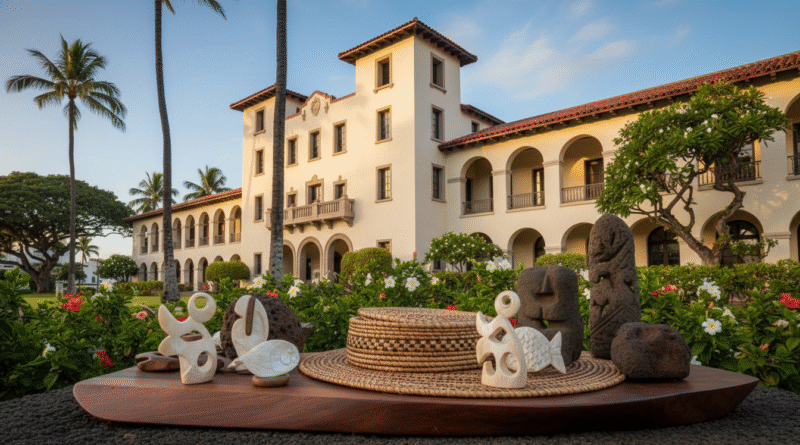
“Ocean of Peace,” running through June 11, presents works by artists from across Micronesia—including the Federated States of Micronesia, Palau, and the Marshall Islands—in the civic building’s main gallery space. The free exhibition showcases painting, sculpture, traditional weaving, and multimedia installations that explore what it means to maintain Indigenous Pacific identity across vast ocean distances.
The timing feels particularly relevant given ongoing community conversations about Micronesian migration to Hawaii. Over the past two decades, thousands of Micronesian citizens have relocated to Hawaii under the Compact of Free Association, bringing rich cultural traditions while navigating complex questions of integration and acceptance.
“This exhibition creates space for Micronesians to tell their own stories through art,” said Maria Kawelo, cultural programs coordinator for the Honolulu Sister City Foundation, which organized the show. “Too often, Pacific Islander communities are spoken about rather than spoken with. Here, the artists are leading the conversation.”
Bridging Traditional and Contemporary
The exhibition features twelve artists whose works span traditional craft techniques and contemporary artistic practices. Visitors will find intricate woven mats and baskets displayed alongside abstract paintings and video installations that incorporate ocean sounds and navigation imagery.
One standout piece is a large-scale installation by Palauan artist Elena Ngiraked that combines traditional pandanus weaving with LED lighting to create what she describes as a “constellation map” representing the movement of Pacific peoples across generations. The work invites viewers to trace pathways of light that mirror traditional star navigation methods.
Marshall Islands-based painter Jorik Reimers contributes a series of canvases that blend traditional motifs with contemporary concerns about climate change and rising sea levels. His vibrant works incorporate coral imagery alongside abstract representations of currents and tides, speaking to both cultural heritage and environmental urgency.
Community Gathering Space
Beyond the visual art, “Ocean of Peace” includes cultural programming designed to foster dialogue between Micronesian and broader Hawaii communities. Weekend workshops will feature traditional weaving demonstrations, storytelling sessions, and panel discussions about Pacific Islander experiences in contemporary Hawaii.
The exhibition’s location at Honolulu Hale—the city’s civic center in downtown Honolulu—carries symbolic weight. By placing Micronesian art in this governmental space, organizers hope to emphasize these communities’ legitimate place in Hawaii’s civic and cultural landscape.
“Art has this unique ability to build empathy and understanding,” Kawelo noted. “When people see the beauty and complexity of Micronesian culture through these works, it creates openings for deeper conversation about what it means to be Pacific family.”
Pacific Islander Renaissance
The exhibition arrives during what many observers describe as a renaissance in Pacific Islander arts visibility. From the success of films like “Moana” to increasing recognition of Native Hawaiian artists, Pacific voices are gaining unprecedented platforms in contemporary culture.
“Ocean of Peace” contributes to this momentum by specifically centering Micronesian perspectives, which have often remained overshadowed by larger Pacific Islander populations in Hawaii and the continental United States.
Several of the featured artists will travel to Honolulu for the exhibition’s opening reception and educational programming. Their presence offers local audiences direct opportunities to engage with creators whose work reflects lived experiences of island life, ocean travel, and cultural preservation.
Looking Forward
The exhibition runs Tuesday through Saturday, 9 a.m. to 4 p.m., with extended hours until 7 p.m. on Thursdays. Gallery talks are scheduled for the first Saturday of each month, with the final presentation set for June 7.
For Honolulu residents, “Ocean of Peace” offers more than aesthetic appreciation—it provides a window into the experiences of neighbors and community members whose stories often go untold in mainstream spaces. As Hawaii continues to evolve as a multicultural society, exhibitions like this create essential opportunities for cross-cultural understanding and celebration.
The show also signals growing institutional support for Pacific Islander arts programming in Hawaii, potentially paving the way for future collaborations that center Indigenous Pacific voices in the region’s cultural landscape.