
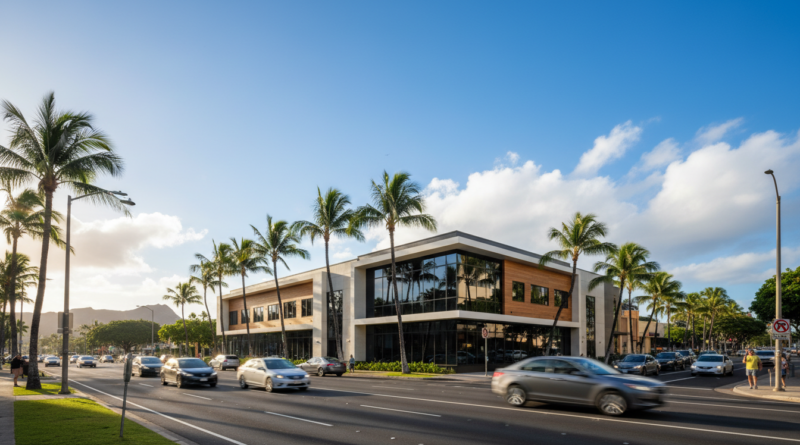
Chick-fil-A Opens Its Largest Hawaii Location Yet on Kapiolani Boulevard
Chick-fil-A’s newest Hawaii location opened its doors April 2 at 1837 Kapiolani Boulevard, marking the chain’s largest footprint in the islands with a sprawling restaurant that signals intensifying competition for prime Honolulu real estate.
The two-story location spans significantly more space than the chain’s existing Oahu outposts in Kahala Mall and Ka Makana Ali’i, featuring expanded seating areas, a full-service kitchen, and drive-through capabilities that cater to both locals and the steady stream of tourists traveling between downtown and Waikiki.
The opening represents more than just another fast-food addition to Kapiolani Boulevard’s evolving commercial landscape. It underscores how national chains are willing to pay premium prices for strategic locations along Honolulu’s most trafficked corridors, potentially pricing out smaller local operators.
Prime Real Estate Competition Heats Up
The Kapiolani Boulevard corridor has become increasingly attractive to mainland chains seeking Hawaii market share. The area offers the perfect combination of local residential density, tourist foot traffic, and visibility for brands looking to establish themselves in the islands.
“We’re seeing national franchises compete more aggressively for these high-visibility locations,” said Michael Torres, a commercial real estate broker with Island Properties Group. “The rents they’re willing to pay can be double or triple what a local restaurant operator might afford, which fundamentally changes the neighborhood dining landscape.”
The new Chick-fil-A sits strategically between the University of Hawaii at Manoa and Waikiki, positioning itself to capture both student traffic and visitors. The location previously housed various local businesses over the years, reflecting the ongoing transformation of this stretch of Kapiolani.
This expansion comes as other major chains have similarly invested in premium Honolulu locations. In-N-Out Burger made headlines with its Dillingham Boulevard location, while Raising Cane’s recently opened on Keeaumoku Street, all targeting the same demographic of locals and tourists seeking familiar mainland dining options.
Impact on Local Food Scene
The proliferation of mainland chains along major Honolulu arteries raises concerns about preserving the city’s unique culinary identity. Local plate lunch shops, mom-and-pop restaurants, and family-owned establishments that have defined Honolulu’s food scene for generations face increasing pressure from well-funded competitors.
The Kapiolani corridor has historically been home to local favorites like Rainbow Drive-In, Zippy’s, and numerous ethnic restaurants that reflect Hawaii’s diverse population. These establishments now compete not just on food quality and cultural authenticity, but also on marketing budgets and operational efficiency.
However, some industry observers note that mainland chains can also drive overall foot traffic to commercial areas, potentially benefiting neighboring local businesses. The key lies in maintaining balance and ensuring local operators have opportunities to thrive alongside national brands.
The new Chick-fil-A incorporates some local elements in its design and menu offerings, including Hawaii-specific breakfast items and décor that reflects island culture. The company has also emphasized its commitment to community involvement and local hiring practices.
Economic Development Implications
From an economic development perspective, major chain openings bring jobs and tax revenue to the city. The Kapiolani location is expected to employ approximately 80 full- and part-time workers, with management positions paying competitive wages for the local market.
The restaurant also represents significant capital investment in Honolulu’s urban core, contributing to the ongoing revitalization of areas between downtown and Waikiki that have seen increased development activity in recent years.
City planners have generally welcomed commercial development along transit corridors like Kapiolani Boulevard, especially as the rail system begins operations. Mixed-use developments and dining options near transit stops align with long-term urban planning goals.
Looking Ahead
The success of this expanded Chick-fil-A location will likely influence other chains considering Hawaii expansion plans. The restaurant industry will be watching closely to see whether Honolulu can support multiple large-format mainland chains while maintaining its distinctive local dining culture.
For local restaurant owners and aspiring entrepreneurs, the challenge becomes finding ways to compete effectively while preserving what makes Hawaii’s food scene special. This might mean emphasizing locally-sourced ingredients, cultural authenticity, or community connections that national chains cannot easily replicate.
As Honolulu continues evolving into a more densely developed urban center, the balance between welcoming economic investment and preserving local character will remain a critical consideration for both city officials and residents who value the neighborhoods that make their city unique.
