
Hawaii Housing Costs Leave Residents Facing ‘Impossible Choices,’ New Factbook Finds
The numbers tell a stark story that many Hawaiʻi residents already know by heart: housing costs here are crushing families, forcing impossible decisions that are reshaping communities across Oahu.
The newly released 2026 Hawaiʻi Housing Factbook confirms what local families have been experiencing daily — the islands continue to hold the dubious distinction of having the nation’s highest housing costs. The comprehensive report documents a crisis that’s pushing longtime residents to choose between staying in their homeland, accepting overcrowded living conditions, or facing homelessness.
On Oahu, the median home price now sits at $1.2 million, while the median household income hovers around $88,000. That gap means a typical family would need to spend more than 60% of their income on housing — far exceeding the 30% that financial experts consider affordable.
“We’re seeing three generations living in two-bedroom apartments because that’s the only way families can afford to stay,” said Maria Santos, executive director of the Oahu Housing Coalition. “People are making choices no one should have to make — between keeping their kids in local schools or having enough space for them to do homework.”
Downtown and Kakaako Feel the Squeeze
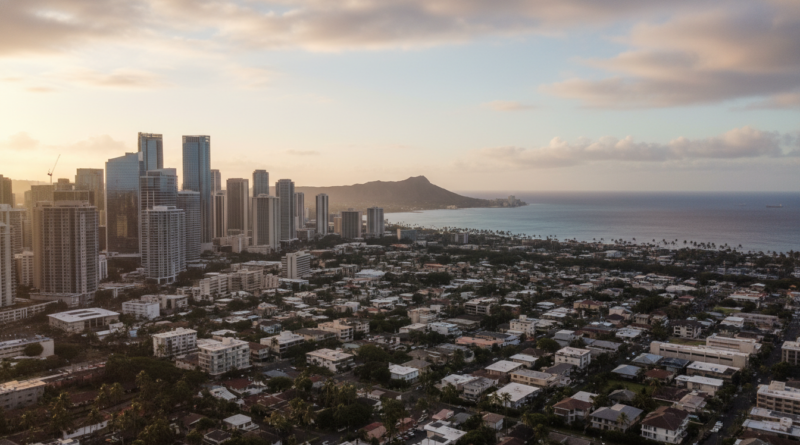
The crisis is particularly acute in urban Honolulu, where development has created a stark divide between luxury condos and affordable options. In Kakaako, new high-rises command prices starting at $800,000 for studio apartments, while longtime residents in nearby neighborhoods like Kalihi and Mayor Wright find themselves priced out of their own communities.
The factbook reveals that nearly 40% of Oahu renters are spending more than half their income on housing. In downtown Honolulu, that percentage jumps even higher, with service workers, teachers, and even some professionals struggling to find affordable options within commuting distance of their jobs.
The ripple effects extend far beyond individual families. Local businesses are losing employees who can no longer afford to live on the island. Schools are seeing teacher shortages partly attributed to housing costs. Even healthcare facilities are struggling to recruit and retain staff.
Overcrowding and Hidden Homelessness
The factbook documents a troubling trend of “hidden homelessness” — families doubling up in garages, living rooms, and other makeshift spaces that don’t show up in traditional homeless counts. This overcrowding is particularly common in West Oahu communities like Waianae and Nanakuli, where extended families pile into single-family homes.
The data shows that nearly 15% of Oahu households live in overcrowded conditions, defined as more than one person per room. For Native Hawaiian families, that number rises to 22%, reflecting both cultural values around extended family living and economic necessity.
These conditions create stress on everything from children’s academic performance to public health outcomes. Schools report increases in tardiness and behavioral issues among students who lack quiet spaces to sleep or study at home.
Policy Responses and Community Solutions
City and state officials are scrambling to address the crisis through various initiatives. The Honolulu City Council recently approved zoning changes to allow more accessory dwelling units, while the state legislature is considering expanded funding for affordable housing programs.
However, community advocates argue these measures aren’t keeping pace with the problem. The factbook notes that Hawaiʻi would need to build approximately 50,000 new affordable housing units over the next decade just to meet current demand — a pace that far exceeds recent construction rates.
Grassroots organizations are stepping up with creative solutions. The Hawaiʻi Community Land Trust is working to keep properties permanently affordable, while co-housing initiatives are exploring ways to make shared living arrangements more sustainable and dignified.
Looking Ahead
The factbook serves as both a wake-up call and a roadmap for action. Its detailed neighborhood-by-neighborhood analysis provides policymakers with the data needed to target interventions more effectively.
For Honolulu residents, the report validates experiences that many have felt isolated in facing. It also highlights the urgent need for comprehensive solutions that address both immediate relief and long-term affordability.
As Santos puts it: “We’re at a tipping point where we either act decisively to preserve our communities, or we accept that Hawaiʻi becomes a place where only the wealthy can afford to call home.”
The full 2026 Hawaiʻi Housing Factbook is available online and will be presented to the state legislature next month as lawmakers consider housing-related bills for the upcoming session. Community meetings to discuss the findings are scheduled across Oahu throughout the summer.