King Kamehameha Day Celebration Features Historic Floral Parade Through Downtown
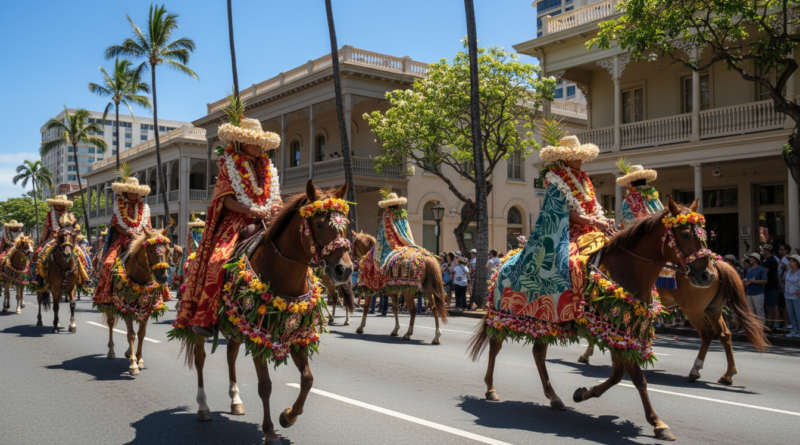
Downtown Honolulu will transform into a vibrant river of color and cultural pride this Saturday as the annual King Kamehameha Day Floral Parade winds through the city’s heart, celebrating Hawaii’s most revered monarch with one of the island’s most beloved traditions.
The parade, now in its 107th year, will begin at 9 a.m. at King and Richards streets before proceeding down King Street to Kalakaua Avenue, then along Kalakaua to Kapiolani Park. More than 100 entries are expected, featuring elaborate floral floats, pa’u riders representing each Hawaiian island, marching bands, and cultural groups from across Oahu.
“This parade embodies the true spirit of aloha and our connection to King Kamehameha’s legacy,” said Maria Kawamoto, executive director of the King Kamehameha Celebration Commission. “Every float tells a story, every lei represents hours of love and dedication from our community.”
The celebration honors King Kamehameha I, who united the Hawaiian Islands under one rule in the early 1800s. His bronze statue in downtown Honolulu will be draped with fresh lei during Friday’s lei draping ceremony, a tradition that draws thousands of spectators annually.
Island Pride on Display
Each island’s pa’u unit will showcase their unique colors and flowers during the parade. The Hawaii Island riders will sport red lehua and maile, while Oahu’s representatives will display yellow ilima and maile. Maui’s pa’u unit features pink lokelani, and Kauai riders will wear purple mokihana with maile.
The elaborate floral floats require months of preparation and thousands of fresh flowers. Local garden clubs, schools, and community organizations have been working since March to create their entries, many incorporating traditional Hawaiian plants like bird of paradise, plumeria, and ti leaves alongside imported blooms.
Spectrum Aloha, the parade’s presenting sponsor, will broadcast the event live on multiple platforms, allowing viewers statewide to experience the pageantry. The broadcast begins at 9 a.m. and continues until the last float reaches Kapiolani Park around noon.
Cultural Showcase Beyond the Parade
The festivities extend beyond the parade route with the King Kamehameha Celebration at Kapiolani Park immediately following the procession. This free family-friendly event features traditional Hawaiian music, hula performances, cultural demonstrations, and local food vendors.
The Royal Hawaiian Band, Hawaii’s only full-time municipal band and one of the oldest in the United States, will perform throughout the day. Founded in 1836 by King Kamehameha III, the band continues its tradition of providing musical accompaniment for state ceremonies and community celebrations.
Local hula halau from across Oahu will perform on multiple stages at the park, offering visitors an opportunity to experience authentic Hawaiian dance and chant. Cultural practitioners will also demonstrate traditional crafts including lauhala weaving, kapa making, and lei construction.
Traffic and Viewing Tips
City officials recommend arriving early for optimal viewing positions along the parade route. Popular spots include the sidewalks along King Street near Iolani Palace, the Honolulu Harbor area, and the stretch of Kalakaua Avenue in Waikiki.
Street closures will begin at 7 a.m. and continue until approximately 1 p.m. King Street will be closed from Punchbowl to Kalakaua, and portions of Kalakaua Avenue will be closed from King Street to Kapahulu Avenue. TheBus will operate on modified routes during the parade hours.
Spectators should bring sun protection, water, and folding chairs for comfort during the multi-hour celebration. Food trucks and vendors will be stationed at various points along the route and at Kapiolani Park.
Community Impact and Legacy
The King Kamehameha Day Celebration represents more than a parade – it serves as a vital cultural touchstone for Hawaii’s residents and an educational opportunity for visitors to understand the islands’ rich history.
Many of this year’s participants are multi-generational families who have contributed to the parade for decades. The Nakamura family of Kaimuki, for example, has created floral arrangements for the event for more than 30 years, passing down traditional techniques through four generations.
The celebration also provides significant economic impact for local flower growers, lei makers, and small businesses throughout Honolulu. Thousands of visitors from neighbor islands and the mainland attend the festivities, supporting hotels, restaurants, and retail establishments.
Saturday’s parade continues a tradition that connects modern Hawaii to its royal past while celebrating the cultural diversity that defines contemporary island life. For residents and visitors alike, it offers a rare glimpse into the pageantry and pride that have shaped Hawaii’s identity for more than a century.