Lei Day 2026: Kapiolani Park Marks May Day With Queen Coronation, Hula, and Competitive Lei Making
The sweet scent of plumeria and maile will fill the air at Kapiolani Park on May 1 as Honolulu celebrates its most cherished springtime tradition — Lei Day 2026. This year marks another milestone in the decades-old celebration that transforms the iconic Waikiki-adjacent park into a vibrant showcase of Hawaiian culture, bringing together thousands of residents and visitors for a day of competition, music, and aloha spirit.
The festivities kick off at 9 a.m. with the highly anticipated competitive lei-making contest, where skilled crafters from across Oahu will vie for top honors in categories ranging from traditional ti leaf and maile designs to innovative contemporary creations. Participants have just two hours to complete their masterpieces using fresh island flowers and foliage, making it one of the most exciting spectator events of the day.
“Lei Day represents the heart of what makes Hawaii special — our connection to the land, our respect for tradition, and our spirit of sharing aloha with everyone,” said Keoni Nakamura, cultural coordinator for the Honolulu Parks and Recreation Department. “Watching these artists work with such skill and passion, you really understand why lei-making is considered a sacred art form here.”
The celebration’s crown jewel, the Lei Queen coronation ceremony, begins at 11 a.m. on the main stage. Young women from across Oahu will compete for the coveted title, judged on their lei-making skills, knowledge of Hawaiian culture, and embodiment of the aloha spirit. The newly crowned queen will lead the traditional May Day parade around the park, accompanied by her court and hundreds of keiki carrying handmade lei.
Music and Dance Take Center Stage
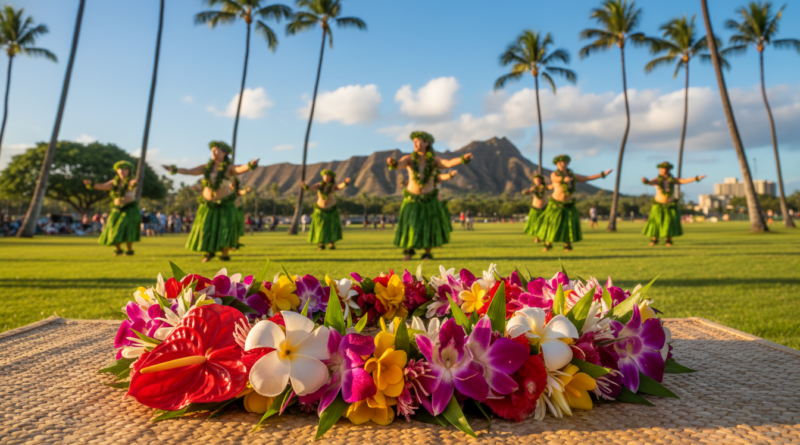
Traditional Hawaiian music and hula performances will grace multiple stages throughout the park from 10 a.m. to 4 p.m. Local hālau (hula schools) will perform both ancient kahiko and modern auana styles, while accomplished musicians share mele (songs) that tell the stories of Hawaii’s flowers and natural beauty.
The Kapiolani Park bandstand, a historic landmark dating back to 1956, will host the main musical performances featuring some of Oahu’s most beloved contemporary Hawaiian artists. Families are encouraged to bring beach mats and settle in for an afternoon of live entertainment with Diamond Head providing the perfect backdrop.
Food vendors will line the park’s perimeter, offering everything from traditional Hawaiian plate lunches to shave ice and malasadas. Local non-profit organizations will also set up booths sharing information about Hawaiian culture and environmental conservation efforts across the islands.
A Tradition Rooted in Aloha
Lei Day began in 1928 when poet and artist Don Blanding proposed establishing May 1 as a day to celebrate Hawaii’s lei-making tradition. The idea gained momentum when Grace Tower Warren, a local writer, organized the first official Lei Day celebration. Nearly a century later, the event has grown into one of Hawaii’s most beloved cultural celebrations.
The timing coincides with May Day celebrations worldwide, but Hawaii’s version uniquely honors the islands’ indigenous traditions while welcoming people of all backgrounds to participate. The saying “May Day is Lei Day in Hawaii” has become synonymous with the spirit of inclusion that defines island life.
Kapiolani Park, stretching across 300 acres between Waikiki and Diamond Head, provides the perfect setting for the celebration. Named after Queen Kapiolani, the park has been a gathering place for community events since the 1870s and remains one of Oahu’s most accessible green spaces.
Visitors planning to attend should arrive early, as parking around the park fills quickly by mid-morning. The city encourages using public transportation or rideshare services, with TheBus routes 8, 22, and 58 providing convenient access to the park. Folding chairs and sun protection are recommended, as much of the celebration takes place on the park’s open lawns.
Lei Day 2026 represents more than just a festival — it’s a living expression of Hawaiian values that continue to shape island communities. As Honolulu grows and evolves, events like this ensure that cultural traditions remain vibrant and accessible to new generations of kamaaina and malihini alike.
For those who can’t make it to Kapiolani Park on May 1, many local shopping centers and schools will host their own smaller Lei Day celebrations throughout the week, ensuring that the spirit of aloha reaches every corner of Oahu.