Skyline Segment 3 Goes Vertical: HART Completes Pier 732 as City Center Guideway Rises Toward Downtown
The Honolulu Authority for Rapid Transportation has reached a major milestone in the Skyline rail project’s third segment, completing Pier 732 and setting the stage for visible construction progress through Kalihi-Palama toward downtown Honolulu over the next two years.
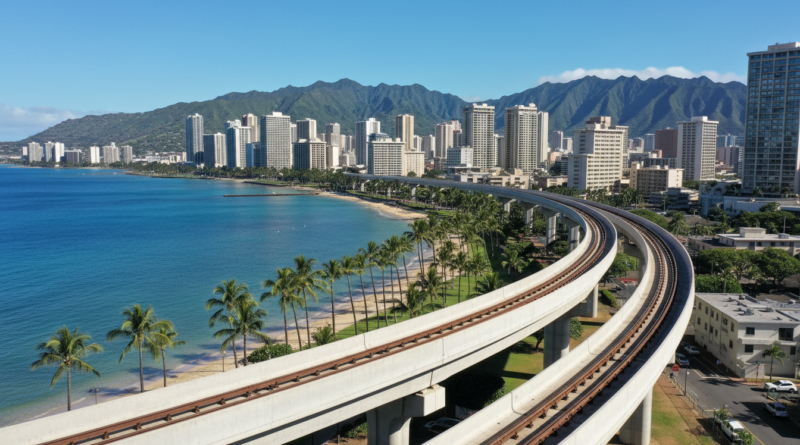
The completion of the 732nd pier marks a significant step forward for the city center guideway extension, which will eventually connect the current West Oahu line to downtown stations at Kalihi-Palama, Keeaumoku, Civic Center, and Ala Moana Center. Construction crews will now begin erecting concrete columns along the Segment 3 corridor, creating the elevated structure that will carry trains from Middle Street through the urban core.
The milestone comes as Skyline continues to exceed ridership expectations on its existing 11-mile route from East Kapolei to Halawa. The system recently recorded its highest single-day ridership since opening in June 2023, with more than 7,500 passengers using the service on a recent weekday.
“We’re seeing consistent growth in ridership, which validates the community’s appetite for rail transit,” said HART spokesperson Tina Yamaki. “Completing Pier 732 keeps us on track to bring that same convenient service to residents and visitors traveling to downtown Honolulu.”
Construction Timeline Accelerates
HART officials say pier construction will continue at an accelerated pace through 2026, with columns becoming increasingly visible along Dillingham Boulevard and into downtown. The authority has streamlined its construction process after lessons learned during the first two segments, which faced significant delays and cost overruns.
Segment 3 represents the most complex portion of the rail project, requiring coordination with existing utilities, traffic management in dense urban areas, and construction over active roadways. The 4.2-mile extension will add four stations to the system, with the Ala Moana Center stop serving as the terminus for the full 15.3-mile line.
The project’s progress has been closely watched by residents and businesses along the route, particularly in Kalihi-Palama where longtime community members have advocated for transit access to connect the neighborhood with downtown employment centers.
Current construction focuses on foundation work and pier installation, with guideway segments scheduled to begin installation in late 2025. HART expects the elevated structure to be substantially complete by early 2028, allowing for track installation and systems testing ahead of the planned 2031 opening.
Ridership Success Builds Support
The timing of the construction milestone coincides with growing confidence in Skyline’s ability to serve Oahu’s transportation needs. Recent ridership data shows steady increases in both daily and monthly passenger totals, with particularly strong growth during weekday morning and evening commute periods.
The success has drawn attention from transit advocates who view the rail system as crucial for reducing traffic congestion on H-1 freeway and surface streets. Average weekday ridership has grown from roughly 3,000 passengers during Skyline’s first months of operation to more than 5,500 passengers daily as of early 2026.
Tourism industry leaders have also taken note, seeing potential for the completed system to provide convenient access from West Oahu hotels to downtown Honolulu and Ala Moana Center. The rail line currently serves several hotel properties in Kapolei and will eventually connect to major shopping and employment destinations.
2031 Opening Target Remains
Despite past delays that pushed the project’s completion back nearly a decade from original projections, HART maintains that city center stations will open as scheduled in 2031. The authority points to improved project management, refined construction techniques, and stable federal funding as factors supporting the timeline.
However, some observers remain skeptical given the project’s history of missed deadlines and budget increases. The total project cost has grown from an initial estimate of $5.1 billion to more than $12 billion, making it one of the most expensive transit projects per mile in the United States.
For Honolulu residents, the completion of Pier 732 represents tangible progress on a project that has dominated local political discussions for more than two decades. With columns set to rise along familiar streets through 2026, the vision of rail connecting West Oahu to downtown will become increasingly visible across the island’s urban core.
The success of Segment 3 construction and the system’s growing ridership will ultimately determine whether Skyline fulfills its promise as a transformative transportation option for Oahu’s 1 million residents.