
Midtown Eats: Checking In on Honolulu’s Newest Food Hall Three Months After Opening
Three months after its splashy January opening, Midtown Eats at The Park on Ke’eaumoku is settling into its rhythm as Honolulu’s newest food hall experiment. The 12-vendor collective has weathered its honeymoon period, and early indicators suggest the ambitious project is finding its footing in the competitive local dining scene.
Located in the heart of Kalihi-Palama, the food hall opened with considerable fanfare and high expectations for supporting local entrepreneurs. Now, with the initial buzz subsiding, it’s clear which vendors have captured hearts — and stomachs — while others continue fine-tuning their offerings.
The standout success story has been Aunty Leilani’s Kitchen, whose plate lunches consistently draw the longest lines during peak lunch hours. Her kalua pig and lau lau have become the hall’s unofficial signature dishes, with many visitors making the trek specifically for her authentic Hawaiian comfort food.
Mixed Results for Vendor Success
Not all stalls have enjoyed equal success. The Vietnamese banh mi station and the artisanal ice cream vendor have struggled with inconsistent foot traffic, particularly during weekday afternoons when the hall feels notably quieter than expected.
“It’s been a learning curve for everyone involved,” said Marcus Chen, general manager of The Park complex. “Some vendors are absolutely crushing it, while others are still finding their groove. That’s pretty typical for any new food hall venture.”
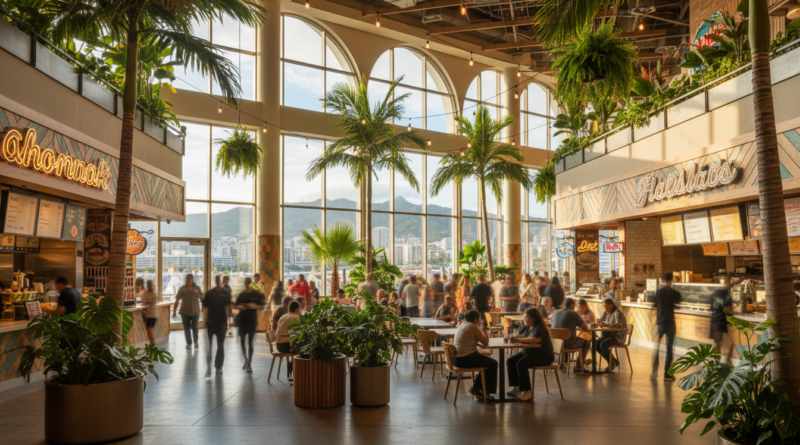
The hall’s design has proven both asset and challenge. The open-concept layout creates an energetic atmosphere when busy, but the space can feel cavernous during slower periods. Weekend evenings see the most activity, particularly when live music performances draw crowds to the central seating area.
Local food blogger and frequent visitor Sarah Nakamura noted the hall’s evolving identity. “January felt very much like a grand opening party every day. Now it’s settling into more of a neighborhood spot, which might actually be better for long-term success.”
Community Response and Foot Traffic
Foot traffic patterns have stabilized around lunch rushes and weekend dining, though weekday evenings remain challenging for most vendors. The hall benefits from its proximity to the nearby medical district and government offices, providing a steady stream of lunch customers.
Several vendors have already adapted their strategies based on customer feedback and sales data. The Korean fusion stall expanded its vegetarian options after requests from regular customers, while the local coffee roaster adjusted operating hours to better capture the morning commuter crowd.
The food hall model’s emphasis on supporting local entrepreneurs appears to be resonating with Honolulu diners who are increasingly interested in supporting small businesses. Many visitors express appreciation for having multiple locally-owned options under one roof, particularly compared to the chain-heavy food courts found in many shopping centers.
Pricing across vendors has remained competitive with standalone restaurants, though some customers noted the lack of combo deals or cross-vendor promotions that might encourage trying multiple stalls in one visit.
Looking Ahead
Management is already discussing potential adjustments for the hall’s next phase. Plans include expanding weekend programming, possibly adding cooking demonstrations, and exploring partnerships with local farms for a weekend farmers market component.
Two original vendors have already moved on — a smoothie bar that struggled with equipment issues and a dessert specialist who found the rent structure challenging. Their spaces are being marketed to new operators, with management reporting strong interest from potential vendors.
The hall’s success ultimately depends on its ability to become a genuine community gathering place rather than just another dining option. Early signs suggest it’s heading in the right direction, with regular customers becoming familiar faces and vendors building relationships with their neighbors.
For Honolulu’s restaurant scene, Midtown Eats represents an important test case for supporting local culinary entrepreneurs without the massive overhead of traditional restaurant spaces. Its continued evolution over the coming months will likely influence similar projects across the island, making it worth watching as both dining destination and small business incubator.