Honolulu Zoo Welcomes First Hawaiian Monk Seal Pup Born in Captivity in 12 Years
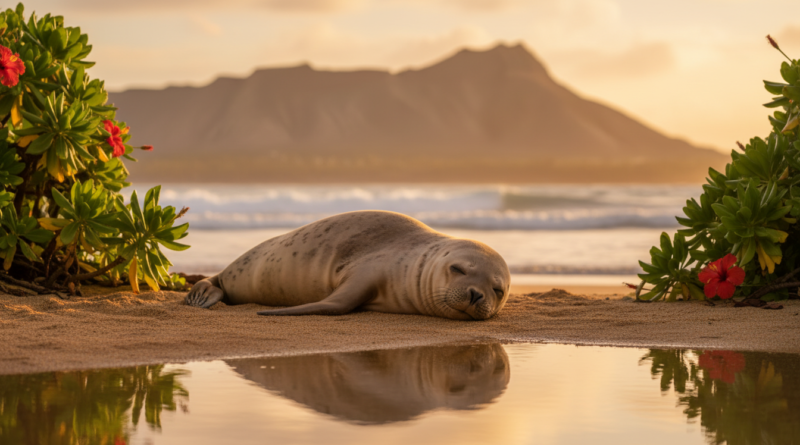
The Honolulu Zoo celebrated a major conservation milestone this week with the birth of its first Hawaiian monk seal pup in more than a decade. The healthy female pup, born to mother Kaimana on Tuesday morning, represents a significant breakthrough for the zoo’s endangered species breeding program.
This marks the first Hawaiian monk seal born in captivity at the Waikiki facility since 2014, when the zoo’s previous breeding efforts last produced offspring. The birth comes as Hawaiian monk seals remain one of the most endangered marine mammals in the world, with fewer than 1,400 individuals left in the wild.
“This is an incredible moment for our conservation team and for the future of Hawaiian monk seals,” said Dr. Linda Santos, the zoo’s director of marine mammal programs. “Every single pup born represents hope for this critically endangered species that’s so important to Hawaii’s marine ecosystem.”
The unnamed pup weighed approximately 35 pounds at birth and has been nursing regularly from Kaimana, a 12-year-old female who arrived at the zoo in 2018 from French Frigate Shoals. Zoo veterinarians report both mother and pup are in excellent health, with the newborn already showing strong swimming instincts during supervised pool time.
Conservation Partnership Success
The birth represents years of collaboration between the Honolulu Zoo and NOAA Fisheries’ Hawaiian Monk Seal Research Program. The partnership focuses on breeding seals in controlled environments to boost population numbers and genetic diversity.
Hawaiian monk seals, known as ‘ilio-holo-i-ka-uaua in Hawaiian, face numerous threats in the wild including entanglement in marine debris, habitat loss, and limited food sources. The species has experienced a 60% population decline over the past six decades.
Most of the remaining wild population lives in the remote Northwestern Hawaiian Islands, with only about 200 seals found in the main Hawaiian islands. This geographic isolation has created genetic bottlenecks that threaten long-term species survival.
Road to Release
The Kapahulu zoo plans to care for the pup for approximately 18 months before releasing her into Hawaiian waters. During this time, she’ll learn essential survival skills while zoo staff monitor her development and health.
“We’re not just raising a seal — we’re preparing a wild animal to thrive in her natural habitat,” Santos explained. “Our role is to give her the best possible start while maintaining her natural instincts.”
The pup will undergo extensive health screenings and behavioral assessments before release. Zoo staff will also fit her with identification tags and possibly a satellite transmitter to track her movements and survival after returning to the ocean.
Release location will depend on several factors, including the pup’s size, health, and seasonal conditions. Potential sites include waters around Oahu, Molokai, or other main Hawaiian islands where monk seal populations are being actively monitored.
Educational Impact
The birth also provides valuable educational opportunities for the zoo’s approximately 600,000 annual visitors. The monk seal exhibit, located near the African Savanna section, has become increasingly popular as awareness of the species’ plight has grown.
Local school groups regularly visit the facility as part of marine conservation curricula, and the new pup is expected to generate additional interest in Hawaiian monk seal protection efforts.
The zoo plans to livestream portions of the pup’s development through its social media channels, allowing Hawaii residents to follow her progress from birth to eventual release.
For Honolulu residents, this birth represents more than just a zoo success story — it’s tangible progress in protecting a species that’s uniquely Hawaiian. As the pup grows and prepares for her ocean home, she carries the hopes of conservationists working to ensure Hawaiian monk seals remain part of our islands’ marine legacy for generations to come.
The zoo expects to announce the pup’s name within the coming weeks, likely drawing from Hawaiian language and cultural traditions that honor the species’ deep connection to these islands.