New TOD Rules Would Require Developers Near Skyline Stations to Deliver More Community Benefits
The Honolulu City Council is considering new legislation that would require private developers to deliver significant community benefits in exchange for density bonuses and financial incentives near Skyline rail stations. The proposed measure aims to ensure transit-oriented development projects provide affordable housing, public open space, walkability improvements, and enhanced transit connections rather than just market-rate condos and commercial space.
Council Chair Tommy Waters introduced Bill 15, which would establish mandatory community benefit requirements for developers seeking to build higher and denser projects within half a mile of Skyline stations. Under current rules, developers can request density bonuses and tax increment financing but face limited requirements to give back to surrounding communities.
“We’ve seen too many TOD projects that maximize profit while minimizing community benefit,” Waters said during Wednesday’s committee meeting. “This legislation ensures that when we allow developers to build bigger near our rail stations, residents get something meaningful in return.”
What Developers Would Need to Provide
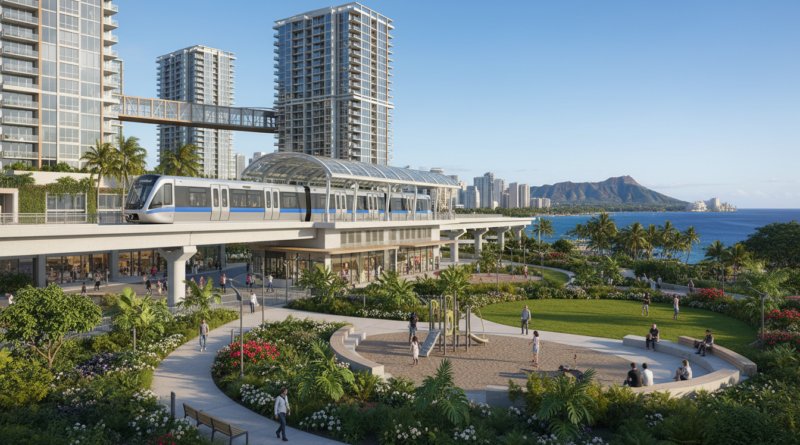
The proposed rules would create a point-based system requiring developers to meet minimum thresholds across four categories. For affordable housing, projects would need to include at least 20% below-market units or pay in-lieu fees to the city’s affordable housing fund.
Open space requirements would mandate developers create or improve public parks, plazas, or recreational facilities accessible to the broader community. Walkability improvements could include wider sidewalks, pedestrian bridges, bike lanes, or enhanced street lighting and landscaping.
Transit connectivity provisions would require developers to contribute to bus stop improvements, bike-share stations, or shuttle services linking their projects to Skyline stations. The legislation allows flexibility for developers to mix and match benefits while meeting overall point requirements.
Impact on Current and Future Projects
The timing could significantly affect several major TOD projects already in planning phases near Downtown, Kalihi-Palama, and Airport stations. The Howard Hughes Corporation’s Keeaumoku development and Castle & Cooke’s plans near West Loch station would likely need to adjust their proposals if the bill passes.
Development industry representatives expressed concerns about adding costs and complexity to an already challenging approval process. Pacific Resource Partnership executive director Robbie Melton warned the requirements could slow desperately needed housing production along the rail corridor.
“We support community benefits, but piling on requirements could make projects financially unfeasible,” Melton said. “That helps no one if we end up with empty lots instead of new homes and businesses.”
However, affordable housing advocates argue the current system allows developers to capture most of the value created by public rail investment while contributing little to community needs. The Hawaii Appleseed Center for Law and Economic Justice noted that TOD projects in other cities typically include stronger affordability requirements.
Learning from Mainland Examples
The proposed legislation draws from transit-oriented development policies in Portland, Seattle, and San Francisco, where community benefit requirements have become standard practice. Those cities have seen mixed results, with some projects delivering significant affordable housing and public amenities while others have faced delays or cancellations.
Council members pointed to successful local examples like the Honolulu Authority for Rapid Transportation’s joint development policies, which have generated revenue for rail operations while creating community assets. The proposed rules would extend similar principles to private development seeking city incentives.
Planning Director Dawn Takeuchi Apuna noted that the legislation aligns with the city’s Complete Streets and Climate Action Plan goals by encouraging walkable, transit-connected neighborhoods. Her department has been working with developers informally to incorporate community benefits but lacks enforcement mechanisms under current rules.
Next Steps and Community Input
The bill faces committee review over the next month, with public hearings scheduled in each rail corridor district. Council members plan to visit TOD projects in Portland and San Jose to study implementation approaches before final votes.
Community groups in Kalihi, Kapolei, and Pearl City have endorsed the concept while requesting stronger affordability requirements and local hiring provisions for construction jobs. The measure could also influence ongoing discussions about inclusionary zoning and linkage fees citywide.
For Honolulu residents, the legislation represents a chance to shape how rail-adjacent development serves existing communities rather than displacing them. With Skyline ridership growing and property values rising near stations, the debate over community benefits will likely determine whether TOD becomes a tool for inclusive growth or gentrification along Oahu’s new transit spine.
