
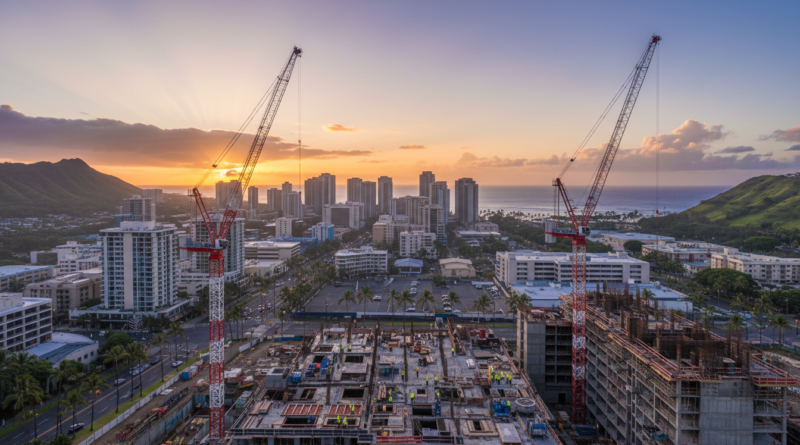
Waiakoa Breaks Ground in Kakaako: 1,032 Homes With 60% Set Aside as Affordable
Castle & Cooke Hawaii’s ambitious Waiakoa development will break ground in 2026, bringing 1,032 residential units to Kakaako with an unprecedented 60% designated as affordable housing. The mixed-use project represents one of the largest affordable housing commitments in recent Honolulu development history, addressing the city’s persistent housing crisis in one of its most desirable neighborhoods.
Located on a 7.5-acre site in the heart of Kakaako, Waiakoa will feature four residential towers ranging from 35 to 45 stories, complemented by 68,000 square feet of ground-level retail space and extensive green areas. The development sits within the broader 29-acre Our Kaka’ako master plan, managed by Kamehameha Schools, which envisions transforming the area into a vibrant mixed-use community.
Affordability in Practice
The 60% affordable housing commitment translates to approximately 619 units reserved for households earning between 60% and 120% of Area Median Income (AMI). For a family of four in Honolulu, this means households earning roughly $60,000 to $120,000 annually will qualify for affordable units.
While specific pricing hasn’t been finalized, industry standards suggest affordable units could range from $400,000 to $650,000 for condominiums, depending on size and AMI category. Market-rate units in the development are expected to command significantly higher prices, likely exceeding $800,000 for comparable floor plans.
“This level of affordable housing integration in a prime Kakaako location is exactly what our community needs,” said local housing advocate Maria Santos, director of the Honolulu Housing Coalition. “It’s not just about the numbers—it’s about creating economic diversity in one of our most expensive neighborhoods.”
The project’s affordability requirements stem from Kamehameha Schools’ community-focused development approach and the Hawaii Community Development Authority’s guidelines for the Kakaako district. Developers must maintain affordability controls for at least 30 years, preventing immediate resale at market rates.
Fitting the Master Plan Vision
Waiakoa represents a cornerstone of the Our Kaka’ako master plan, which aims to create 4,300 new homes across multiple developments over the next two decades. The master plan emphasizes walkable neighborhoods, sustainable design, and economic accessibility—principles reflected in Waiakoa’s mixed-income approach.
The development will include approximately 15,000 square feet of dedicated community space, featuring areas for cultural programming and resident gatherings. Plans also call for preserving view corridors toward the ocean and integrating Native Hawaiian cultural elements throughout the design.
Retail spaces will prioritize local businesses and services that support daily needs—grocery stores, restaurants, and professional services—reducing residents’ reliance on driving to other parts of the city. The project’s proximity to existing Kakaako developments like Ward Village creates potential for a truly integrated urban neighborhood.
Economic Impact and Challenges
Construction is expected to generate approximately 800 jobs during the four-year build-out phase, with permanent retail and property management positions following completion. The project’s $500 million estimated construction cost represents significant economic activity for local contractors and suppliers.
However, challenges remain substantial. Construction costs in Hawaii continue climbing, potentially affecting final unit pricing. The project must also navigate complex permitting processes and community input sessions, which could impact the 2026 groundbreaking timeline.
Transportation infrastructure presents another consideration. While Waiakoa sits near planned rail transit stations, current traffic patterns in Kakaako already strain existing roadways. The development includes plans for 1,200 parking stalls, though this falls short of traditional one-space-per-unit ratios.
For Honolulu residents, Waiakoa represents both opportunity and a test case for large-scale affordable housing integration. Success could provide a model for future developments, while failure might reinforce skepticism about developer commitments to affordability.
The project’s 2030 completion target coincides with other major Kakaako developments reaching maturity, potentially creating the critical mass needed for a truly urban neighborhood in Honolulu. Whether Waiakoa delivers on its affordable housing promises will significantly influence how future Kakaako projects approach community obligations and economic diversity.