
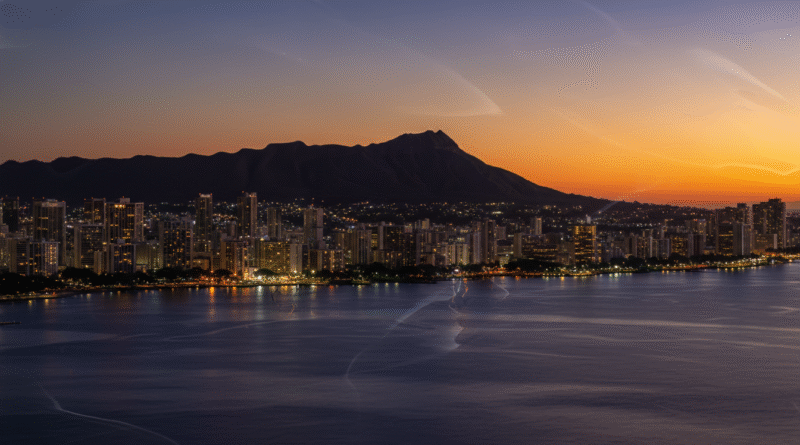
6.0 Earthquake Rattled the Whole State Friday Night — Here’s What Oahu Residents Felt
A magnitude 6.0 earthquake jolted Hawaii residents from Hilo to Honolulu Friday night, sending tremors across the island chain that had many reaching for doorframes and wondering if they should head for higher ground.
The quake struck at 10:06 p.m. on the western flank of Mauna Loa, centered about 14 miles south of Kailua-Kona at a depth of 14 miles, according to the U.S. Geological Survey. While no tsunami was generated and no major damage has been reported, the seismic event was powerful enough to rattle windows and nerves as far away as Oahu and Kauai.
“I was watching TV in my Kaimuki apartment when everything started shaking,” said longtime Honolulu resident Mark Tanaka, who felt the tremor around 10:07 p.m. “At first I thought it was a big truck going by, but then I realized the whole building was swaying. It lasted maybe 20 seconds, but it definitely got my attention.”
Social media lit up with reports from across Oahu as residents shared their experiences. Many described a rolling motion that started gentle but built in intensity, lasting anywhere from 15 to 30 seconds depending on location.
Widespread Impact Across the Islands
The earthquake’s reach extended well beyond the Big Island’s Kona coast where it originated. Reports poured in from Maui, Molokai, and even Kauai, making this one of the more widely felt seismic events in recent memory.
On Oahu, residents from Pearl City to Hawaii Kai reported feeling the tremor, with many describing it as a gentle but persistent rolling motion. Several Waikiki hotels briefly evacuated guests to lobbies as a precautionary measure, though operations quickly returned to normal.
The Pacific Tsunami Warning Center initially issued a green advisory, confirming that no tsunami threat existed for Hawaii or the broader Pacific region. The relatively deep focus of the earthquake — 14 miles below the surface — helped limit its destructive potential while still allowing the energy to travel across the island chain.
Context in Hawaii’s Seismic Landscape
Friday’s earthquake serves as a reminder that Hawaii sits atop one of the world’s most active volcanic regions. The islands experience hundreds of small earthquakes each year, though most go unnoticed by residents.
Earthquakes of this magnitude occur roughly once or twice per year in Hawaii, often associated with volcanic activity or the ongoing process of the islands settling under their own weight. The location on Mauna Loa’s western flank is particularly significant, as this area has been showing signs of increased seismic activity in recent months.
“This type of earthquake is not uncommon for Hawaii,” said Dr. Jennifer Nakamura, a seismologist at the University of Hawaii (no relation to this reporter). “The good news is that at 14 miles deep, it’s not directly related to immediate volcanic eruption concerns, but it does reflect the ongoing geological processes that shape our islands.”
Emergency Response and Preparedness
Hawaii County Civil Defense quickly assessed the situation on the Big Island, where the shaking was strongest. No significant damage to infrastructure has been reported, though authorities continue monitoring for potential aftershocks.
The earthquake prompted many residents to review their emergency preparedness plans, particularly regarding tsunami evacuation routes. While Friday’s event posed no tsunami threat, it highlighted the importance of knowing what to do when the ground starts shaking.
Honolulu’s Department of Emergency Management used the opportunity to remind residents about earthquake safety protocols: drop, cover, and hold on during shaking, then check for hazards and injuries afterward.
What This Means for Island Residents
For Honolulu residents, Friday’s earthquake serves as both a wake-up call and a reminder of living in paradise’s more dynamic moments. While the tremor caused anxiety for many, it also demonstrated the islands’ resilience and preparedness systems.
Scientists will continue monitoring seismic activity in the region, particularly around Mauna Loa, which last erupted in late 2022. While Friday’s earthquake doesn’t indicate an imminent eruption, it reflects the ongoing geological processes that continue shaping Hawaii’s landscape.
The event also underscores why earthquake preparedness remains crucial for all Hawaii residents, regardless of which island they call home. As Friday night demonstrated, when the earth moves on one island, the entire state feels it.
