
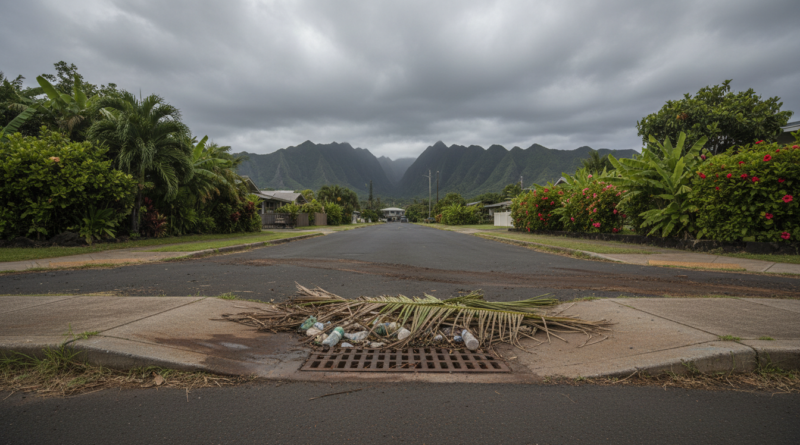
North Shore Residents Say Drainage System Failure Worsened March’s Historic Flooding
Weeks after a devastating Kona low weather system brought record rainfall and catastrophic flooding to Oahu’s North Shore in March, residents of Haleiwa and Waialua are raising serious concerns about whether failing drainage infrastructure made the disaster significantly worse.
The March flooding event, which dumped more than 10 inches of rain in some areas over just a few hours, left homes and businesses underwater and forced dozens of evacuations. But according to longtime residents, pre-existing problems with storm drains and culverts may have turned what should have been manageable runoff into a community-wide crisis.
“We’ve been complaining about these clogged drains for years,” said Waialua resident Maria Santos, whose home on Farrington Highway was among those inundated. “When the big rain came, the water had nowhere to go except into our houses and businesses.”
The concerns center around a network of aging storm drains and culverts that residents say have been poorly maintained for years. Many point to visible signs of neglect: drains choked with debris, culverts partially collapsed, and retention ponds that haven’t been cleared of sediment buildup.
Infrastructure Challenges Across the North Shore
The drainage issues aren’t limited to one neighborhood. From Sunset Beach to Mokuleia, residents describe a pattern of deferred maintenance that has left the North Shore’s storm water management system operating well below capacity.
In Haleiwa, business owners along Kamehameha Highway say they’ve watched storm drains gradually fill with sand and debris over the years, with little apparent response from city maintenance crews. The problem is particularly acute near Haleiwa Beach Park, where ocean sand regularly washes into drainage inlets during high surf events.
The March flooding overwhelmed these compromised systems almost immediately. Video footage from the event shows water backing up from storm drains and flowing across roadways, creating dangerous conditions that persisted for hours even after the heaviest rainfall had passed.
City and County of Honolulu officials acknowledge that storm water infrastructure across Oahu faces significant challenges, citing both the age of existing systems and the increasing intensity of weather events due to climate change.
A Pattern of Deferred Maintenance
The North Shore’s drainage problems reflect broader infrastructure challenges facing Honolulu. Many of the area’s storm water management systems date back decades and were designed for rainfall patterns that may no longer reflect current climate realities.
Budget constraints have forced the city to prioritize emergency repairs over preventive maintenance, according to Department of Environmental Services records. This reactive approach often means problems aren’t addressed until they cause significant flooding or property damage.
Community advocates argue this penny-wise, pound-foolish approach ultimately costs taxpayers more. Emergency repairs and flood damage response are typically far more expensive than routine maintenance and timely upgrades.
“It’s like not changing the oil in your car and then wondering why the engine seized up,” said North Shore Neighborhood Board member Tom Nakamura. “We keep kicking the can down the road until Mother Nature forces our hand.”
Climate Change Amplifies Existing Problems
The March flooding event highlighted how climate change is amplifying existing infrastructure vulnerabilities. While Kona lows have always brought heavy rainfall to the islands, recent events have been more intense and unpredictable.
Weather data shows the March storm dropped rainfall at rates that exceeded the design capacity of many local drainage systems. But residents argue that properly maintained infrastructure would have handled the deluge far better.
The combination of higher-intensity rainfall and compromised drainage creates a dangerous feedback loop. As storms become more severe, the consequences of infrastructure failures become more catastrophic.
Looking Forward
City officials say they are reviewing drainage infrastructure across the North Shore in response to the March flooding. The assessment will identify priority areas for repair and upgrade, though specific timelines and funding sources remain unclear.
For North Shore residents, the review can’t come soon enough. Hurricane season approaches, and many worry their communities remain vulnerable to the next major weather event.
The March flooding serves as a costly reminder that infrastructure investments aren’t just about convenience—they’re about community resilience and public safety. As climate patterns continue to shift, the stakes for getting these systems right will only continue to rise.