Pagoda Hotel Reopens After $9.9M Renovation — Koi Pond Returns to Honolulu Landmark
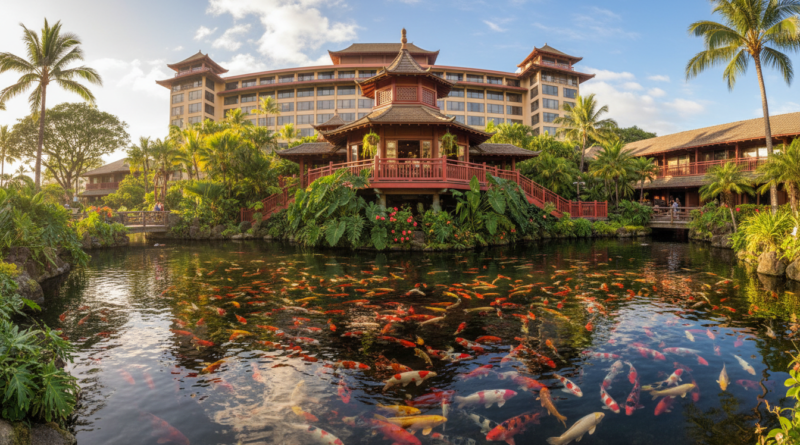
The Pagoda Hotel’s iconic koi pond is back, and so is one of Honolulu’s most beloved mid-tier accommodations after a comprehensive $9.9 million renovation that breathed new life into the 55-year-old property.
The locally owned hotel at 1525 Rycroft Street reopened its doors last month following an extensive eight-month closure that transformed everything from guest rooms to the property’s signature floating restaurant. The renovation represents the largest investment in the property since it first opened in 1969.
“We wanted to honor the hotel’s legacy while creating something fresh for today’s travelers,” said property manager Lisa Nakamura, whose family has operated the 361-room hotel for three generations. “The koi pond was non-negotiable — it’s what people remember most about staying here.”
The renovated property showcases a modern take on island hospitality while preserving the Asian-influenced aesthetic that made it a staple for both tourists and local event-goers. New bamboo flooring, contemporary furnishings, and upgraded bathrooms now complement the traditional Japanese garden elements throughout the six-acre property.
Restoring a Honolulu Institution
The Pagoda Hotel’s closure in early 2024 marked the end of an era for many longtime residents who grew up attending family celebrations at its floating restaurant or staying there during visits from mainland relatives. The property’s location near the airport and downtown made it a popular choice for budget-conscious travelers seeking authentic local flavor.
During renovation, crews completely rebuilt the koi pond system with modern filtration and added new landscaping around the property’s courtyard areas. The floating restaurant received new kitchen equipment and expanded seating, while the hotel’s 361 rooms got new carpeting, paint, and upgraded Wi-Fi infrastructure.
The renovation also addressed long-standing maintenance issues, including new air conditioning systems and updated plumbing throughout the aging property. Solar panels were added to the roof as part of sustainability improvements that the family hopes will reduce operating costs.
Local Ownership in Challenging Times
The multimillion-dollar investment comes as Honolulu’s hospitality industry continues recovering from pandemic impacts and facing increased competition from vacation rental properties. For locally owned operations like the Pagoda, the challenge is competing with larger resort chains while maintaining affordable rates.
“We’re not trying to be the Moana Surfrider,” Nakamura explained. “Our niche is providing clean, comfortable accommodations with that local touch you can’t get at the big resorts. The koi pond, the floating restaurant — these are experiences you remember.”
The property’s reopening adds much-needed inventory to Honolulu’s mid-range accommodation sector, which has shrunk in recent years as developers convert older properties to luxury condos or demolish them entirely. Industry data shows that hotels in the $150-250 per night range comprise less than 20% of Oahu’s visitor accommodations.
Economic Impact and Future Plans
The renovation created approximately 150 construction jobs and retained 85 permanent hotel positions, from front desk staff to restaurant workers. The property’s reopening also benefits nearby businesses along Nimitz Highway and in the Kalihi-Palama area, where tourism dollars are less common than in Waikiki or Ko Olina.
Beyond the immediate economic impact, the Pagoda Hotel’s revival represents a vote of confidence in Honolulu’s tourism recovery. Hotel occupancy rates have returned to pre-pandemic levels, but many properties still struggle with staffing shortages and rising operational costs.
The Nakamura family financed the renovation through a combination of savings, bank loans, and a state tourism recovery grant program. They’re already planning phase two improvements, including a new fitness center and upgraded conference facilities, pending revenue performance over the next 18 months.
“This property has been part of Honolulu for over five decades,” Nakamura noted. “We’re committed to keeping it locally owned and affordable for the next 50 years.”
For longtime residents, the hotel’s reopening restores a piece of Honolulu’s hospitality landscape that bridges the gap between budget motels and luxury resorts. The return of weekend dim sum service at the floating restaurant and the gentle splash of koi in the courtyard pond signal that some things in our rapidly changing city can still be preserved and improved rather than simply replaced.