
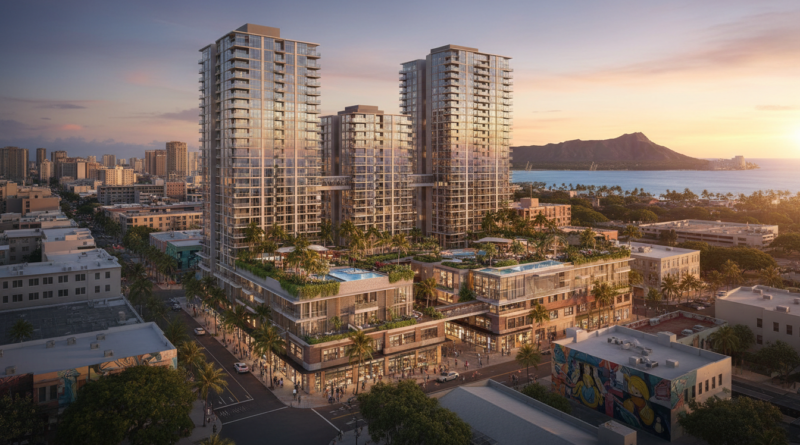
Kahuina Mixed-Use Project to Break Ground in Kakaako with 861 Units, Majority Affordable
A massive mixed-use development promising to deliver hundreds of affordable housing units to Kakaako is set to break ground in 2026, marking another milestone in the neighborhood’s rapid transformation into Honolulu’s densest urban core.
Stanford Carr Development’s Kahuina project will rise on Block C of the Kakaako redevelopment area, delivering 861 residential units across multiple towers. The development stands out for its commitment to affordability — 60% of the units will be designated as workforce or affordable housing, addressing a critical need in Hawaii’s expensive housing market.
The project will also include 42,000 square feet of commercial space, adding retail and dining options to the growing neighborhood that sits between downtown Honolulu and Ala Moana Center.
Part of Kakaako’s Building Boom
Kahuina represents one of several major developments simultaneously reshaping Kakaako’s skyline. The neighborhood, once dominated by industrial buildings and car lots, has emerged as Honolulu’s answer to urban density, with multiple high-rise projects in various stages of planning and construction.
“Kakaako is becoming the blueprint for how we can create livable, walkable communities in Honolulu,” said Maria Santos, a local real estate analyst who tracks development trends across Oahu. “Projects like Kahuina show that developers can be profitable while still addressing our affordability crisis.”
The timing of Kahuina’s groundbreaking aligns with the Hawaii Community Development Authority’s vision for the area, which has encouraged mixed-income developments that serve both market-rate buyers and working families priced out of other neighborhoods.
Affordable Housing Component
The project’s emphasis on workforce and affordable housing units addresses one of Honolulu’s most pressing challenges. With median home prices consistently ranking among the nation’s highest, many local families — including teachers, firefighters, and healthcare workers — struggle to find housing they can afford.
Stanford Carr Development has built a reputation for incorporating affordable components into luxury projects. The developer’s approach typically involves creating units at various price points within the same building, rather than segregating affordable housing into separate structures.
The workforce housing units will target families earning 80% to 140% of the area median income, while affordable units will serve those earning less. These income limits are adjusted annually based on federal guidelines and local economic conditions.
Infrastructure and Transportation
Kahuina’s location in Kakaako provides residents with multiple transportation options, including proximity to the planned Kalihi-Palama rail station and existing bus routes connecting to downtown, Waikiki, and other major employment centers.
The development sits within walking distance of Keeaumoku Street’s emerging restaurant scene and Ala Moana Beach Park, offering residents both urban conveniences and recreational opportunities that define island living.
However, the influx of nearly 900 new housing units will add pressure to already congested streets like Ala Moana Boulevard and Kapiolani Boulevard. The project will need to coordinate with city infrastructure improvements to handle increased traffic and utility demands.
Market Impact
Real estate experts expect Kahuina to help moderate housing costs in the broader Kakaako area by increasing supply, though the effect may be limited given continued demand from both local buyers and mainland transplants.
The commercial component could also reshape retail dynamics in the neighborhood, potentially drawing foot traffic away from established centers while creating new gathering spaces for residents of the growing residential towers.
The project joins other major developments like Ward Village and Ae’o that have transformed former industrial land into mixed-use communities. Together, these projects represent billions in private investment and thousands of new housing units in one of Honolulu’s most transit-accessible neighborhoods.
Looking Ahead
Construction on Kahuina is expected to span several years, with phases potentially opening as early as 2028. The project will test whether Kakaako can absorb continued high-density development while maintaining livability for both new and existing residents.
For Honolulu families searching for affordable housing options, Kahuina represents hope that new development can serve local needs rather than just luxury buyers. The project’s success could influence how future developments approach the balance between profitability and community benefit.
As Kakaako continues its evolution from industrial area to urban neighborhood, projects like Kahuina will determine whether this transformation creates lasting value for all of Honolulu’s residents or primarily serves outside investment interests.
