
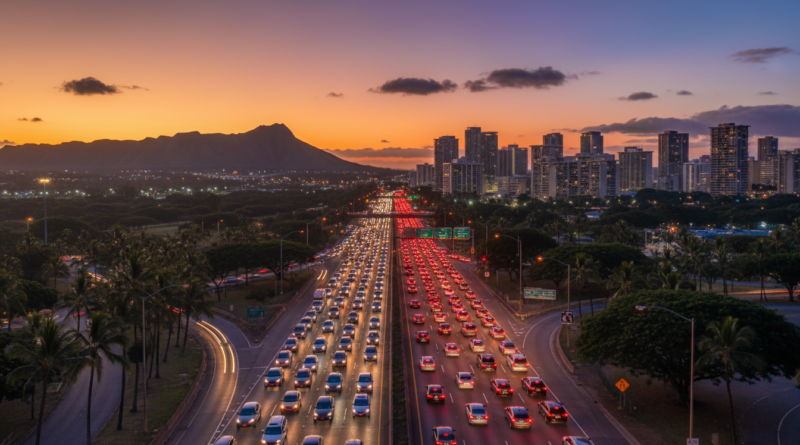
Record-Breaking H-1 Freeway Congestion Sparks New Transit Debate
Traffic congestion on the H-1 Freeway reached unprecedented levels this week, with commuters reporting travel times exceeding three hours for what should be a 45-minute journey from Kapolei to downtown Honolulu. The gridlock, exacerbated by ongoing construction projects and a recent uptick in tourism, has reignited calls for expanded public transit options and alternative transportation solutions across Oahu.
Data from the Hawaii Department of Transportation shows average morning commute times have increased by 47% compared to pre-pandemic levels. The stretch between Pearl City and Kalihi has become particularly problematic, with speeds dropping below 15 mph during peak hours.
“I left my house in Ewa Beach at 6:30 AM yesterday and didn’t get to my office in downtown until nearly 10 AM,” said Maria Santos, a financial advisor who has been commuting the route for eight years. “This is beyond frustrating — it’s affecting my ability to serve my clients and maintain a work-life balance.”
The current congestion crisis stems from a perfect storm of factors. TheBus ridership remains 23% below 2019 levels, pushing more residents back into personal vehicles. Meanwhile, the Skyline rail project’s Pearl Highlands station won’t open until late 2024, leaving West Oahu residents with limited alternatives.
Construction on the Kamehameha Highway widening project near Pearl Harbor has also reduced available lanes during critical morning hours. HDOT estimates the work will continue through March 2024, compounding existing bottlenecks.
Economic Impact Ripples Through Local Business
The traffic snarls are creating measurable economic consequences across Honolulu’s business community. Restaurant owners in downtown and Chinatown report employees arriving late or calling in sick due to traffic stress. Some Kapolei-based companies have begun offering flexible work arrangements to retain talent frustrated by the daily commute.
“We’ve had to adjust our opening hours because half our staff lives on the west side,” said James Nakamura, manager of a popular dim sum restaurant in Chinatown. “When your employees are spending four hours a day just getting to and from work, something has to give.”
The Honolulu Board of Realtors has also noted increased interest in properties closer to urban job centers, as buyers prioritize proximity over square footage. This shift is driving up rents and home prices in previously affordable neighborhoods like Kalihi and Salt Lake.
Transit Advocates See Opening for Change
Transportation advocacy groups are seizing this moment to push for accelerated transit improvements. The group Move Oahu Forward has launched a petition calling for expanded TheBus service, including dedicated bus-only lanes during peak hours.
“This congestion crisis proves we can’t build our way out of traffic with more lanes,” said Lisa Chen, Move Oahu Forward’s executive director. “We need bold solutions that give people real alternatives to sitting in their cars for hours every day.”
City Council members are responding to constituent pressure with renewed interest in previously stalled transportation initiatives. Councilwoman Carol Fukunaga has proposed emergency funding for additional bus routes serving West Oahu, while Councilman Tommy Waters is pushing for congestion pricing similar to systems used in Singapore and London.
The Hawaii Department of Transportation has announced plans to fast-track several improvement projects, including new on-ramp meters and intelligent traffic signal systems. However, these measures won’t provide relief until 2025 at the earliest.
Short-Term Solutions and Long-Term Planning
While major infrastructure improvements remain years away, officials are implementing immediate measures to ease the crisis. HDOT will extend construction work to overnight hours where possible, reducing daytime lane closures. The city is also exploring temporary express bus service from major West Oahu shopping centers to downtown during peak commuting hours.
For Honolulu residents, this traffic crisis represents more than just inconvenience — it’s a quality of life issue that affects family time, health, and economic opportunities. The coming months will test whether local leaders can deliver meaningful solutions or if residents will continue to pay the price for decades of car-centric planning.
As the Skyline rail system gradually expands and new bus rapid transit proposals gain momentum, the current congestion may eventually be remembered as the breaking point that finally pushed Honolulu toward a more sustainable transportation future. For now, commuters like Santos will continue setting their alarms earlier and hoping for a day when getting to work doesn’t feel like a full-time job itself.