UH Waikiki Flood Research Wins National Architecture Award — And It Shows What the Neighborhood Could Look Like Under Water
A University of Hawaii research team has earned national recognition for their sobering architectural visualizations showing how Waikiki could adapt to life underwater — work that takes on new urgency after this month’s flooding across Oahu.
The team’s flood adaptation renderings for Waikiki earned top honors at the 2026 ARCC–EAAE International Conference, where their project stood out among submissions from universities worldwide. But beyond the accolades, their work offers a glimpse into a future that may arrive sooner than many residents realize.
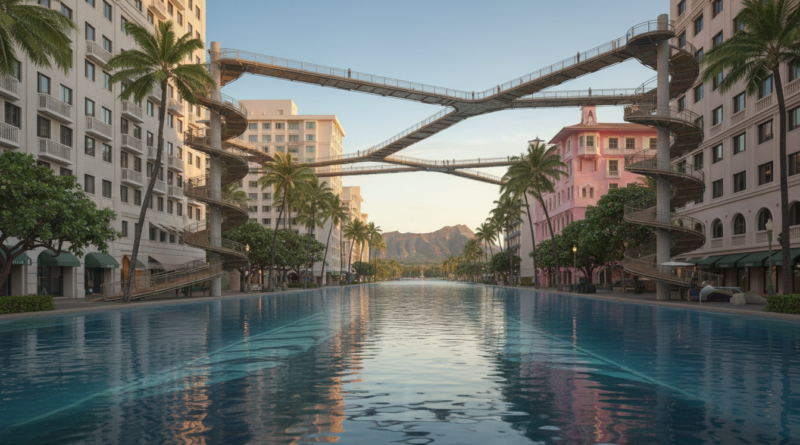
The award-winning visualizations depict familiar Waikiki landmarks transformed by rising seas and increased flooding. Hotels along Kalakaua Avenue appear with reinforced ground floors and elevated entry points. Beach parks feature floating pavilions and amphibious structures that can rise with flood waters.
Most striking are the renderings of everyday life continuing amid these changes — tourists boarding water taxis where sidewalks once stood, vendors selling shave ice from floating carts, and keiki playing in redesigned parks that double as retention ponds during heavy rains.
Beyond Visualization: The Real Challenge
The research, led by Dr. Mei Chen from UH’s School of Architecture, combines architectural innovation with hard climate data. Their models incorporate projections for sea level rise, increased storm intensity, and the kind of extreme precipitation events that recently overwhelmed storm drains from Diamond Head to Pearl City.
“We’re not just imagining a flooded future — we’re designing for resilience in a way that honors what makes Waikiki special,” Chen said. “The question isn’t whether these changes will be necessary, but how quickly we can adapt our infrastructure to protect residents and visitors alike.”
The timing feels particularly relevant. Last week’s flash flooding exposed vulnerabilities throughout urban Honolulu, with Waikiki experiencing significant street flooding that forced temporary closures of several hotels and businesses along Kuhio Avenue.
The research team’s approach goes beyond typical flood mitigation strategies like sea walls or drainage improvements. Instead, they envision a neighborhood that works with water rather than fighting it — featuring floating foundations, permeable building materials, and public spaces designed to handle temporary flooding without losing their function.
Economic Realities
Implementing such changes across Waikiki would require unprecedented coordination between property owners, city planners, and state agencies. The research estimates that comprehensive flood adaptation for the core tourist district would cost upwards of $2 billion over two decades.
That figure includes retrofitting existing high-rises with flood-resistant ground floors, installing neighborhood-wide water management systems, and creating new building standards for future development. For context, that’s roughly equivalent to the entire annual tourism revenue for Waikiki under normal conditions.
The economic stakes extend far beyond construction costs. Waikiki generates approximately $8 billion annually for Hawaii’s economy, supporting jobs from Honolulu Harbor to the North Shore. Extended flooding or climate-related closures could ripple through every sector of Oahu’s economy.
Local Innovations
The UH team drew inspiration from flood-prone cities worldwide, but their solutions reflect distinctly local conditions. Proposed floating markets echo traditional Hawaiian fishing practices, while elevated walkways incorporate materials and design elements that complement existing architecture along the beach.
Their renderings also address cultural preservation, showing how sites like the Duke Kahanamoku statue and Royal Hawaiian Hotel could be protected and accessed even during flood events. Community gathering spaces remain central to their vision, with adaptable pavilions that serve as both social hubs and emergency shelters.
The research has already attracted attention from city planners and private developers. Several Waikiki hotels are reportedly exploring pilot projects based on the team’s recommendations, particularly around flood-resistant ground floor redesigns and water management systems.
For Honolulu residents, the award-winning research offers both a warning and a roadmap. The visualizations make clear that significant changes to our built environment aren’t just possible — they’re increasingly inevitable as climate impacts intensify.
The question now is whether policymakers and property owners will act proactively to implement these adaptations, or wait for the next major flood to force their hand. With hurricane season approaching and climate projections pointing toward more extreme weather events, Waikiki’s future resilience may depend on how quickly we can turn these award-winning visions into reality.