Waimanalo Water Crisis: BWS Scrambles to Fix Second Leak in 20-Inch Main as Residents Conserve
The Board of Water Supply is racing against time to repair a second major leak discovered in Waimanalo’s aging water infrastructure, extending conservation measures that have left residents scrambling to manage their daily water use for over a week.
The new break was found in the same 20-inch transmission main that supplies the rural East Oahu community, just days after crews began addressing an initial rupture that sparked emergency water restrictions on January 10. BWS officials say the discovery of the second leak means residents will remain under mandatory conservation orders longer than initially hoped.
“We understand the frustration our Waimanalo customers are experiencing, and we’re working around the clock to restore normal service,” said BWS spokesperson Tracy Burgo. “The age of this particular main means we have to be thorough in our inspection and repair process to prevent additional failures.”
The 20-inch main, installed decades ago, serves as a critical lifeline for Waimanalo’s roughly 5,800 residents. When functioning properly, it carries millions of gallons from BWS treatment facilities in Central Oahu through the mountains to storage tanks that supply the beachside community.
But aging infrastructure across Oahu has become a mounting challenge for the water utility. The transmission system includes pipes installed in the 1960s and 70s that are now reaching the end of their expected lifespan, particularly in areas like Waimanalo where saltwater corrosion and shifting soils create additional stress.
Community Impact Spreads
The extended conservation order affects everything from local businesses to families trying to maintain basic hygiene. Residents have been asked to limit showers, delay laundry, and avoid filling pools or washing cars.
Waimanalo Elementary and Intermediate Schools adjusted their schedules earlier this week, sending students home early on Tuesday and Wednesday to conserve water for essential needs. The schools reopened Thursday with portable water tanks supplementing their supply.
Local businesses along Kalanianaole Highway have also felt the pinch. Several restaurants temporarily modified their menus, while the Waimanalo Beach Park saw reduced restroom services as the county worked to manage water pressure throughout the system.
The timing couldn’t be worse for a community already dealing with other infrastructure challenges. Waimanalo residents have long advocated for improved roads, better drainage, and more reliable utilities in what many consider an underserved part of the island.
Repair Timeline Uncertain
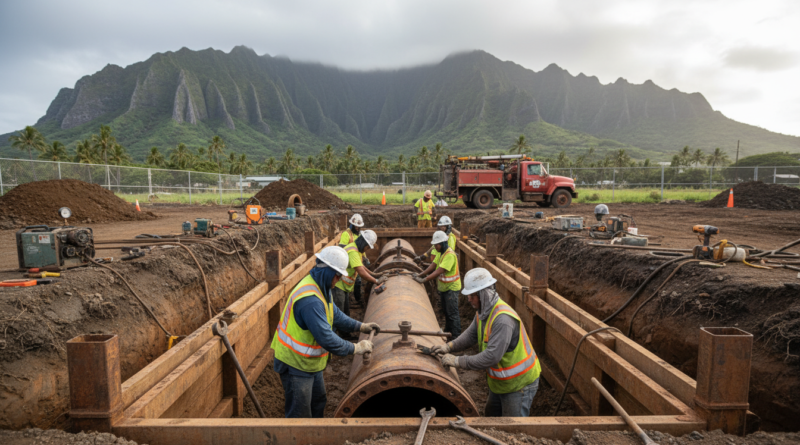
BWS crews are working to isolate both leak locations while maintaining enough water pressure to serve essential needs. The utility brought in specialized equipment to excavate around the buried main, which runs through challenging terrain near the base of the Ko’olau Mountains.
Complicating repair efforts is the main’s location along a route that serves multiple communities. Engineers must balance Waimanalo’s immediate needs with maintaining service to other areas that depend on the same transmission system.
The utility hasn’t provided a firm timeline for completion, citing the need to fully assess the extent of damage before committing to a repair schedule. Similar main breaks on Oahu have taken anywhere from several days to more than a week to fully resolve, depending on the complexity of the damage and accessibility of the repair site.
Water trucks remain stationed at Waimanalo District Park and other locations for residents who need emergency supplies. BWS has also coordinated with the Red Cross to distribute bottled water to vulnerable populations, including elderly residents and families with young children.
Bigger Infrastructure Questions
The Waimanalo crisis highlights broader questions about Oahu’s aging water infrastructure and the challenges of serving rural communities separated from urban centers by mountains and distance.
BWS has identified hundreds of miles of transmission mains across the island that will need replacement or major rehabilitation over the next decade. The utility’s capital improvement program includes $2.8 billion in projects through 2030, with transmission main upgrades representing a significant portion of that investment.
For Waimanalo residents, the immediate concern remains when normal water service will return. BWS officials promise regular updates as repair work progresses, but the discovery of the second leak has reset expectations about a quick resolution.
The conservation order will remain in effect until both repairs are completed and the system can be fully tested and pressurized. Until then, Waimanalo residents continue adapting their daily routines while hoping their community’s infrastructure challenges will finally get the attention they deserve.