
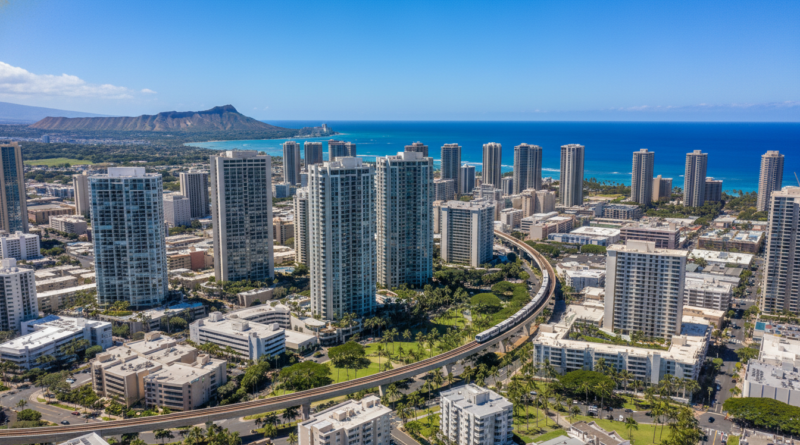
$2 Billion Ala Moana Transit-Oriented Development Gets Final City Approval
The Honolulu City Council gave final approval Wednesday to a massive $2 billion transit-oriented development adjacent to Ala Moana Center, clearing the way for what will become one of Hawaii’s largest mixed-use projects in decades.
The Ward Village expansion will add 4,000 residential units, 1.2 million square feet of retail and office space, and a 400-room hotel across 60 acres between Ala Moana Boulevard and Queen Street. The development leverages its proximity to the planned Ala Moana rail station to create dense, walkable neighborhoods designed to reduce car dependency.
“This represents the kind of smart growth Honolulu desperately needs,” said Council Chair Tommy Waters during Wednesday’s meeting. “We’re talking about housing thousands of families within walking distance of mass transit, retail, and jobs.”
The project, led by The Howard Hughes Corporation, has been in planning stages for over five years. It will be built in phases over the next decade, with the first residential towers expected to break ground in early 2025.
Addressing Honolulu’s Housing Crisis
The development comes as Oahu faces its most severe housing shortage in memory, with median home prices exceeding $1 million and rental vacancy rates below 1%. Ward Village’s 4,000 units represent nearly 10% of the housing units Honolulu needs to add by 2030 to meet demand projections.
Approximately 800 units will be designated as affordable housing for families earning 80-120% of area median income. While housing advocates had pushed for more affordable units, the inclusion represents one of the largest affordable housing components in a private development on Oahu.
“It’s not perfect, but it’s significant progress,” said Keeaumoku Kapu, executive director of the Aloha United Way housing initiative. “We need every tool in the toolbox to address this crisis, and transit-oriented development is crucial.”
Rail Integration Central to Design
The development’s design centers around the upcoming Ala Moana rail station, scheduled to open in late 2025. Residential and office towers will be connected to the station via elevated walkways and ground-level pedestrian plazas.
The project includes 8,000 parking spaces, significantly fewer than traditional developments of this size. Planners anticipate many residents will rely on rail service to reach downtown Honolulu, the University of Hawaii, and eventually Pearl Harbor and West Oahu when the full rail line opens.
Retail components will include a mix of local businesses and national chains, with ground-floor spaces reserved for restaurants, grocery stores, and services that residents can access without driving. The hotel component targets business travelers and visitors who prefer staying near rail connections rather than Waikiki.
Traffic and Infrastructure Concerns
Not all community feedback has been positive. Residents in nearby Kakaako and Kalihi neighborhoods worry about increased traffic congestion on already-strained roads like Ala Moana Boulevard and King Street.
The developer has committed $150 million in infrastructure improvements, including road widening, new traffic signals, and enhanced pedestrian crossings. The city will also implement new bus routes connecting the development to areas not served by rail.
Environmental impact studies concluded the project will actually reduce vehicle miles traveled per resident compared to suburban developments, thanks to its walkable design and transit connections.
Economic Impact and Local Hiring
Construction is expected to generate approximately 12,000 jobs over the build-out period, with requirements that 20% of workers be Hawaii residents. The completed development will create an estimated 8,000 permanent jobs in retail, hospitality, and property management.
Property tax revenue from the completed project is projected at $35 million annually, providing significant funding for city services including education and infrastructure maintenance.
The first phase, consisting of two 40-story residential towers and 200,000 square feet of retail space, will begin construction in March 2025. Pre-sales for residential units are expected to begin this fall, with prices starting in the mid-$600,000 range for one-bedroom condominiums.
This approval represents a crucial test case for transit-oriented development in Hawaii, demonstrating whether dense, rail-connected communities can succeed in a market historically dominated by single-family homes and car-dependent suburbs. Success could pave the way for similar projects near other planned rail stations in Kapolei, Pearl City, and Kalihi.
