Downtown Honolulu Office Vacancy Drops as Remote Workers Return
Downtown Honolulu’s office market is showing signs of recovery as vacancy rates dropped to 15.2% in the fourth quarter of 2024, down from a peak of 18.7% in early 2023, according to new data from Commercial Real Estate Hawaii.
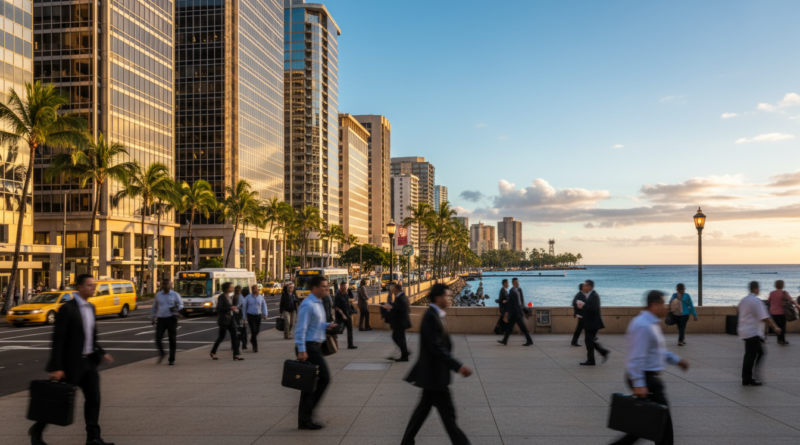
The improvement comes as more Hawaii companies implement hybrid work policies that bring employees back to the office at least three days a week. Several major tenants have renewed leases in buildings along Bishop Street and Fort Street, signaling renewed confidence in the central business district.
“We’re seeing a definite shift in mindset,” said Mark Bratton, managing director at Colliers International Hawaii. “Companies that downsized aggressively in 2021 and 2022 are realizing they need more space to accommodate collaboration and company culture.”
The recovery has been uneven across downtown’s various submarkets. Class A buildings in the financial district, particularly those with recent renovations and modern amenities, are attracting the most interest. Properties near Iolani Palace and the state capitol building have seen occupancy rates climb above 90%.
Meanwhile, older buildings without updated HVAC systems or flexible floor plans continue to struggle. Several properties along Merchant Street remain more than 30% vacant as landlords grapple with the costs of modernization.
New Leasing Activity Drives Demand
The turnaround has been fueled by both lease renewals and new tenants entering the market. Local law firms, which had been consolidating space during the pandemic, are again expanding their footprints to accommodate growing practices.
Technology companies have emerged as an unexpected bright spot. Three software firms relocated their operations from shared workspace facilities in Kakaako to traditional offices downtown in the past six months, citing the need for dedicated space as their teams grew.
Financial services firms, long the backbone of downtown occupancy, have also begun expanding again. First Hawaiian Bank announced plans to lease an additional floor in the First Hawaiian Center, while other local banks are reconsidering their real estate strategies.
Challenges Remain
Despite the positive trends, downtown faces ongoing challenges that could limit the recovery’s pace. Parking remains a persistent issue, with monthly rates now averaging $180 at most commercial lots near major office buildings.
The retail landscape at street level continues to struggle, with several storefronts along Fort Street Mall still empty. This affects the overall vibrancy that many companies seek when choosing office locations.
Transit accessibility has improved with the planned expansion of TheBus routes serving downtown, but many suburban workers still prefer the flexibility of working from home rather than dealing with H-1 freeway congestion.
Rental Rates Show Stability
Office rental rates have stabilized after the dramatic declines of 2020-2022. Class A space now averages $32 per square foot annually, compared to pre-pandemic rates of $38. Class B properties average $24 per square foot.
Landlords have become more flexible with lease terms, offering tenant improvement allowances and shorter-term commitments to attract occupants. Some buildings are experimenting with all-inclusive rates that bundle utilities, internet, and shared conference facilities.
“The market is finding its new equilibrium,” Bratton explained. “Companies want the benefits of having a central office, but they also want the flexibility to adapt as their needs change.”
Looking Ahead
Industry experts expect the recovery to continue gradually through 2025, though vacancy rates are unlikely to return to pre-pandemic levels of around 8-10% anytime soon. The shift to hybrid work appears permanent for many Hawaii businesses, meaning overall demand for office space will remain below historical norms.
Several proposed mixed-use developments could reshape downtown’s landscape in the coming years. Plans for residential towers with ground-floor commercial space may help create the 24-hour community that urban planners say is essential for long-term vitality.
For Honolulu residents, the downtown recovery matters beyond just real estate metrics. A thriving central business district supports restaurants, retail shops, and service businesses that create jobs throughout the urban core. The gradual return of office workers also means more foot traffic for local merchants and renewed investment in the area’s infrastructure and public spaces.
