HART Approves Eminent Domain Against Two Downtown Properties to Unblock Rail Construction
The Honolulu Authority for Rapid Transportation voted Thursday to pursue eminent domain proceedings against portions of two major downtown properties, reigniting a legal battle that has stalled rail construction for months.
HART’s board unanimously approved moving forward with condemnation proceedings for parts of the Pacific Guardian Center at 733-735 Bishop Street and Servco Pacific’s headquarters at 616 Keawe Street. The authority needs these properties to complete construction of the Kakaako and Downtown rail stations.
The decision restarts a process that ground to a halt following a December 2025 court ruling that questioned HART’s authority to use eminent domain for the rail project. That ruling sent shockwaves through the already troubled $12 billion transit system, which has faced years of cost overruns and delays.
“We cannot allow the rail project to remain indefinitely stalled,” said HART board chair Colleen Hanabusa during Thursday’s meeting. “These properties are critical to completing the urban core portion of our system, and we’ve exhausted all reasonable negotiation options.”
Legal Drama Unfolds
The eminent domain battle centers on relatively small portions of both properties needed for station construction and rail operations. At Pacific Guardian Center, HART requires ground-level space and subsurface access for the downtown station. The Servco property dispute involves land needed for the Kakaako station’s entrance and mechanical systems.
Both property owners have resisted HART’s acquisition efforts, leading to protracted negotiations that began nearly two years ago. The December court ruling added another layer of complexity by questioning whether HART, as a quasi-independent authority, has the same eminent domain powers as traditional government agencies.
HART’s legal team believes they can overcome the court’s concerns by demonstrating the project’s public benefit and the authority’s legitimate governmental function. The December ruling didn’t definitively strip HART of eminent domain powers but required the authority to better justify its legal standing.
Timeline Implications
The eminent domain proceedings could add months or even years to the rail project’s already extended timeline. The 20-mile system was originally scheduled to reach downtown Honolulu by 2020, but construction has been plagued by engineering challenges, funding shortfalls, and now legal disputes.
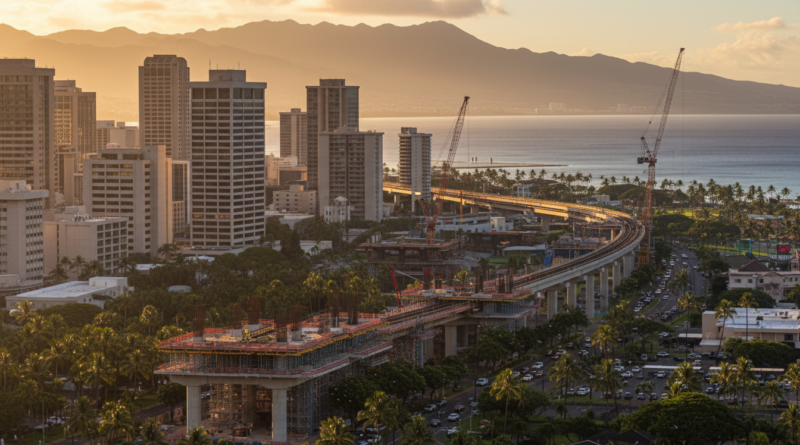
Currently, only the westernmost portion of the rail line operates, running from East Kapolei to Halawa. The urban core segment, which includes the contested Kakaako and Downtown stations, represents some of the most technically challenging and expensive construction on the entire route.
Without access to these downtown properties, HART cannot complete the stations that many consider essential to the rail system’s success. The Downtown station, in particular, would serve as a major hub connecting the rail line to TheBus routes and providing access to the central business district.
Property Owner Perspectives
Representatives for Pacific Guardian Center and Servco Pacific declined to comment on HART’s latest move, citing ongoing litigation. However, both companies have previously argued that the rail authority’s offers were below fair market value and would disrupt their operations.
The Pacific Guardian Center houses numerous businesses and government offices, while Servco Pacific’s headquarters has been a Kakaako landmark for decades. Both properties sit in areas that have seen dramatic development and rising real estate values in recent years.
Local commercial real estate experts say the eminent domain cases could set important precedents for future public infrastructure projects in Hawaii’s increasingly expensive urban core.
Financial and Political Pressure
HART faces mounting pressure to complete the rail project before federal funding commitments expire. The Federal Transit Administration has already expressed concerns about the project’s delays and cost overruns, threatening future support.
Meanwhile, Honolulu taxpayers continue paying for a system that serves only a fraction of its intended route. The general excise tax surcharge funding the project is scheduled to end in 2030, creating additional urgency to finish construction.
The eminent domain proceedings will likely face appeals and could ultimately require resolution by Hawaii’s Supreme Court. For Honolulu residents who have waited more than a decade for a functioning transit system, the legal battle represents another frustrating delay in a project that has become synonymous with bureaucratic dysfunction and broken promises.
HART officials say they remain committed to completing the full 20-mile system, but acknowledge that the property disputes could push the downtown opening well into the next decade.
