
City Council Grills Emergency Manager Over ‘Too Slow’ Evacuation Orders During North Shore Floods
Honolulu’s emergency management chief faced a barrage of criticism from City Council members Wednesday over what lawmakers called a dangerously slow response to catastrophic flooding that inundated North Shore communities during March’s devastating Kona Low storm.
Emergency Management Administrator Sarah Nakamura endured nearly three hours of pointed questioning about delayed evacuation orders, inconsistent public warnings, and communication breakdowns that left residents scrambling for safety as floodwaters rose rapidly through Haleiwa, Waialua, and surrounding areas.
“We had families trapped on rooftops while your department was still ‘assessing the situation,'” said Councilwoman Jennifer Kim, whose district includes much of the affected North Shore. “That’s unacceptable, and frankly, it could have been deadly.”
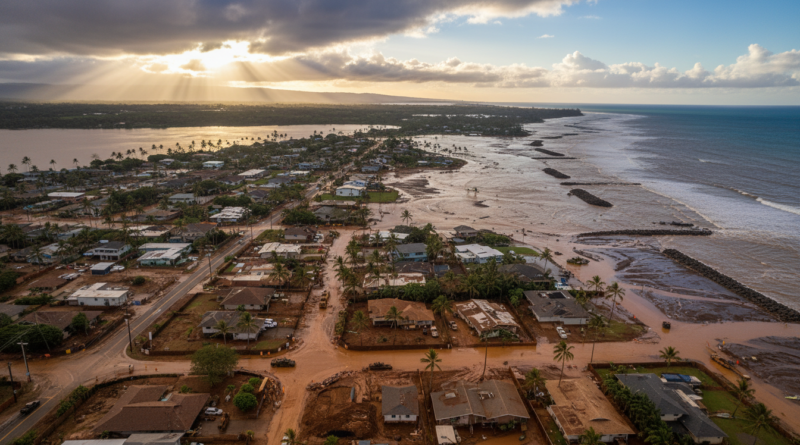
The March 15-16 storm dropped more than 20 inches of rain across the North Shore in less than 24 hours, transforming normally dry gulches into raging torrents that swept away cars and forced dozens of dramatic rescues. While no deaths were reported, property damage exceeded $50 million across the region.
Timeline Under Scrutiny
Council members focused their criticism on a crucial six-hour window when National Weather Service forecasters had already upgraded their flood warnings, but the city had not yet issued mandatory evacuation orders for low-lying areas near the Anahulu River and other known flood zones.
Internal emails obtained by the council show emergency officials were aware of the storm’s intensifying threat by 2 a.m. on March 15, yet evacuation orders for the most vulnerable areas weren’t issued until after 8 a.m. — well after flooding had already begun in several neighborhoods.
“Those six hours made all the difference,” said Council Chair Marcus Tanaka. “We’re talking about the window between an orderly evacuation and people running for their lives.”
Nakamura defended her department’s response, arguing that rapidly changing conditions made it difficult to issue precise warnings. She noted that the storm’s intensity exceeded most computer models and that her team prioritized accuracy over speed in their public communications.
“We don’t issue evacuation orders lightly,” Nakamura told council members. “Once we tell families to leave their homes, we need to be certain it’s necessary. False alarms erode public trust and can lead to complacency during real emergencies.”
Communication Breakdown
Beyond the timing issues, council members expressed frustration with contradictory information that emerged from different city departments during the crisis. While emergency management urged residents to shelter in place, the fire department was simultaneously advising some neighborhoods to evacuate.
The city’s AlertHNL emergency notification system also experienced technical problems, with many residents reporting they received duplicate or outdated messages hours after conditions had changed.
Local business owner Keoni Akamu, who owns a surf shop in Haleiwa Town, said the mixed messages created dangerous confusion during critical hours. “We didn’t know whether to stay or go,” Akamu said during public testimony. “My neighbors and I were making life-or-death decisions based on Facebook posts because we couldn’t trust what the city was telling us.”
The March floods marked the worst North Shore disaster since the 2018 Kauai flooding that killed two people, and council members made clear they expect significant changes before the next major storm system threatens the islands.
Reform Demands
Councilwoman Kim introduced a resolution Wednesday calling for a comprehensive review of the city’s emergency protocols, including mandatory response timelines and clearer chains of command during disasters.
The measure would also require quarterly emergency drills specifically focused on North Shore evacuation scenarios, acknowledging the area’s unique geography and limited escape routes.
Council members also pushed for upgraded technology, including redundant communication systems and real-time flood monitoring equipment in historically vulnerable areas like Kawailoa Beach and Mokuleia.
Mayor Rick Blangiardi has ordered an independent review of the city’s storm response, with results expected by June 1 — well ahead of the next hurricane season. The mayor’s office declined to comment on Nakamura’s job security, but sources close to the administration suggest her position remains under evaluation.
For North Shore residents still rebuilding from March’s destruction, the council’s criticism offers little immediate comfort but raises hopes for better protection during future storms. With climate scientists predicting more intense weather events in coming years, the pressure for emergency management reforms will likely only intensify.
The council plans additional hearings on emergency preparedness throughout April, with a focus on lessons learned from other island communities that have successfully managed similar flooding disasters.
