
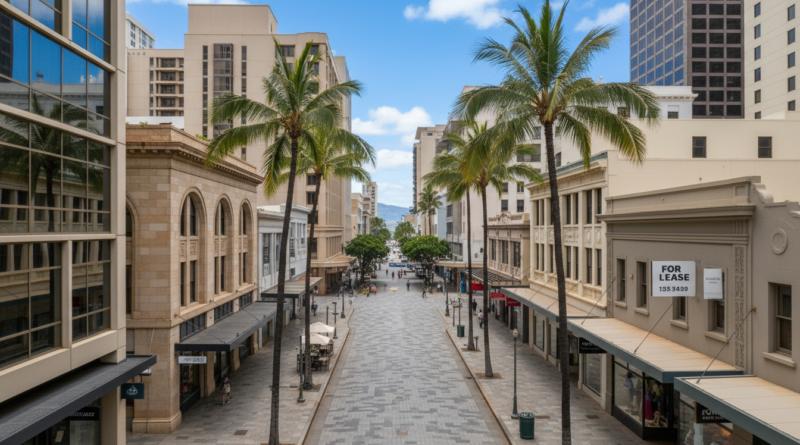
Bill 48: City Council Eyes Expanded Fort Street Mall to Tackle Downtown Crime and Vacancy
The Honolulu City Council is considering a significant expansion of the Fort Street Mall pedestrian zone as part of a broader strategy to combat crime and fill vacant storefronts in downtown’s struggling commercial core.
Bill 48, introduced by Councilmember Tyler Dos Santos-Tam, would extend the car-free zone from its current boundaries at Hotel Street south to include portions of Queen Street and connecting side streets. The proposal aims to create a more walkable downtown environment that supporters believe will attract businesses and improve public safety through increased foot traffic.
“We need to think differently about how people move through downtown,” Dos Santos-Tam said during Wednesday’s committee hearing. “Creating more pedestrian-friendly spaces has worked in cities across the mainland, and we believe it can work here too.”
The Fort Street Mall, established in 1969, currently runs four blocks from Hotel Street to Merchant Street. While it has seen periods of vibrancy over the decades, the area has struggled with high commercial vacancy rates and persistent public safety concerns in recent years.
Crime and Vacancy Concerns Drive Action
Downtown Honolulu has faced mounting challenges since the pandemic, with commercial vacancy rates hovering around 25% according to recent city data. The area has also seen an uptick in property crimes and complaints about loitering and drug use, particularly along Bishop Street and in Chinatown.
Honolulu Police Department statistics show a 15% increase in theft and vandalism reports in the downtown core over the past two years. Business owners have repeatedly called for action at City Council meetings, citing concerns about customer safety and the impact on their bottom lines.
The proposed expansion would close additional street segments to vehicle traffic during peak pedestrian hours, initially from 10 a.m. to 6 p.m. on weekdays. The bill also includes provisions for enhanced lighting, additional seating areas, and designated spaces for food trucks and street vendors.
Mixed Response from Business Community
Local business owners remain divided on the proposal’s potential impact. Some see it as a necessary step to revitalize foot traffic, while others worry about reduced accessibility and delivery challenges.
Jennifer Nakamura, who owns a jewelry shop on Fort Street, supports the expansion. “Anything that brings more people downtown is good for business,” she said. “Right now, people are afraid to walk around here, especially in the evenings.”
However, restaurant owner Michael Tanaka expressed concerns about logistics. His establishment on Queen Street relies heavily on delivery services and worries that vehicle restrictions could complicate operations.
The Downtown Neighborhood Board has scheduled a special meeting for next week to gather additional community input before the bill advances to full council consideration.
Part of Larger Revitalization Effort
The pedestrian mall expansion aligns with Mayor Rick Blangiardi’s broader downtown revitalization initiative, which includes plans for affordable housing development, improved public transit connections, and enhanced cultural programming in the area.
The city has already allocated $2.3 million in the current budget for downtown improvements, including upgraded street lighting along Bishop Street and new landscaping in several pocket parks.
Urban planning experts have pointed to successful pedestrian zones in cities like Portland and Denver as models for Honolulu. Dr. Sarah Kim, an urban studies professor at the University of Hawaii, noted that well-designed pedestrian areas often see reduced crime rates due to increased natural surveillance from foot traffic.
“The key is ensuring these spaces are activated throughout the day,” Kim said. “Empty pedestrian zones can actually become magnets for unwanted activity.”
Implementation Timeline and Costs
If approved, the expanded pedestrian zone would be implemented in phases over 18 months. The city estimates initial costs at $800,000 for street improvements, signage, and temporary barriers.
The bill includes a three-year sunset clause, requiring council review and renewal to make the changes permanent. This provision was added to address concerns from some council members about committing to the expanded zone without first evaluating its effectiveness.
City transportation officials are also studying how the expansion would affect bus routes and delivery schedules. Several TheBus routes currently use portions of the proposed pedestrian zone during morning and evening commute hours.
The council’s planning committee is expected to vote on Bill 48 within the next two weeks. If it advances, a final council vote could come before the end of the month, with implementation potentially beginning this summer.
For downtown workers and residents, the proposal represents both hope for renewal and uncertainty about change. As Honolulu grapples with post-pandemic economic recovery, the success or failure of an expanded Fort Street Mall could influence future urban planning decisions across Oahu’s urban core.