Honolulu City Council Considers Expanding Fort Street Mall — Could Downtown’s Pedestrian Zone Grow?
The Honolulu City Council is exploring a proposal that could significantly expand the Fort Street Mall pedestrian zone, potentially transforming downtown’s walkability and breathing new life into an underused urban corridor.
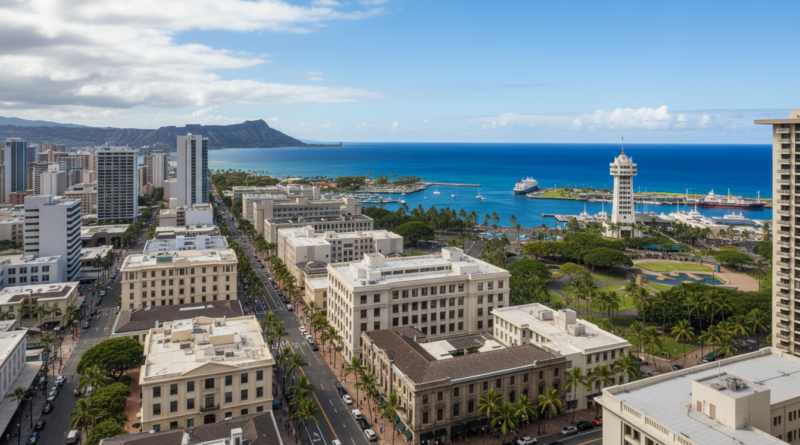
The current Fort Street Mall, stretching just two blocks from King Street to Merchant Street, has long been considered one of downtown’s quirky but underperforming spaces. The proposed expansion would extend the pedestrian-only zone north to Nimitz Highway and south to Ala Moana Boulevard, creating a continuous car-free corridor through the heart of Honolulu’s business district.
Council Chair Tommy Waters introduced the measure at Wednesday’s meeting, citing successful pedestrian mall projects in cities like Burlington, Vermont, and Boulder, Colorado. The proposal has already sparked debate among downtown business owners, city planners, and transportation advocates.
“We have an opportunity to create something truly special here — a vibrant pedestrian corridor that connects our civic buildings, encourages foot traffic, and gives people a reason to linger downtown rather than just pass through,” Waters said during the council session.
Current Challenges and Opportunities
The existing Fort Street Mall, created in the 1960s as part of an urban renewal effort, features distinctive paving stones and mature trees but struggles with vacant storefronts and limited foot traffic outside of weekday lunch hours. The space often feels disconnected from the energy of nearby Hotel Street and Bishop Street.
Local business owner Sarah Nakamura, who operates a small café on the current mall, sees potential in the expansion. “Right now, we get good lunch crowds from the state workers, but evenings and weekends are dead,” she said. “If they can bring in more activities and connect us better to the rest of downtown, it could really help.”
The proposed expansion would require rerouting vehicle traffic around the extended pedestrian zone, potentially creating challenges for delivery trucks and emergency vehicles. City transportation officials are studying alternative routes through parallel streets like Bethel and Maunakea.
Economic Impact and Design Considerations
A preliminary economic impact study commissioned by the council suggests that expanded pedestrian zones could increase property values along the corridor by 8-15% over five years, similar to results seen in other cities that have implemented car-free districts.
The expansion would also integrate several key downtown landmarks into a cohesive walking experience. Pedestrians could stroll from the Hawaii Theatre on Bethel Street, through the current mall area, past Honolulu Hale, and down to the harbor without crossing major traffic arteries.
City planners envision programming the expanded space with regular farmers markets, cultural events, and outdoor dining areas. The design would incorporate native Hawaiian plants and materials, creating what planning director James Tanaka calls “a uniquely local pedestrian experience.”
Mixed Reactions from Stakeholders
Not everyone embraces the expansion plan. Some downtown business owners worry about reduced vehicle access and parking availability. The Hawaii Restaurant Association has raised concerns about delivery logistics for establishments that rely on frequent supply runs.
“We’re not against pedestrian-friendly spaces, but we need to make sure businesses can still operate efficiently,” said restaurant association president Lisa Chen. “Some of our members are already struggling with downtown foot traffic patterns.”
Transportation advocates, however, strongly support the proposal. The Hawaii Bicycling League sees the expansion as part of a broader vision for making downtown more walkable and bike-friendly.
Learning from Other Cities
The council is studying pedestrian mall successes and failures nationwide. Burlington’s Church Street Marketplace, created in 1981, transformed a struggling downtown into a vibrant destination with year-round programming and strong retail performance.
However, the council is also mindful of cautionary tales. Many cities removed pedestrian malls in the 1990s and 2000s after they failed to generate expected economic activity. The key difference, planning experts say, is ensuring adequate residential density and programming to sustain foot traffic beyond business hours.
The proposal will undergo environmental review and community input sessions throughout the summer. A final vote could come as early as September, with potential implementation beginning in 2025.
For downtown Honolulu residents and workers, the expanded Fort Street Mall could represent a significant shift toward more livable urban space. Whether it becomes a vibrant community gathering place or simply more underutilized pavement will depend largely on the city’s commitment to programming and maintenance in the years ahead.