
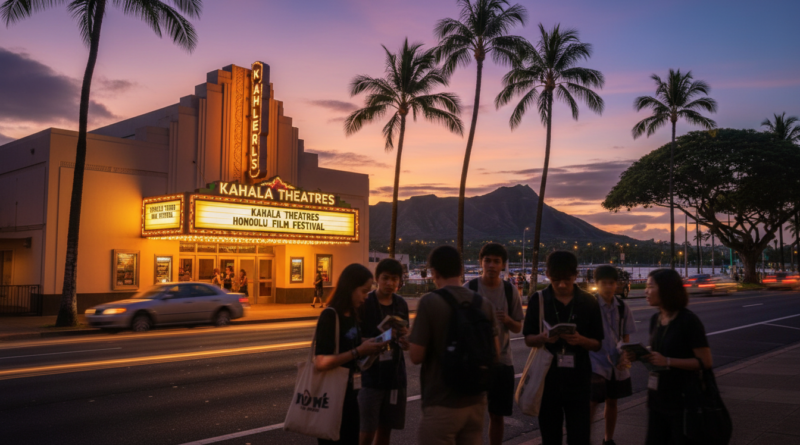
OPIOFest 2026: Kahala Theatres Becomes Ground Zero for Hawaii’s Next Generation of Filmmakers This Week
The next generation of Hawaii filmmakers will take center stage this week as OPIOFest 2026 transforms Consolidated Theatres Kāhala into a showcase for emerging local talent. The festival, running as part of the Hawaii International Film Festival through Sunday, features student short films, animated premieres, and interactive screenings designed to nurture homegrown storytelling voices.
“OPIO” — Hawaiian for “youth” — captures the festival’s mission to spotlight young filmmakers who are reshaping how Hawaii stories get told. This year’s lineup includes 24 student shorts from across the islands, ranging from intimate family dramas shot in Chinatown to experimental pieces filmed at Makapuu Lighthouse.
Among the standout entries is “Reef Dreams,” a 15-minute documentary by Roosevelt High School senior Keiko Nakamura that follows three generations of women in her family who work as traditional lei makers in Chinatown. The film, shot over eight months, weaves together archival footage with contemporary interviews to explore how cultural traditions adapt in modern Honolulu.
“I wanted to show that our traditions aren’t museum pieces — they’re living, breathing parts of who we are today,” Nakamura said. “My tūtū taught me that every lei tells a story, and I realized filmmaking could tell those stories too.”
The festival also features work from University of Hawaii at Mānoa film students, including “Midnight at the Blaisdell,” a noir-inspired short by junior filmmaker Marcus Kaleo that reimagines classic detective stories against the backdrop of downtown Honolulu’s concert hall district.
Cultivating Local Voices
OPIOFest represents more than just a screening opportunity — it’s become a crucial pipeline for developing Hawaii-based filmmakers who might otherwise leave the islands to pursue their craft. The festival provides mentorship opportunities, connecting student filmmakers with industry professionals who work on major productions filmed in Hawaii.
“We’re seeing young filmmakers who understand that you don’t have to choose between staying home and having a career in film,” said Linda Chang, HIFF’s education director. “These students are creating work that’s authentically local while meeting professional standards.”
This year’s festival includes master classes with cinematographers who worked on recent Netflix productions filmed on Oahu, as well as workshops on post-production techniques specific to tropical filming conditions — addressing challenges like color correction for Hawaii’s unique lighting and sound recording near the ocean.
Interactive Programming
Beyond traditional screenings, OPIOFest 2026 features several interactive events designed to engage younger audiences with local filmmaking. Saturday night’s “KPop Demon Hunters” sing-along brings together the creative team behind the viral short film series that was shot in various Honolulu locations, from the Ala Moana Center to the slopes of Diamond Head.
The series, created by a collective of UH Mānoa students, combines Korean pop music aesthetics with Hawaiian supernatural folklore, creating something distinctly local yet globally relevant. The sing-along screening allows audiences to participate in karaoke-style segments while learning about the production challenges of filming action sequences in public spaces around Honolulu.
Friday’s animation showcase highlights the growing community of local animators who are finding ways to incorporate traditional Hawaiian visual elements into contemporary digital storytelling. Several pieces in the program explore themes of climate change and ocean conservation through animation techniques that blend traditional Pacific Island art forms with cutting-edge digital tools.
Building Community
The festival’s impact extends beyond individual filmmakers to the broader creative community. Local businesses in Kāhala have embraced the event, with nearby restaurants offering special menus themed around featured films and the Kāhala Mall hosting an exhibition of production stills and behind-the-scenes photography.
For many young filmmakers, OPIOFest provides their first experience seeing their work screened in a professional theater setting alongside an audience of peers, family members, and industry professionals. The festival’s closing ceremony on Sunday will announce the recipients of several awards, including a $5,000 grant for post-secondary film education.
As Hawaii’s film industry continues to evolve beyond its role as a location for mainland productions, OPIOFest represents a crucial investment in local talent that could reshape how the islands’ stories get told on screen. For Honolulu residents, the festival offers a chance to see their community through fresh eyes while supporting the next generation of local storytellers who are choosing to stay home and tell Hawaii stories from the inside out.