
Three Major Kakaako Towers Poised to Break Ground in 2026, Bringing 2,000+ New Units
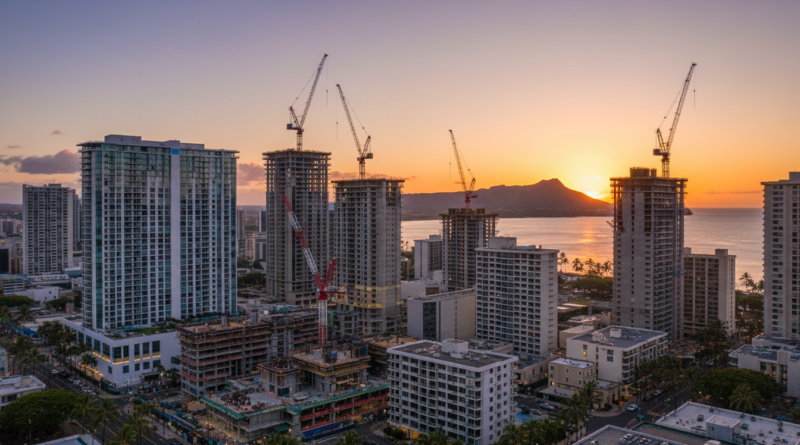
Three massive residential towers are set to break ground in Kakaako this year, collectively adding more than 2,000 new housing units to Honolulu’s fastest-growing neighborhood. The projects — Kahuina, Kaliʻu, and Waiakoa — represent the latest wave of development in the Our Kakaʻako district, promising to dramatically reshape the urban landscape between downtown and Ala Moana.
The most significant of these developments is Kahuina, a 45-story tower planned for 1001 Queen Street that will deliver 861 residential units. What sets Kahuina apart from typical luxury high-rises is its commitment to affordability — 60% of its units will be reserved for moderate-income buyers, making it one of the largest affordable housing projects in the district’s recent history.
“Projects like Kahuina are exactly what Honolulu needs right now,” said Maria Santos, a housing policy analyst with the Hawaiʻi Appleseed Center for Law & Economic Justice. “We’re seeing luxury condos go up everywhere, but working families still can’t find places to live in town. This mixed-income approach could be a model for future development.”
The tower will also include ground-floor retail space and amenities designed to serve both residents and the broader community. Located near the intersection of Queen and Kamakee streets, Kahuina sits at the heart of Our Kakaʻako’s transit-oriented development zone, just blocks from the planned rail stations.
Market-Rate Towers Add to Housing Supply
Meanwhile, two market-rate projects will contribute additional inventory to the neighborhood’s growing housing stock. Kaliʻu, a 40-story tower, will offer 294 luxury residential units with premium amenities and ocean views. The development targets Kakaako’s growing population of young professionals and empty nesters seeking urban living.
The largest of the three projects is Waiakoa, a mixed-use development featuring 1,032 residential units spread across multiple buildings. This massive undertaking will include retail space, restaurants, and community amenities designed to create a neighborhood hub rather than just another residential tower.
Together, these developments represent more than $2 billion in new construction investment and will add roughly 2,200 housing units to a neighborhood that has already seen dramatic growth over the past decade.
Infrastructure Questions Loom Large
The scale of new development raises important questions about infrastructure capacity and neighborhood character. Kakaako has transformed from an industrial district into a dense residential area in just 15 years, with more than 10,000 new units approved or under construction since 2010.
Traffic congestion around Ala Moana Boulevard and Ward Avenue has already reached critical levels during peak hours. The planned rail system promises some relief, but the first phase won’t reach Kakaako until the late 2020s at the earliest.
Local schools are also feeling pressure from the population boom. Keelikolani Middle School and nearby elementary schools are approaching capacity, while new families continue moving into the area’s growing number of family-friendly developments.
Water and sewer infrastructure, much of it dating to the district’s industrial past, requires ongoing upgrades to handle increased residential demand. The Honolulu Board of Water Supply has approved capacity for the new projects but continues monitoring system performance as development accelerates.
Balancing Growth and Community
The Hawaii Community Development Authority, which oversees development in Kakaako, has worked to balance density with livability through its master planning process. New projects must include public benefits like affordable housing, parks, or community facilities.
The authority has also mandated that a percentage of ground-floor space in new towers be reserved for local businesses rather than national chains, an effort to maintain some of the area’s character as it transitions from industrial to residential.
Community advocates continue pushing for more affordable units in new developments. While Kahuina’s 60% affordable component represents progress, market-rate projects like Kaliʻu and Waiakoa cater primarily to higher-income buyers, potentially pricing out local families.
The timing of these groundbreakings coincides with broader conversations about Oahu’s housing crisis. With median home prices still well above $1 million and rental costs consuming huge portions of local incomes, the debate over development priorities remains contentious.
Construction on all three projects is expected to begin in the second half of 2026, with completion dates ranging from 2029 to 2031. As these towers rise, they will test whether Kakaako can successfully evolve into a truly mixed-income urban neighborhood or simply become another enclave for the wealthy in an increasingly expensive city.
