
One Month Later: North Shore Families Still Navigating ‘Day by Day’ Recovery After Kona Low
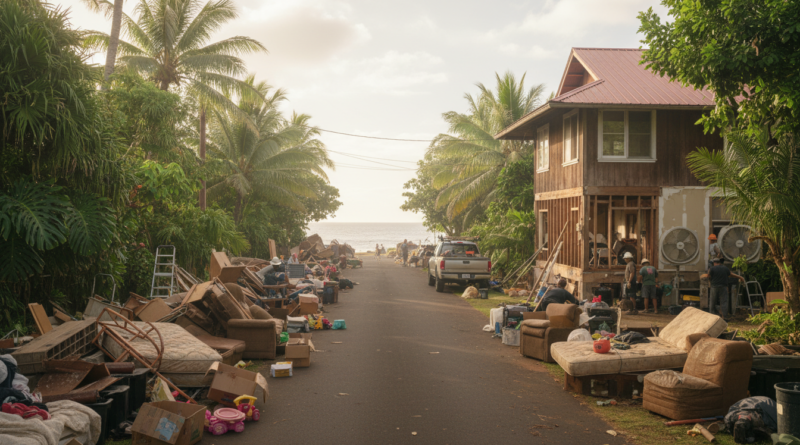
The walls of the Nakamura family’s Waialua home still bear the dark waterline from where floodwaters reached nearly four feet high one month ago. What once was their living room now sits gutted to the studs, a dehumidifier humming constantly in the corner as they wage a daily battle against mold.
“We’re taking it day by day,” said Lisa Nakamura, whose family of five has been staying with relatives in Wahiawa since the March flooding. “Some days are better than others, but we’re grateful to be alive.”
While visitors driving through Haleiwa might assume the North Shore has bounced back — with surf shops and plate lunch counters reopened along Kamehameha Highway — the residential communities of Waialua and Mokuleia tell a different story. One month after the Kona low dumped record rainfall across Oahu’s North Shore, many families are still displaced, navigating insurance claims, and facing the reality of months-long rebuilds.
The March 2-3 storm brought Hawaii’s worst flooding in two decades, with some areas receiving more than 15 inches of rain in 24 hours. The Anahulu River overflowed its banks, sending torrents of muddy water through neighborhoods that hadn’t flooded in living memory.
Business Recovery vs. Residential Reality
The contrast between commercial and residential recovery highlights the complex aftermath of natural disasters. Haleiwa’s tourism-dependent businesses had strong incentives to reopen quickly, with many back in operation within two weeks.
But for families like the Nakamuras, recovery looks vastly different. Insurance adjusters are overwhelmed with claims. Contractors are booked solid. Building materials are in short supply.
“The business side of town bounced back because they had to,” explained Sarah Martinez, a Mokuleia resident whose oceanfront rental was also heavily damaged. “For families, it’s not just about replacing inventory. We’re talking about people’s homes, their memories, their sense of security.”
Martinez estimates her family won’t be able to move back in for at least four more months, pending permits and contractor availability.
Mold Concerns Mount
Beyond the obvious damage from standing water, many North Shore residents are grappling with mold concerns that weren’t immediately apparent in the storm’s aftermath. Hawaii’s humid climate makes rapid mold growth a serious concern in flood-damaged homes.
The Nakamuras discovered mold behind their kitchen cabinets two weeks after the flood, forcing them to expand their renovation scope and budget. Similar discoveries are happening throughout affected neighborhoods.
“We thought we got lucky because the water receded so quickly,” Lisa Nakamura said. “But then we started smelling something musty, and when we opened up the walls, there it was.”
Local contractors report that roughly 80% of flood-damaged homes they’ve inspected require more extensive repairs than initially estimated due to mold remediation needs.
Community Support Networks
Despite the ongoing challenges, North Shore communities have rallied around affected families. The Haleiwa Elementary School gym continues serving as a supply distribution center on weekends, while local churches coordinate volunteer work crews.
Sunset Beach resident Tom Kawelo has organized weekend cleanup crews through social media, helping families strip damaged drywall and remove debris. “This is how we do things out here,” he said. “We take care of each other.”
The North Shore Community Land Trust has also stepped up, providing temporary housing assistance and connecting families with resources for long-term recovery planning.
Looking Ahead
As hurricane season approaches in just two months, many families are racing to complete repairs while also implementing flood-prevention measures. Some are elevating utilities, installing sump pumps, or even considering relocating entirely.
For the Nakamuras, the experience has fundamentally changed their relationship with their neighborhood. They’re rebuilding with flood-resistant materials and keeping important documents in waterproof containers.
“We love it here, and we’re not going anywhere,” Lisa Nakamura said. “But we’re definitely building back smarter this time.”
County officials estimate that full residential recovery across the North Shore could take 6-12 months, depending on the availability of contractors and building materials. For now, families like the Nakamuras continue their day-by-day journey back home, supported by the tight-knit community that makes island life resilient even in the face of unprecedented challenges.