
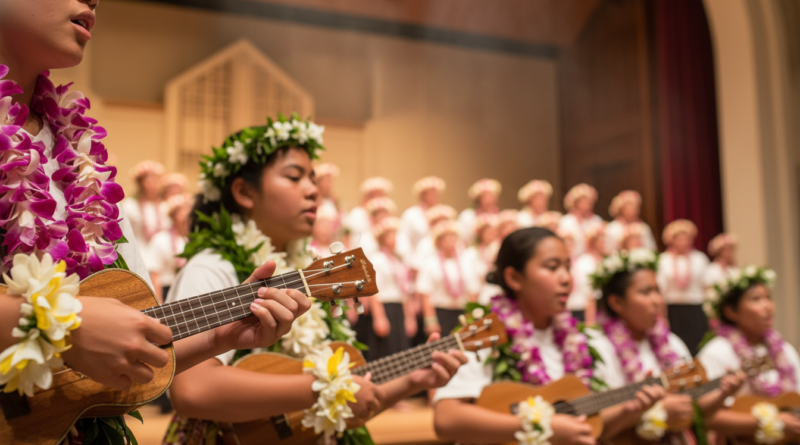
Kamehameha Schools Holds 106th Annual Song Contest — A Living Hawaiian Tradition
The voices of more than 1,000 Kamehameha Schools students will fill the Neal S. Blaisdell Center Arena this May as the institution’s 106th Annual Song Contest takes center stage, continuing one of Hawaii’s most cherished and enduring cultural traditions.
This year’s competition, scheduled for May 3, represents more than a century of preserving and celebrating Native Hawaiian music, language, and cultural identity. Students from the Kapālama campus will compete in elaborate performances that blend traditional Hawaiian mele with contemporary arrangements, each class telling stories that connect past and present.
“Song Contest isn’t just about winning — it’s about our students connecting with their culture and their ancestors through music,” said Kaulana Pakele, a longtime faculty advisor who has guided students through 15 competitions. “When you see these young people pour their hearts into these performances, you’re witnessing the living spirit of Hawaiian culture.”
The competition format remains largely unchanged since its inception in 1921. Each grade level — from seventh through twelfth — presents a themed musical program lasting 12-15 minutes, incorporating traditional Hawaiian instruments, choreography, and costume design that often takes months to prepare.
This year’s themes range from celebrating specific Hawaiian islands to honoring legendary figures in Native Hawaiian history. The junior class is preparing a tribute to Queen Liliʻuokalani, while seniors are crafting a performance centered on the story of Pele, the volcano goddess.
Generations of Participation
For many Native Hawaiian families, Song Contest represents a multigenerational tradition. Alumni return each year to watch their children and grandchildren take the stage where they once performed, creating an emotional continuity that spans decades.
Leilani Akamu, whose daughter performs with this year’s sophomore class, competed in Song Contest in 1987. “I still get chicken skin every time I walk into Blaisdell for this event,” she said. “Seeing my daughter learn the same songs I sang, working with her classmates the way I did — it’s like watching our culture live and breathe through the next generation.”
The preparation process begins in January, with students learning not just melodies and harmonies but the deeper meanings behind each mele. They study the historical context of their chosen themes, research traditional protocols, and work with kumu hula and cultural practitioners to ensure authenticity in their presentations.
Student committees handle everything from costume design to set construction, with many families contributing expertise in traditional crafts like lauhala weaving or kapa making. The collaborative effort extends beyond the school walls, involving the broader Native Hawaiian community in preserving and sharing cultural knowledge.
Cultural Significance Beyond Competition
While judges award prizes for categories including musical excellence, costume design, and overall presentation, participants and families emphasize that the true value lies in cultural preservation and community building.
The event serves as one of the largest gatherings of Native Hawaiian families in the state, with tickets traditionally selling out within hours of release. Extended family members travel from neighbor islands and the mainland to witness performances that represent months of preparation and cultural learning.
Dr. Randie Fong, director of Hawaiian Cultural Studies at Kamehameha Schools, notes that Song Contest has evolved to address contemporary issues while maintaining its cultural foundation. “Recent years have seen performances addressing environmental protection, Hawaiian language revitalization, and land rights — showing how our students use traditional forms to speak to today’s challenges.”
The competition also provides a platform for emerging Native Hawaiian composers and arrangers, many of whom create original pieces specifically for Song Contest performances. These new compositions often become part of the broader repertoire of Hawaiian music, extending the event’s cultural impact beyond the school community.
Looking Ahead
As Kamehameha Schools prepares for its 106th Song Contest, organizers are implementing new digital initiatives to share performances with alumni and family members who cannot attend in person. Live streaming options and archived performances will help extend the tradition’s reach while maintaining its intimate, community-centered character.
For downtown Honolulu, the event represents one of the year’s most significant cultural celebrations, drawing thousands of visitors to the Blaisdell Center and surrounding areas. Local businesses often extend special welcomes to Song Contest families, recognizing the event’s importance to the Native Hawaiian community.
The 106th Annual Song Contest stands as testament to the enduring power of music and tradition in preserving cultural identity, offering Honolulu residents a powerful reminder of the living culture that continues to shape our islands’ character and community.