City Council’s Fort Street Mall Bill Could Reshape Downtown Honolulu’s Most Troubled Corridor
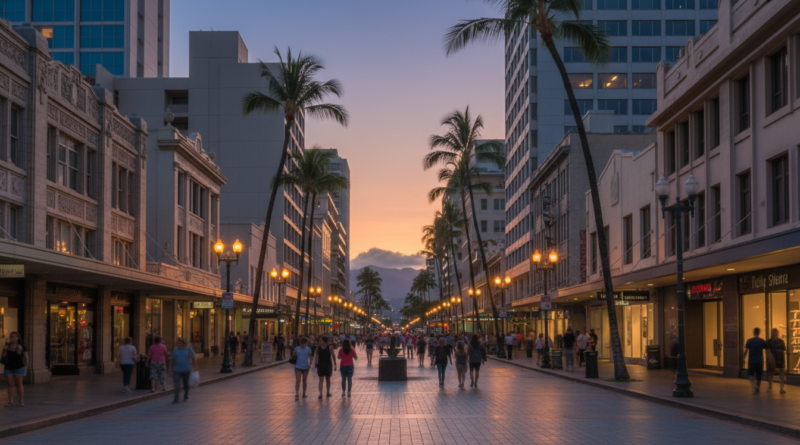
The Honolulu City Council is weighing a proposal that could dramatically transform Fort Street Mall, expanding the pedestrian-only zone in downtown’s most crime-plagued corridor as part of an ambitious effort to revive the area’s struggling economy.
Bill 48, introduced by Councilmember Calvin Say, would extend the current pedestrian mall from its existing boundaries between Beretania and King streets to include additional blocks toward the harbor. The measure aims to reduce vehicle-related crime and create more space for outdoor dining, street vendors, and community events.
“Fort Street Mall has become synonymous with petty crime and loitering, but it doesn’t have to stay that way,” Say said during Wednesday’s committee hearing. “By expanding the pedestrian zone, we can create a more welcoming environment that encourages legitimate business activity while making it harder for criminal elements to operate.”
The current Fort Street Mall, established in 1969 as Hawaii’s first pedestrian mall, spans four blocks through the heart of downtown. Once a bustling retail corridor anchored by major department stores, the area has struggled with persistent issues including drug activity, aggressive panhandling, and vandalism that have driven away both businesses and foot traffic.
Recent Honolulu Police Department data shows the Fort Street corridor accounts for nearly 30% of all reported crimes in the broader downtown area, despite representing less than 10% of the district’s total area.
Mixed Reception from Business Community
Local merchants are divided on whether expanding the pedestrian zone will solve the area’s fundamental problems. Some see the proposal as a necessary step toward revitalization, while others worry it could worsen existing challenges.
“Closing more streets to cars might sound good in theory, but our real problem is enforcement,” said Maria Tanaka, who has operated a jewelry shop on Fort Street for 15 years. “Until the city commits to consistent security presence and addresses the underlying social issues, expanding the mall could just spread the problems over a larger area.”
However, newer businesses in the area are more optimistic. Several food truck operators and pop-up vendors have expressed support for the expansion, viewing it as an opportunity to establish permanent locations and benefit from increased pedestrian traffic.
The Downtown Neighborhood Board voted 7-4 in favor of supporting the bill at their March meeting, though members emphasized that expansion must be coupled with enhanced security measures and better maintenance.
Lessons from Other Cities
Urban planning experts point to mixed results from similar pedestrian mall expansions across the mainland United States. Denver’s 16th Street Mall has thrived with consistent transit connections and aggressive programming, while other cities have seen pedestrian zones become magnets for criminal activity.
The key difference appears to be comprehensive planning that addresses security, programming, and economic incentives simultaneously rather than treating street closure as a standalone solution.
Dr. Sarah Kim, a urban planning professor at the University of Hawaii, noted that successful pedestrian malls typically require “activation” through regular events, adequate lighting, and what planners call “eyes on the street” — legitimate foot traffic throughout the day.
“Honolulu’s challenge is that downtown empties out after business hours, which creates a vacuum that antisocial behavior tends to fill,” Kim explained. “Simply expanding the pedestrian zone without addressing the underlying lack of residential population and evening activity could backfire.”
Implementation Timeline and Costs
If approved, the bill would require extensive coordination between multiple city departments. The Department of Transportation Services would need to reroute bus lines and reconfigure traffic patterns, while the Department of Parks and Recreation would assume maintenance responsibilities for the expanded area.
Initial cost estimates suggest the city would need to invest approximately $2.3 million in infrastructure improvements, including new lighting, security cameras, and pedestrian amenities. Annual maintenance costs would increase by an estimated $180,000.
The proposal also includes provisions for temporary street closures during special events and farmers markets, allowing the city to test expanded pedestrian access before making permanent changes.
What’s Next
The bill faces at least two more committee hearings before reaching a full council vote, likely in late May or early June. Council members have requested additional input from HPD regarding security implications and from the Mayor’s office on budget considerations.
For downtown Honolulu residents and workers, the debate represents a crucial decision point for one of the city’s most visible public spaces. Whether Bill 48 becomes the catalyst for Fort Street Mall’s renaissance or simply expands an existing problem zone may depend as much on implementation details as the legislation itself.
The outcome will likely influence how the city approaches other struggling commercial corridors, making Fort Street Mall a test case for pedestrian-focused urban renewal in tropical climates.
