
Oahu’s March Home Sales Surged 26% — But Affordability Remains Out of Reach for Most Residents
Oahu’s housing market delivered mixed signals in March, with single-family home sales surging 26% year-over-year while median prices climbed to a staggering $1.2 million — a figure that places homeownership even further beyond the reach of most island residents.
The sales spike comes as mortgage rates dipped below 6% for the first time since late 2022, potentially drawing buyers back into a market that has struggled with both high prices and expensive financing. However, industry experts question whether the rate relief provides meaningful assistance when the typical home costs more than 10 times the median household income in Hawaii.
“We’re seeing pent-up demand finally breaking through, but let’s be realistic about who can actually afford a $1.2 million home,” said Maria Santos, a longtime Realtor with Island Properties who has worked the Honolulu market for 15 years. “Even with rates dropping, you’re still looking at monthly payments north of $7,000 for most buyers.”
The March data reveals a tale of two markets. While single-family homes saw robust activity across neighborhoods from Kailua to Kapolei, condominium sales declined 8% compared to March 2025. The median condo price held steady at $485,000, suggesting that middle-tier buyers may be finding slightly more breathing room in the vertical housing market.
Downtown and Kakaako Drive Luxury Activity
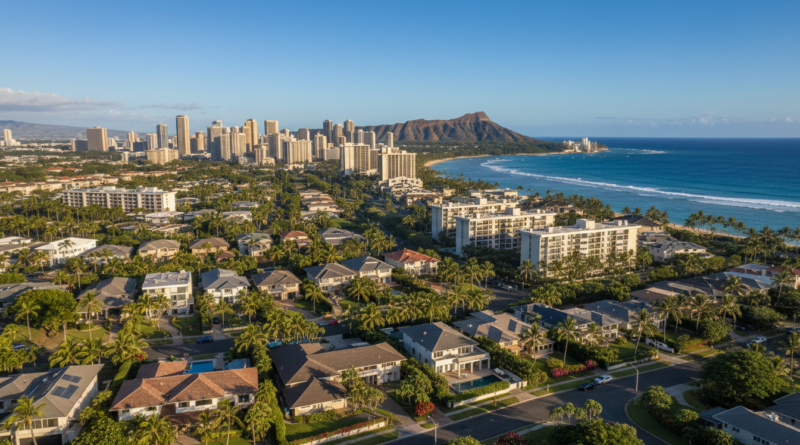
Much of the single-family surge appears concentrated in higher-end segments, particularly in areas like Kahala, Portlock, and newer developments in West Oahu. Meanwhile, downtown Honolulu and Kakaako continue attracting condo buyers, though sales volume remains below pre-pandemic levels.
The Kakaako neighborhood, long positioned as Honolulu’s answer to urban density, saw steady but not spectacular condo activity. Several new towers in the area are nearing completion, which could add supply pressure later this year.
For context, the median single-family home price of $1.2 million represents a 15% increase from the same period last year. Even accounting for wage growth in certain sectors, housing costs continue outpacing income gains for most Hawaii residents.
Rate Relief Offers Limited Help
The drop in mortgage rates below 6% — down from peaks above 7.5% in late 2023 — does provide some mathematical relief for qualified buyers. On a $1.2 million home with 20% down, the difference between 7% and 5.8% rates translates to roughly $250 less per month.
However, that still leaves monthly housing costs around $6,800 before property taxes, insurance, and maintenance — requiring household income well above $200,000 annually to meet traditional lending standards.
The rate environment has created particular challenges for local families looking to upgrade from condos to single-family homes. Many find themselves trapped in starter properties that have appreciated significantly but still can’t bridge the gap to detached housing.
Cash buyers continue playing an outsized role in Oahu’s market, accounting for nearly 40% of single-family transactions in March. This dynamic often puts local buyers — who typically need financing — at a disadvantage in competitive situations.
Supply Constraints Persist
Inventory levels remain historically low, with just 1.8 months of supply available for single-family homes at current sales pace. Healthy markets typically maintain 4-6 months of inventory, providing buyers with reasonable selection and negotiating power.
The supply crunch stems from multiple factors: limited buildable land, lengthy permitting processes, high construction costs, and owners reluctant to sell in a volatile rate environment. New construction has failed to keep pace with demand, particularly for homes priced below $800,000.
Looking ahead, several factors could influence market direction through the remainder of 2026. The Federal Reserve’s monetary policy decisions will largely determine whether rates continue falling or stabilize at current levels. Additionally, several large residential projects in West Oahu and Central areas are expected to deliver units later this year.
For most Honolulu residents, the March sales surge represents both opportunity and frustration. While increased market activity suggests economic confidence, the price levels underscore the growing divide between housing costs and local incomes — a challenge that continues shaping the island’s economic and social landscape.