Pope Leo XIV Names New Bishop of Honolulu — A Jesuit Priest with Deep Pacific Roots
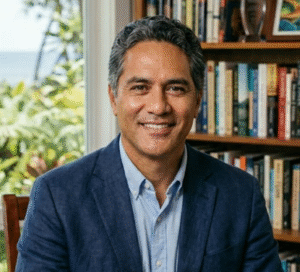
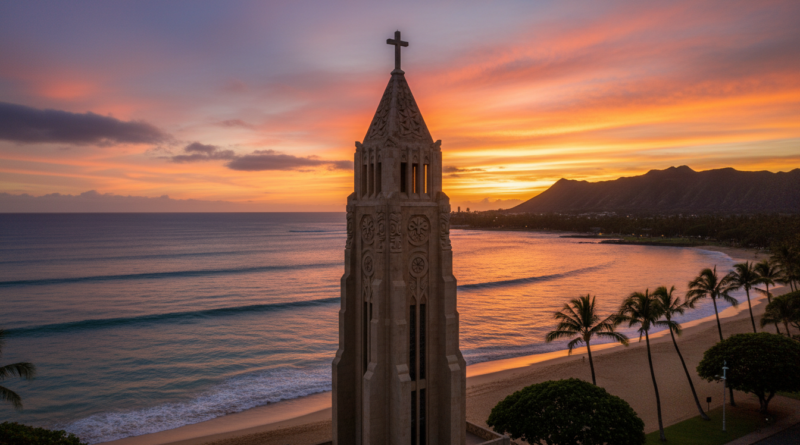
The Vatican announced Tuesday that Father Michael Thomas Tupou Castori, a Jesuit priest with deep Pacific Island heritage, will become the next Bishop of Honolulu. His ordination and installation is scheduled for July 28 at the Cathedral Basilica of Our Lady of Peace in downtown Honolulu.
Father Castori, 52, currently serves as provincial superior of the Jesuit Province of Oceania, overseeing Catholic missions across the Pacific. His appointment fills the role left vacant since Bishop Larry Silva’s retirement in March after 16 years leading Hawaii’s Catholic community.
Born in American Samoa to a Tongan father and Samoan mother, Castori brings a unique understanding of Pacific Islander culture to Hawaii’s remarkably diverse Catholic population. The Honolulu diocese encompasses not just the Hawaiian Islands but also Guam, Wake Island, and the Northern Mariana Islands, serving approximately 250,000 Catholics across ethnicities including Filipino, Hawaiian, Portuguese, Korean, Vietnamese, and various Pacific Islander communities.
“Father Castori’s appointment reflects the Vatican’s recognition of our Pacific region’s cultural complexity,” said Dr. Maria Santos, a theology professor at Chaminade University. “His multilingual abilities and cross-cultural experience will resonate deeply with our island communities.”
Castori was ordained a priest in 1998 and earned his doctorate in systematic theology from the Pontifical Gregorian University in Rome. He speaks English, Samoan, Tongan, Italian, and conversational Hawaiian, skills that will prove valuable in Hawaii’s multilingual parishes from Kalihi to Kahala.
Economic Impact on Local Communities
The Bishop of Honolulu oversees significant real estate holdings and social service programs that impact the local economy. The diocese operates 32 elementary schools, four high schools, and numerous social service agencies across the islands. These institutions employ over 2,000 people and contribute an estimated $180 million annually to Hawaii’s economy.
Under Bishop Silva’s leadership, the diocese weathered financial challenges including settlements related to clergy abuse cases and pandemic-related revenue losses. Castori inherits a diocese that has stabilized financially but faces ongoing pressures from Hawaii’s high cost of living, which has made it difficult to attract and retain clergy and lay staff.
The diocese also manages substantial real estate assets in urban Honolulu, including properties near downtown’s business district. These holdings have appreciated significantly in recent years, providing the diocese with both opportunities and community responsibility as Hawaii grapples with affordable housing shortages.
Addressing Contemporary Challenges
Castori’s appointment comes at a pivotal time for Hawaii’s Catholic Church. The diocese has been implementing reforms recommended following investigations into clergy abuse, while simultaneously adapting to demographic shifts as younger generations become less religiously affiliated.
Pacific Islander Catholics represent one of the fastest-growing segments of Hawaii’s Catholic population, particularly in communities like Kalihi, Waipahu, and the Windward side. Castori’s background positions him to strengthen connections with these communities while maintaining relationships with the diocese’s historically strong Filipino and Portuguese constituencies.
Climate change presents another pressing concern for the new bishop. Rising sea levels threaten several coastal parishes, while extreme weather events have damaged church infrastructure on neighbor islands. The diocese must balance preservation of historic churches, including the downtown cathedral built in 1843, with practical adaptation to environmental challenges.
The appointment also signals Rome’s continued emphasis on elevating Pacific Islander voices within the global Catholic Church. Castori joins a small but growing number of Pacific Islander bishops worldwide, bringing indigenous perspectives to church leadership.
Looking Ahead
Castori’s installation ceremony will draw Catholic leaders from across the Pacific, providing a significant boost to Honolulu’s tourism and hospitality sectors during what is typically a strong summer season. The cathedral, located in the heart of downtown’s government and business district, expects to host over 1,000 attendees for the installation Mass.
For Hawaii’s Catholic communities, the appointment represents continuity with innovation. Castori’s Jesuit background emphasizes education and social justice, values that align with the diocese’s extensive school system and social service programs. His Pacific Islander heritage offers fresh perspectives on indigenous Hawaiian spirituality and the church’s role in preserving cultural traditions.
As Hawaii continues evolving as a majority-minority state with increasing Pacific Islander representation, Bishop-elect Castori’s leadership could prove instrumental in shaping how the Catholic Church engages with local communities from Chinatown’s immigrant enclaves to rural Hawaiian homestead areas. His installation marks not just a changing of ecclesiastical leadership, but a potential new chapter in Hawaii’s ongoing cultural and spiritual evolution.