
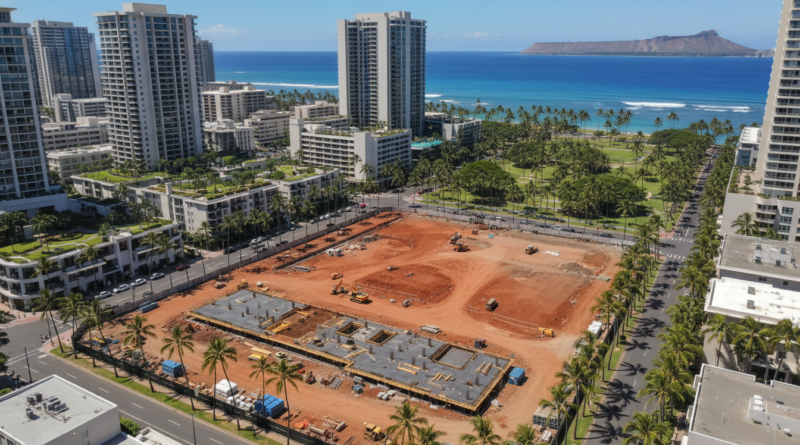
861-Unit Kakaako Tower Kahuina Is Breaking Ground in 2026 — With 60% Affordable Housing
A massive residential tower planned for Kakaako’s waterfront district promises to deliver what Honolulu desperately needs: hundreds of affordable housing units alongside market-rate condos in one of the city’s most coveted neighborhoods.
Stanford Carr Development’s Kahuina project is set to break ground in 2026 on Block C of the Our Kakaako master plan, bringing 861 residential units to the rapidly transforming area between downtown and Ala Moana. The 40-story tower stands out from other luxury developments in the district with its commitment to designate 60% of units as workforce and affordable housing.
That means approximately 516 units will be priced below market rate — a significant contribution to addressing Honolulu’s housing shortage that has pushed many local families out of urban neighborhoods. The remaining 345 units will be sold at market prices, creating the mixed-income community that housing advocates have long pushed for in new developments.
“This project represents exactly what Kakaako needs — housing that serves our workforce and families, not just wealthy investors,” said Dr. Jennifer Matsumoto, a housing policy researcher at the University of Hawaii. “The question is whether these affordability commitments will survive the development process and actually translate into homes locals can afford.”
Location and Community Impact
The Kahuina tower will rise on Block C within the Hawaii Community Development Authority’s Our Kakaako master plan, which envisions transforming the former industrial area into a vibrant mixed-use community. The site sits just mauka of Ala Moana Boulevard, walking distance from Keeaumoku Street shops and the future rail station.
The project joins several other major developments reshaping Kakaako’s skyline, including the completed Ae’o and Anaha towers, and the upcoming Alia development. But unlike many of its predecessors that primarily serve wealthy buyers, Kahuina’s affordable housing component could help address criticism that the neighborhood’s transformation has displaced local residents.
The workforce housing units will likely target families earning between 80-120% of area median income — roughly $77,000 to $115,000 for a family of four in Honolulu County. Affordable units typically serve those earning up to 80% of AMI, or about $77,000 annually.
Development Challenges and Timeline
Stanford Carr Development, led by local developer Stanford Carr, has built several prominent projects across Oahu, including luxury condos in Hawaii Kai and mixed-use developments in urban Honolulu. The company’s track record includes delivering on affordability commitments, though the scale of Kahuina presents new challenges.
The 2026 groundbreaking timeline aligns with the broader Our Kakaako development schedule, which has seen some projects face delays due to market conditions, construction costs, and regulatory approvals. Recent supply chain disruptions and rising material costs have particularly impacted affordable housing projects statewide.
The Hawaii Community Development Authority must still approve final plans for the project, including details about the affordable housing component’s long-term affordability requirements. These restrictions typically require units to remain affordable for 10-30 years, preventing quick flips that could undermine the program’s intent.
Market Context and Housing Crisis
Honolulu faces an estimated shortage of 50,000 housing units, with particular gaps in workforce and affordable categories. The median home price in urban Honolulu exceeds $900,000, while rental costs continue climbing beyond what many working families can afford.
Kakaako’s transformation from industrial wasteland to urban village has created new housing opportunities, but previous developments largely served affluent buyers. Many units in completed towers like Ward Village’s condos have gone to investors rather than local residents, sparking concerns about gentrification.
Kahuina’s mixed-income approach could help establish a more sustainable model for future development in the area. The project’s success will likely influence how other developers approach affordability requirements in subsequent Our Kakaako phases.
Looking Ahead
The next two years will be critical for Kahuina’s development timeline and affordability commitments. Market conditions, construction costs, and financing availability could all impact the project’s final form when groundbreaking arrives in 2026.
For Honolulu residents struggling with housing costs, Kahuina represents both hope and uncertainty. The project could deliver hundreds of homes for working families in a prime urban location — or face the same challenges that have derailed affordable housing commitments in other developments across the city.
The true test will come when sales begin and the community sees whether those 516 affordable units actually reach local families who need them most.